
Legal note
The content is for information. It does not replace a consultation, an examination or an individual medical assessment.
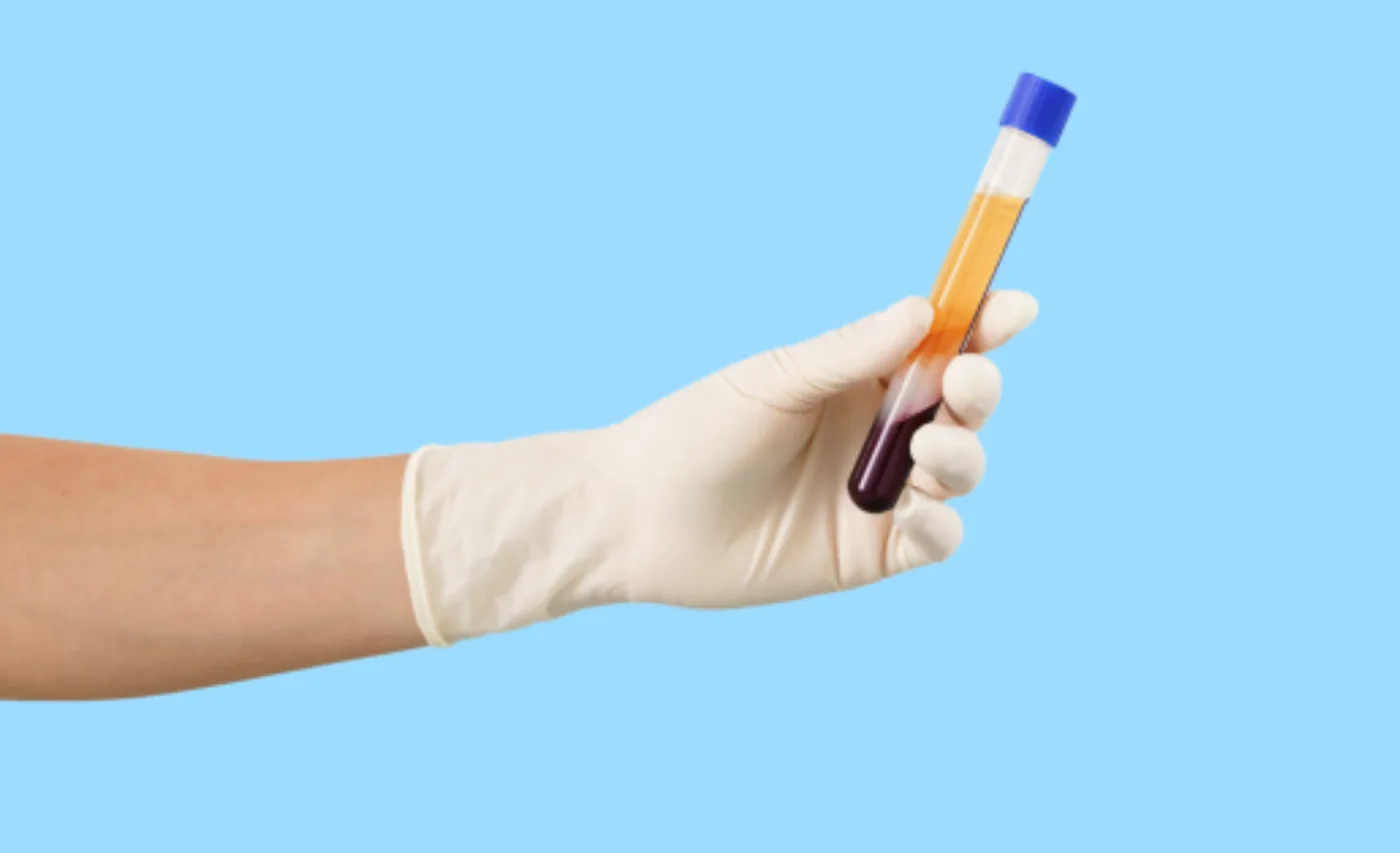
The treatment includes drawing blood, preparing it and administering it into the tissue, so from start to finish it is a medical procedure. The material comes solely from the person it will be given to and is not stored for later.
On this page
What blood-derived preparations are
These are materials obtained from the patient's blood and given to the same patient, without adding any foreign substances. Two are used in aesthetic medicine: platelet-rich plasma and fibrin. Both are made from the same sample, and what differs is the way they are prepared.
The point of this group is that blood contains elements involved in natural healing, above all platelets with the growth factors they carry. Concentrating them and administering them into a chosen area is meant to stimulate the tissue to repair itself in that specific place.
The preparation does not fill or tighten. It belongs to the biostimulating methods, that is, those whose effect is whatever the tissue itself produces. We have described the context and a comparison with other groups on the tissue biostimulators page.
Vampire facelift, plasma, autologous biostimulators
The same treatment goes by several names, and it is worth sorting them out, because patients search for it under each one.
Platelet-rich plasma, abbreviated as PRP
The technical name, used in documentation. It refers to what is actually in the syringe: plasma with an increased concentration of platelets.
Vampire facelift
The colloquial name, most often typed into search engines. It comes from the fact that the material comes from the patient's own blood. The treatment is not a facelift in the surgical sense and does not tighten the skin.
Autologous biostimulators
A group term: autologous means coming from the same person. Plasma and fibrin are described this way when compared with synthetic preparations.
Plasma mesotherapy
The name of an administration technique, not of a preparation. Mesotherapy is the way the material is delivered into the skin, through numerous tiny punctures.
In the medical records and in the price list we use the name platelet-rich plasma or fibrin, because they are unambiguous. We mention the name vampire facelift only because that is how the question is phrased at reception, not to build a sensational atmosphere around the treatment.
How the preparation is made from your blood
The whole path from collection to administration fits within a single visit and takes a dozen or so minutes.
Drawing 20 ml is less than for a typical blood count test. The sensation is limited to the puncture in the crook of the elbow, the same as at a blood collection point.
The composition of the preparation differs between patients and between collections, because it depends on what is in the blood on a given day. This is a real limitation of the method: there is no way to guarantee in advance that two treatments in two people will give a comparable result.
Two preparations in this group
Platelet-rich plasma
Liquid, most often administered using the mesotherapy technique, in numerous tiny punctures. Used for working on skin quality, for supporting healing and on the scalp.
Platelet-rich plasmaFibrin
Made from the same blood, but it forms a mesh of fibres with a denser consistency, which stays longer at the site of administration. Used where longer-lasting action in one area is needed.
FibrinWhich preparation is right is decided by the doctor after assessing the area and the aim of the treatment. They can also be used together in one plan, in a set order.
Forms of administration
Mesotherapy
Numerous tiny punctures within the treatment area, into which the preparation is administered. A form used for working on skin quality and on the scalp.
Subcutaneous injection
Administering the preparation deeper, into one spot, when working on a chosen fold or area. It does not replace a filler, because it does not build volume in the same way.
Dressing after a laser treatment
Applying the preparation to the skin directly after laser therapy, to support healing and reduce redness. A separate purpose and a separate logic for this one application.
Blood-derived preparations are also sometimes combined with treatments that create micro-injuries in the skin, for example microneedling or laser therapy. In that case the base treatment is the actual procedure, and the preparation is an addition. The same principle applies to exosomes.
Areas where they are administered
For hair loss, the preparation is administered into the scalp, but the starting point is establishing the cause of the hair loss, not choosing the preparation. You will find a description of the approach on the hair loss page.
Indications, or what they help with
Thin, dry and inelastic skin
Face, neck, decolletage and hands, where the skin loses density and hydration early.
Fine lines and furrows
Work on tissue quality, not on filling. For a deep furrow resulting from volume loss, the doctor will suggest a different method.
Hair loss
Administration into the scalp, after establishing the cause of the hair loss. Without a diagnosis, the preparation alone is guesswork.
Support for healing after treatments
After laser therapy and after treatments that create micro-injuries, to shorten the duration of redness.
Acne scars
An element of combined therapy, usually with a method that remodels the scar mechanically or thermally.
Treatments from this group are performed on people of very different ages, most often between the ages of thirty and eighty. Age alone is not an indication, however: what matters is the condition of the tissue and the goal that can be achieved in it.
What blood-derived preparations will not do
The preparation stimulates the tissue to work but does not replace volume. For a sunken cheek or a deep furrow, the starting point is a filler.
The common name refers to a lift, but the treatment does not tighten the skin or remove its excess.
For hair loss, the approach starts with establishing the cause, because the choice of method depends on it.
The composition of the preparation depends on what is in the blood on a given day, so we will discuss the scope of change individually at the consultation.
The visit step by step
The first treatment takes from 45 minutes, counting blood collection, preparation and administration. We use numbing cream for comfort, although it is not required.
Effects of blood-derived preparations and when they become visible
With mesotherapy, the first changes are reported after a few days and concern hydration and skin tone. The change in skin quality and density builds up over weeks, because it relies on tissue remodelling, and is assessed after the series is completed.
When supporting healing after a laser treatment, the effect is visible immediately: applying the preparation in mask form reduces skin redness. This is a different aim from rejuvenation and a different logic from a single administration.
The extent of change depends on the condition of the tissue, age, coexisting illnesses and the composition of the preparation itself. We do not state a predicted effect here, because with a method based on the patient's own material, differences between patients are greater than with preparations of fixed composition.
Reactions after the treatment and recommendations
Expected reactions
Redness, swelling and tenderness at the injection sites, sometimes minor bruising, also at the blood collection site. They usually resolve within one to two days.
No make-up for 24 hours
For the first 24 hours, do not apply make-up to the treatment area and do not touch the injection sites.
No high temperatures
Sauna, steam baths, swimming pool and sunbeds only after two weeks.
No exercise or alcohol for a day
For at least 24 hours no alcohol and no intense physical exercise.
Hydration before and after the treatment
Good hydration on the day of the treatment affects the blood collection itself. This is practical advice, not decorative.
The treatment does not require recovery time, so you can usually return to daily activities the same day. Increasing pain, warmth and redness of the area after a few days require contact with the clinic.
Contraindications to treatments with blood-derived preparations
Qualification covers both blood collection and administration of the preparation into the tissues, so the list is longer than for treatments without blood collection.
Report anticoagulant and antiplatelet medicines before the visit, because some of them affect the quality of the preparation obtained. Do not stop taking anything on your own: every change is decided by the treating doctor.
The questions we are asked most often
Is a vampire facelift the same as platelet-rich plasma?
Yes, it is the common name for the same treatment. It comes from the fact that the material comes from the patient's own blood. The treatment is not a facelift, however: it does not tighten the skin or remove its excess, it only stimulates the tissue to repair work.
How much blood needs to be collected for the treatment?
Around 20 ml, which is less than for a typical blood count test. The blood is collected in the practice, just before the treatment, and centrifuged immediately for 5 to 8 minutes. The material is not stored for a further visit.
Is a preparation from your own blood safer?
Autologous material contains no foreign substances, so there is no risk of a reaction to a foreign preparation or of it being rejected. This does not mean the treatment is without risk: there remains the puncture, swelling, bruising and risk of infection, and the contraindications include, among others, blood disorders, pregnancy and cancer.
What is the difference between plasma and fibrin?
Both preparations come from the same blood, but differ in preparation and consistency. Plasma is liquid and is most often administered using the mesotherapy technique. Fibrin forms a denser network of fibres that stays in place longer after administration. The doctor decides which to use after assessing the area and the aim of the treatment.
How long before the effect is visible?
With mesotherapy, the first changes are reported after a few days and concern hydration and skin tone, and the change in skin density builds up over weeks and is assessed after the series is completed. When used after a laser treatment, the reduction in redness is visible immediately.
How many treatments are needed?
Usually a series of several treatments at intervals set by the doctor, depending on the indication and the condition of the tissue. When supporting healing after a laser treatment, this can be a single administration. The number is established at the consultation, before the first treatment.
How much do blood-derived preparations cost?
The cost depends on the preparation, the area and the number of treatments in the course, so we keep one current aesthetic medicine price list instead of scattered figures on individual pages. At the consultation you will find out the price of the whole plan, not just the first treatment.
Who performs a treatment using a blood-derived preparation?
An aesthetic medicine doctor, after a consultation and qualification. The treatment includes drawing blood, preparing the preparation under conditions that ensure sterility, and injecting it into the tissue. Each of these stages is a medical procedure, not a cosmetic one.
The content is for information. It does not replace a consultation, an examination or an individual medical assessment.