
On this page
Possible causes
The causes can be complex and often overlap. Establishing which one dominates is essential for sensible management, since it determines whether treatment, correcting deficiencies or local measures are needed.
Factors covered in the medical history
- a diet low in protein, iron and B vitamins
- prolonged stress and exhaustion
- anaemia and an underactive thyroid
- severe infections in recent months
- hormonal changes, including the period after pregnancy and menopause
- increased effect of dihydrotestosterone, abbreviated as DHT
- diseases of the hair and scalp
- smoking tobacco
- prolonged contact with salty and chlorinated water
- certain medicines and topically applied preparations
- genetic factors
Types of baldness
Androgenetic alopecia
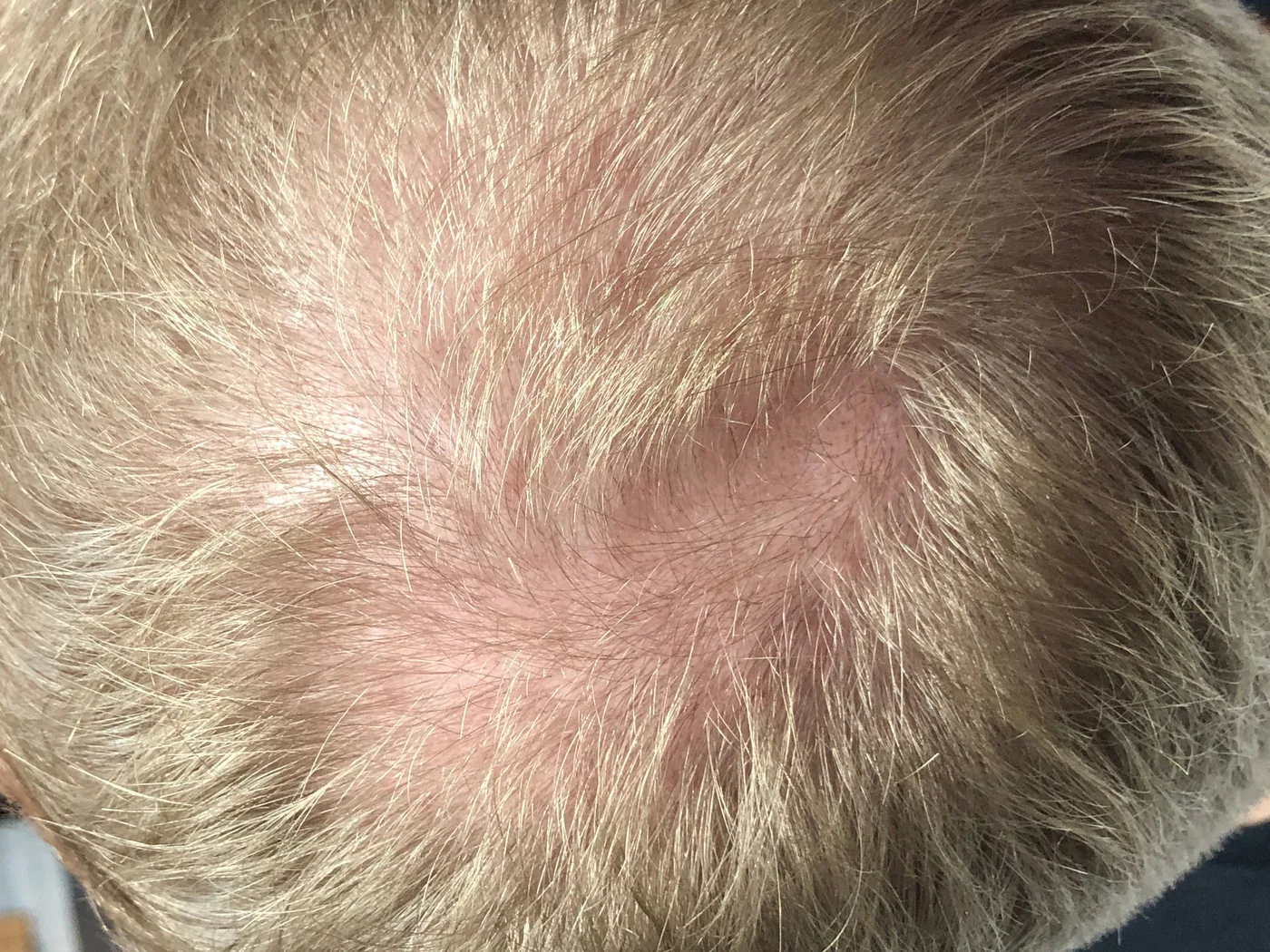
The most common form in both sexes, genetically determined and linked to the effect of dihydrotestosterone on hair follicles, which gradually miniaturise. In men, changes usually affect the frontal area and temples, while in women they tend to affect the crown with the frontal hairline preserved.
Patchy baldness, Latin name alopecia areata
A condition with an autoimmune basis. Hair falls out in limited, usually round areas. It requires management by a doctor, and aesthetic procedures do not replace treatment.
Scarring alopecia
A consequence of inflammatory processes that lead to permanent damage to hair follicles. Hair does not regrow in the affected area, which is why early diagnosis is particularly important here.
Telogen effluvium
It results from a large number of hairs shifting into the resting phase. It can follow stress, a past infection, hormonal disorders, thyroid disease or nutritional deficiencies. Once the cause is removed, hair usually regrows.
When diagnosis is needed
A dermatology or trichology consultation is the right first step when hair falls out suddenly, limited hairless areas appear, the scalp is red, flaking, painful or itchy, or when the changes are accompanied by other general symptoms. Some causes require blood tests rather than local measures.
Cosmetology and aesthetic medicine treatments can complement treatment carried out by a doctor, but they do not replace diagnosis. With scarring alopecia, hair will not regrow in the affected area, regardless of the method used.
Groups of methods that may be considered
Below are the directions of treatment only, without a description of how the procedures are carried out. Details of each method, preparation, reactions after the treatment and prices can be found on the treatment pages that the links lead to.
Hair transplantation is a surgical procedure carried out under a different arrangement. When it is planned, cosmetology measures may be used to prepare the skin before the procedure and to care for the hair afterwards, as decided by the treating team.
Eligibility and limitations
The scope of management depends on the diagnosis, the condition of the scalp, medicines being taken and test results, if any were carried out. Active inflammation, infection of the scalp and an unexplained cause of hair loss are grounds for postponing the procedure.
We do not give the number of sessions or the time to a noticeable change before qualification. The hair growth cycle is long, so assessing the effect takes months, and in some people improvement is limited or does not occur.
Tenderness, redness and slight bruising are possible after injections into the scalp. We discuss the scope for the specific method before it is carried out, together with aftercare recommendations.
Editorial responsibility
Responsible for the content
NL Clinic, Katowice
How the content is created
Last updated
15 August 2026
This material is informational in nature and does not replace a consultation or qualification.