
Legal note
The content is for information. It does not replace a consultation, an examination or an individual medical assessment.
This is an ablative treatment, that is one that breaches the continuity of the epidermis. We discuss the scope of improvement, safety and contraindications before the assessment.
On this page
Indications
More about the types of scars and why different scars require different methods is on the scars and stretch marks page.
Healing and number of sessions
The healing time and the number of sessions are planned individually and depend on the depth and density of fractionation. We do not give them before an assessment, because without the settings being set it would be a number pulled out of thin air.
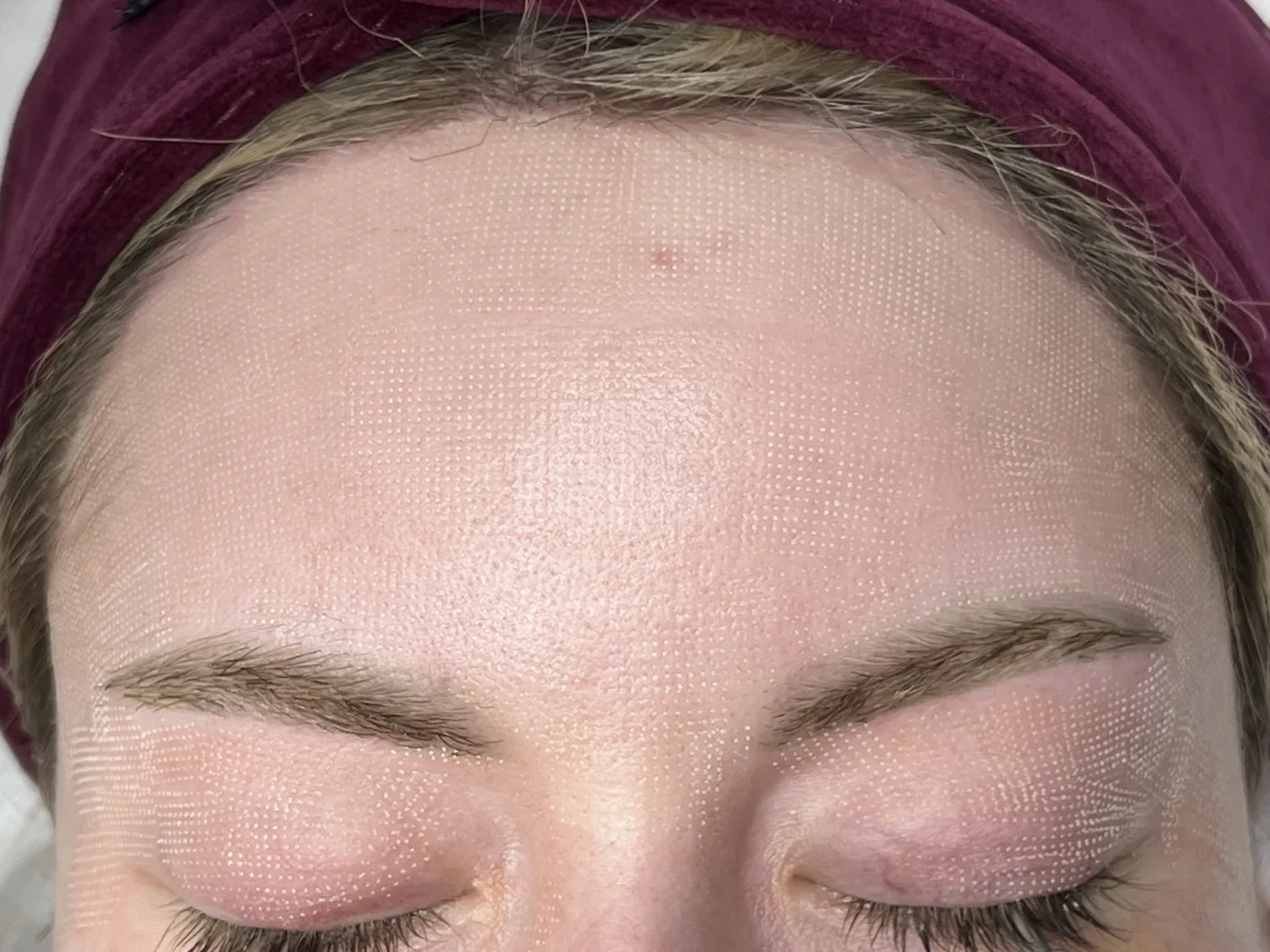
Immediately after the treatment the skin is red and swollen, and the reaction depends on the chosen settings.
In the following days peeling appears. Scabs and flakes must not be picked off.
Sun protection is absolutely required, because after an ablative treatment the risk of post-treatment pigmentation increases.
Patients receive full aftercare recommendations together with home care in the clinic.
Two handpieces, two different treatments
Fractional handpiece
Skin renewal, stimulation of collagen production, scar reduction and improvement of skin quality. This is the treatment described on this page.
Surgical handpiece
Removal of skin lesions. This is a separate procedure, preceded by a medical assessment of the lesion, described on the skin lesion removal page.
We separate them, because patients looking for a „CO2 laser” come across two different things. With a skin lesion the first step is always its assessment, not an aesthetic treatment.
Why the beam stops at the surface
This laser emits an electromagnetic wave of 10 600 nm, invisible to the human eye. It is absorbed by the water present in the tissues, both extracellular and intracellular fluid. A photothermal reaction takes place in which the fluid vaporises.
The result is that the light damages tissue to a depth of 0.6 mm. For comparison: the picosecond laser has a wavelength ten times shorter, yet reaches much deeper, because its target is pigment, not water.
The columns are the areas covered by the beam. The tissue between them stays intact and healing runs from there.
Schematic drawing. The value of 0.6 mm comes from the clinic's materials, and the proportions of the skin layers are approximate.
Non-selective absorption, or a laser without a target
This distinction decides everything that happens next, so it is worth understanding.
Selective lasers
They target a chosen pigment: melanin in the hair, haemoglobin in a vessel, tattoo pigment. Tissue without that pigment remains largely untouched, because it does not absorb the given wavelength.
CO2 laser
It is absorbed by water, and water is in every tissue. The beam does not choose a target and acts on everything in its field. That is why control is provided not by selectivity but by fractionation and the choice of settings.
This is also where the responsibility for the settings comes from. With a selective laser a wrong choice weakens the effect. With an ablative laser a wrong choice leaves a mark, which is why the assessment, evaluation of the phototype and the sun protection plan are not a formality here.
Fractionation and microcolumns
Fractionation consists of dividing the beam into a grid of microscopic points. The laser hits only selected, microscopic areas of skin and leaves the surrounding tissue intact.
This has practical significance for healing: the intact tissue between the columns is a reservoir from which the rebuilding runs. That is why healing is faster than after treatments covering the whole skin surface. The two variables with which the doctor controls the treatment are the depth and density of fractionation.
What happens to collagen
The photothermal action shortens the existing collagen fibres, which form the scaffolding of the skin and are its support. Shortening them densifies the skin tissue, thickens it and smooths its surface.
In parallel, the micro-injuries stimulate the production of new collagen. This remodelling is the basis for using the laser on ageing skin, with loss of firmness and contour, and also in reducing acne scars.
Collagen remodelling takes weeks, not days. The effect visible immediately after healing is not the final effect, and the outcome is assessed after the series is complete.
Contraindications
Some of them mean postponing the appointment, not ruling out the treatment. Tell us about them at the consultation, including the medication you take and any tendency to post-treatment pigmentation.
Editorial responsibility
Responsible for the content
NL Clinic, Katowice
How the content is created
Last updated
24 August 2026
This material is for information purposes only and does not replace a medical consultation or qualification.
The questions we are asked most often
Why does the CO2 laser have the longest wavelength yet reach the least deep?
Because its wavelength is absorbed by water, and water is everywhere in the tissues. The energy is released immediately at the surface and has no way of penetrating deeper. The light damages tissue to a depth of 0.6 mm. That is not a limitation but the mechanism of action: ablation, that is vaporising the fluid from the tissue.
What does it mean that the absorption is not selective?
That the laser does not choose a target. Selective lasers hit a specific pigment, for example melanin or haemoglobin, and bypass the rest. CO2 is absorbed by water in every tissue, so the beam acts on everything in its field. That is why control is provided not by selectivity but by fractionation and the choice of settings.
What is fractionation?
Dividing the beam into a grid of microscopic points. The laser creates columns of damage, and the tissue between them stays intact and becomes a reservoir from which healing runs. Thanks to this, the rebuilding is faster than after a treatment covering the whole surface.
How long does healing take after the treatment?
The healing time and the number of sessions are planned individually, because they depend on the depth and density of fractionation. The deeper and denser, the stronger the effect and the longer the rebuilding. We discuss the scope of improvement, safety and contraindications before the assessment, not after the treatment.
Does this laser also remove warts and moles?
Yes, but that is a different treatment, performed with a different handpiece. The fractional handpiece is for skin remodelling, and the surgical handpiece for removing skin lesions. Removal of a skin lesion is always preceded by a medical assessment, because a lesion of undetermined nature requires diagnosis first, not an aesthetic treatment.
Can the treatment be done in summer?
With an ablative treatment the time of year matters a great deal. A fresh tan and planned intense sun exposure are grounds for postponement, and after the treatment consistent sun protection is essential, without which the risk of post-treatment pigmentation increases. The date is set by the doctor together with the session plan.
The content is for information. It does not replace a consultation, an examination or an individual medical assessment.