
On this page
From what age we pierce ears
We pierce children's ears from the age of four. At that age a child is usually able to co-operate during the procedure and to keep the pierced place clean, and the second of those matters more than the piercing itself.
Age alone is not enough. We pay attention to a few things worth talking about at home before you book.
The child wants the piercing themselves
The decision should come from the child rather than from being talked into it. It is the child who will bear the prick and look after their ears for the following weeks.
They understand it is a procedure, not a game
Co-operating during it and understanding what the recommendations are for makes the whole process clearly easier.
They have had a period of frequent ear infections
With recurrent infections it is worth asking the paediatrician first about the right moment.
They will manage the duties afterwards
Daily cleaning, care when washing hair and getting dressed, no swimming pool for two weeks. It is a real change in the routine.
For those under 18, the presence and written consent of a legal guardian is a requirement we make no exceptions to. The full conditions are set out in the terms of ear piercing for children.
The treatment on video
A recording from our treatment room. It is worth watching together with the child before the visit, because seeing how it goes usually works better than reassurance.
The system we work with
It is a system working with sterile, single-use cartridges containing the earring and the back. The device does not touch the skin, which limits the risk of carrying contamination between patients.
The second feature is the way it pierces. The construction limits the pressure on the earlobe and allows a controlled, precise pass through, and the device itself works without the characteristic bang of classic guns. For a child the sound is often more of a problem than the prick.
The starter earrings are made of surgical steel: a biocompatible material, resistant to corrosion, with low nickel release and a smooth surface. With a fresh piercing that matters, because it limits the risk of irritation and an allergic reaction.
How to talk to a child before the appointment
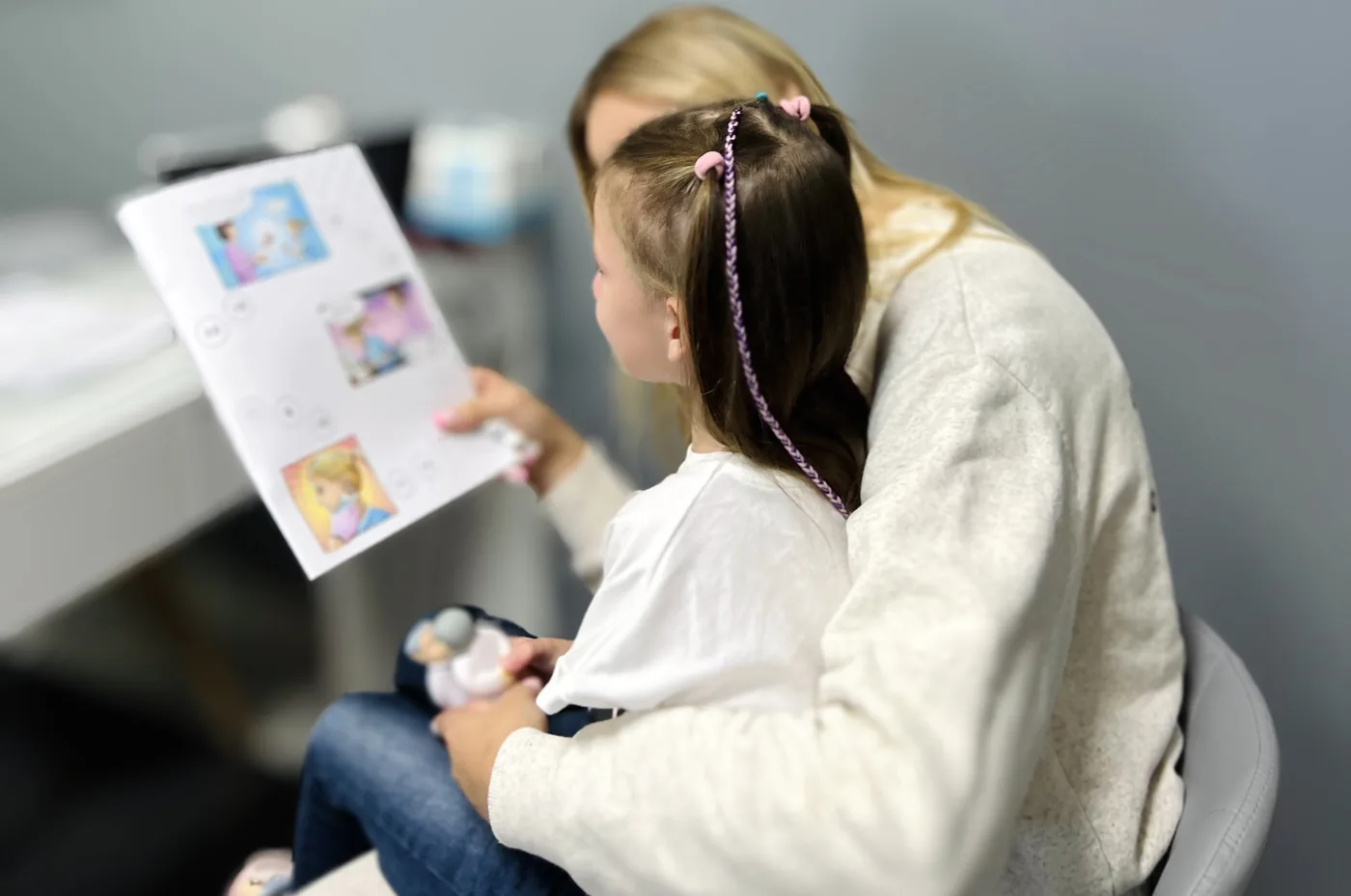
Best plainly and in advance. Explain what the procedure involves, that there will be a moment of a prick and that afterwards the ears will need looking after for a few weeks. A child who knows what to expect goes through the visit more calmly than one taken by surprise on the spot.
It is worth involving the child in choosing the earrings, because it gives a sense of having a say in the decision. What we advise against is presenting the earrings as a reward for being brave or as a condition that has to be endured. Such a framing makes it harder for a child to say they do not want it after all, and that is exactly what we want to hear if it is the case.
If the child changes their mind on the spot, we stop and suggest another date. We do not persuade, we do not hurry them and we do not ask the parents to. We come back to it when the child is ready.
The visit step by step
The whole visit takes about fifteen minutes, and the piercing itself a fraction of a second. The procedure requires no recovery time and you go back to your usual activities the same day, following the aftercare recommendations.
Does ear piercing hurt
For a moment, yes. We do not promise it will be painless, because that is not true and a child will see through it quickly. The honest answer is: there is a brief prick, comparable to having blood taken, after which a throbbing or tingling feeling remains, usually passing within a quarter of an hour.
Anaesthesia is not routine, because the procedure takes a fraction of a second. For exceptionally sensitive children a local anaesthetic cream can be considered. The decision is made after the assessment, taking into account contraindications and the time the preparation needs to work.
How long a pierced ear takes to heal
Healing goes through three phases and stretches over considerably longer than the look of the ear after a few days would suggest.
Inflammatory phase
2 to 5 days
The body's natural response to injury, whose purpose is to clean the wound. Redness, swelling, tenderness and slight bleeding are possible.
Proliferative phase
2 to 3 weeks
New tissue forms, along with blood vessels feeding the structures being rebuilt. It is the period in which hygiene matters most.
Remodelling phase
from several weeks to several months
The new tissue matures and strengthens, and the scar becomes less visible. The earrings are not taken out until healing is complete.
In the remodelling phase it is particularly important not to take the earrings out. Removing them before healing is complete can disturb the process and lead to the channel closing over.
Post-treatment care
We give detailed instructions on the spot, matched to how the visit went. Below are the rules that always apply.
Cleaning twice a day
Gently clean the front and back of the ear with the preparation recommended after the procedure or with saline. Always with washed hands.
Drying
After washing, gently dry the ears with a clean towel or a disposable tissue. Moisture encourages infection.
No aggressive turning of the earring
Any small movement only after moistening with the aftercare preparation. The earrings are not taken out until healing is complete.
Avoiding pressure and rubbing
Watch out for the phone against the ear, hats, over-ear headphones and cuddly toys during sleep.
No swimming pool for two weeks
Swimming pool, lakes, sea and sauna only after about two weeks, once the channel is healing steadily.
Going back to activity
Non-contact exercise after 24 to 48 hours. Contact sports require a break or protection for the ear.
Changing the earrings
Usually after about 6 weeks, if healing is going well. For the following months light, hypoallergenic earrings, because heavy drops irritate the channel.
Symptoms that call for contacting us or a doctor: growing pain, warmth in the area, swelling that keeps increasing, purulent discharge and fever. Do not wait for it to pass on its own; call us.
When we decline or move the date
There are situations in which we do not carry out the procedure on a given day. We say so plainly, so that it does not come as a surprise on the spot.
With a tendency to keloids the assessment is individual. If keloids have appeared in the family or in the child after piercings or injuries, tell us. We may decide against the procedure or suggest an approach that limits the risk.
If the child turns out not to be ready at an appointment already booked, we move the date. We then charge for the time set aside, which we say in advance when booking, so that there is no misunderstanding.
The questions we are asked most often
From what age do you pierce ears?
From the age of four. For those under 18 the presence and written consent of a legal guardian is required. Age alone is not everything, though, because the child's readiness counts too, and whether they will manage the aftercare.
Does the procedure need anaesthesia?
Anaesthesia is not routine, because the piercing takes a fraction of a second. For exceptionally sensitive children an anaesthetic cream can be considered. The decision is made after the assessment, taking into account contraindications and the time the preparation needs to work.
How does this system differ from an ordinary gun?
It works with sterile, single-use cartridges holding the earring and the back, and the device does not touch the skin. It is quiet and allows a controlled pass through the lobe, which limits the risk of contamination and of injury to the tissue.
What are the earrings made of?
Of surgical steel: a biocompatible material, resistant to corrosion, with very low nickel release and a smooth surface. With a fresh piercing this means a low risk of an allergic reaction.
When can the earrings be changed?
As a rule after about six weeks, if the lobe is healing properly. For the following months it is worth wearing light, hypoallergenic earrings, because heavy drops irritate the channel.
When can we go back to the swimming pool and sport?
Swimming pool, open water and sauna usually after two weeks. Non-contact exercise after 24 to 48 hours, and contact sports require a break or protection for the ear.
How do I know something is wrong?
The worrying signs are growing pain, warmth in the area, swelling that keeps increasing, purulent discharge and fever. In that case call us and we will judge whether a change of aftercare is enough or a medical consultation is needed.
How can the risk of keloids be reduced?
Tell us if keloids have appeared in the child or in the family after piercings or injuries. We may decide against the procedure or choose an approach that limits the risk: the location of the piercing, close monitoring of healing and light jewellery.
What if the child changes their mind on the spot?
We stop and suggest another date. We do not persuade and we do not hurry them. We charge for the time of the booked appointment, which we say in advance when booking, but the child's own decision is binding for us.
What does the price of the procedure include?
Preparing sterile conditions, single-use instruments, the starter earrings and care after the piercing together with detailed aftercare instructions. Current amounts are in the cosmetology price list.
If you are unsure
Call before booking
If you are not sure about the child's age, their readiness or their health, call before making an appointment. A short phone call saves the child needless stress and saves you a journey to an appointment we will not go ahead with anyway.
This material is for information and does not replace an assessment of suitability for the procedure.