Legal note
The content is for information. It does not replace a consultation, an examination or an individual medical assessment.
Threads used in aesthetic medicine are medical devices. Implantation is carried out under sterile conditions, using sterile, single-use instruments. We do not give trade names, because the choice of thread is made by the doctor during qualification, based on the area and the aim of the treatment.
On this page
Three types of thread treatments
Thread lifting is the one most often talked about, but it is only one of the procedures performed with threads introduced deep into the skin. The three groups differ in the structure of the thread and the task it has in the tissue.
Types of threads and their task in the tissue
| Type of thread | Structure | Task in the tissue | When considered |
|---|---|---|---|
| Lifting threads | With barbs | Anchor in the tissue and support it | Sagging tissue, loss of facial contour |
| Revitalising threads | Without barbs | Stimulate the tissue to produce collagen | Skin quality and density |
| Filling and shaping threads | Without barbs, complex shapes | Add volume in a chosen spot | Filling wrinkles, shaping small areas |
Threads for non-surgical lifting have barbs, with which they anchor in the tissue and support it. Revitalising and filling threads have no barbs, although their shapes can be complex. This distinction decides what can be achieved in a given area.
What threads are made of
Surgical threads have been used in plastic surgery, ophthalmology and gynaecology for decades. In aesthetic medicine absorbable materials are used, which dissolve in the tissue over time.
PDO, polydioxanone
A fibre used in surgery for decades. In the clinic we use two variants: PDO and WHITE PDO.
PLLA, polylactic acid
A single thread of polylactic acid, that is the same substance found in hard biostimulators.
P(LA/CL), polycaprolactone with polylactic acid
A material combining two polymers, with a different breakdown time from the others.
In the clinic we use four types of thread: PDO, WHITE PDO, PLLA and P(LA/CL). All are certified medical devices. Which type is right follows from the area, the aim of the treatment and the condition of the tissue, not from the patient's preference.
Indications, face and body
Face and neck
Body
The presence of an indication does not yet mean qualification. Whether threads or another method are right in a given case is decided by an assessment of the tissue at the consultation.
When threads alone are not enough
Not every aesthetic problem can be solved by implanting threads, and that is the most common cause of disappointment after the treatment. Threads support the tissue but do not reduce its amount.
Threads support the tissue but do not reduce its amount. With a pronounced double chin, thread lifting alone will not hold the weight of the fatty tissue, so its amount must first be reduced by another method.
They do not remove excess skin. With considerable laxity the scope of possible change is limited, and we say so before the treatment.
They do not replace a filler where the problem is loss of volume, or botulinum toxin for wrinkles caused by muscle movement.
Too few threads means a shorter effect, because the threads will not hold the weight of the skin. That is an argument against choosing the treatment by price alone.
The treatment step by step
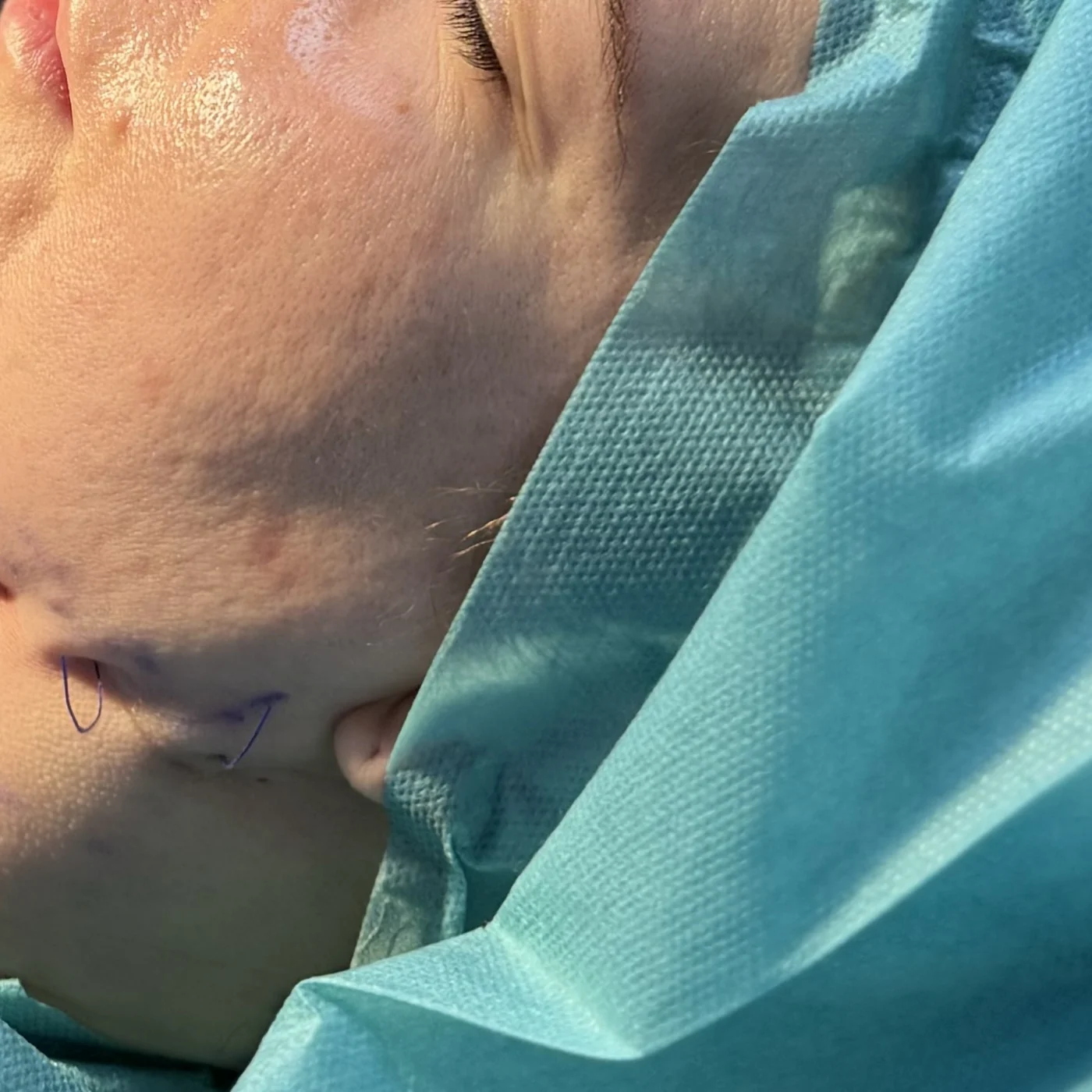
The first treatment takes about 60 minutes. It is performed under local anaesthesia, and we additionally use an anaesthetic cream. If the doctor considers it justified, they may recommend taking an antibiotic for a set time after the treatment and write a prescription.
Results and when they are visible
The results are visible immediately after the treatment, because the threads support the tissue mechanically. The final picture is assessed within four weeks, when the swelling has subsided.
The skin becomes tighter, wrinkles and furrows are reduced and elasticity improves. In addition, the presence of the threads stimulates the production of collagen and elastin, so the tissue densifies over time. The scope of change depends on the area and on matching the thread to the task.
We publish photos of results only with patients’ consent and under comparable conditions: the same framing, light, facial expression and time interval. The result is always individual.
How long the effect of threads lasts
Threads dissolve in the skin over a period from several months to two years, and that is how long the effects of the treatment last. It is a wide range, because it depends on several things at once.
A sudden change in body weight after the treatment also matters. Both a marked loss and a gain in weight change the distribution of tissue on which the effect was based.
Recommendations before the treatment
From 5 to 7 days before the treatment, stop taking non-steroidal anti-inflammatory drugs, including ibuprofen, naproxen and aspirin, as well as other preparations affecting blood clotting, after agreement with your treating doctor.
On the day of the treatment do not use the swimming pool, sauna, sunbed or cryotherapy, and avoid exposure to the sun.
Avoid activities that increase the risk of infection.
Do not have cosmetic treatments: chemical peels, light treatments, device-based and laser treatments.
You receive the list of recommendations from the doctor during qualification, together with information on which of the medication you take needs to be discussed. Do not stop anything on your own.
Recommendations after a thread treatment
The recommendations after threads are longer and spread further over time than after injectable treatments, because there is material in the tissue that has to stabilise there.
Plan a visit to the dentist no earlier than after a month. Opening the mouth wide and pressure on the face in the first weeks can affect the position of the threads.
Complications after threads
Some reactions subside on their own after a few days, others require a consultation and sometimes treatment or correction of the procedure. Below is the full list, including the rare ones.
The risk is affected by proper qualification, the treatment technique and sterile conditions.
Treating complications and removing threads
We see patients with complications after treatments performed elsewhere. Management begins with an assessment of the situation, and what follows depends on what has happened.
Removal of threads
In the case of migration, breakage or a visible outline of the thread under the skin. The scope of management depends on where and how deep the material is.
Pharmacotherapy
In the case of inflammation or infection, conducted under a doctor's supervision and concluded with an assessment of its effectiveness.
Re-implantation
When, after the material has been removed, it is justified to recreate the effect, but in a different arrangement or with a different type of thread.
The cost of treating complications is set individually at the consultation, because it depends on the scope of management. If anything worries you after a treatment at another practice, come for an assessment before the situation becomes established.
Contraindications
Every treatment is preceded by a history taken at the consultation, during which the doctor checks for contraindications. Report medication affecting blood clotting before the visit.
The questions we are asked most often
How long does the effect of threads last?
Threads dissolve in the skin over a period from several months to two years, and that is how long the effects of the treatment last. The time depends on the type of material, the number of threads introduced, the area and individual predisposition, including a sudden change in body weight after the treatment.
When is the effect visible after a thread treatment?
The results are visible immediately, because the threads support the tissue mechanically. The final picture is assessed within four weeks, when the swelling has subsided and the tissue has responded to the presence of the threads by producing collagen.
Will threads replace a surgical facelift?
Not in every situation. Threads work on supporting the tissue, but they do not remove its excess. With considerable laxity or a significant amount of fatty tissue, for example with a pronounced double chin, threads alone will not hold the weight of the tissue and the doctor will propose a different approach first.
Does a thread treatment hurt?
The treatment is performed under local anaesthesia, and we additionally use an anaesthetic cream for comfort. After the treatment the area can be tender for a few days, with possible swelling and bruising.
How much does a thread treatment cost?
The cost depends on the area and on the number of threads needed to achieve the effect. The final price is set at the consultation, after assessing the condition and needs of the skin. It is worth knowing that too few threads means the effect lasts for a shorter time, because the threads will not hold the weight of the skin.
How do PDO threads differ from PLLA?
PDO is a polydioxanone fibre, PLLA is a single thread of polylactic acid, and P(LA/CL) combines polycaprolactone with polylactic acid. The material affects how long the thread takes to dissolve and what task it will be used for. In the clinic we use four types, and the choice belongs to the doctor.
What to do about a complication after threads from another practice?
We see patients with complications after treatments performed elsewhere. Management includes an assessment of the situation and then, depending on it, removal of the threads, pharmacotherapy or re-implantation. The cost is set individually at the consultation. Come before the situation becomes established.
When can I return to training after threads?
Physical activity, including fitness and running, is limited for 30 days after the treatment. Swimming pool, sauna, steam bath and cryotherapy also only after a month. These are the recommendations for thread implantation, longer than for injectable treatments, because there is material in the tissue that has to stabilise.
The content is for information. It does not replace a consultation, an examination or an individual medical assessment.