
On this page
When the question of scalp mesotherapy usually comes up
Usually when the change is already visible to the woman herself, though not necessarily yet to people around her.
More hair than usual on the brush and in the drain
The change is gradual, so usually an impression comes first, and certainty only later.
A wider parting
The same hairstyle needs different styling, and the scalp shows through in places where it was not visible before.
A thinner ponytail
The volume of hair when tied back has decreased, even though the length has stayed the same.
Hair loss after pregnancy, illness or a period of intense stress
A common situation, where hair loss appears several months after the cause.
Hair grows back thinner
New hair is weaker and shorter than before. This is a signal to establish the cause before starting anything else.
First the cause, then the treatment
Hair falls out for very different reasons, and the cause determines what makes sense. The same series of treatments works differently for hair loss after an illness than for genetically determined baldness.
Androgenetic alopecia
The most common form, usually genetically determined, linked to the action of dihydrotestosterone and the gradual miniaturisation of hair follicles.
Telogen effluvium
Linked to stress, infection, surgery, pregnancy, hormonal disorders or a diet low in nutrients. Usually temporary once the cause is removed.
Hormonal disorders
Underactive and overactive thyroid, polycystic ovary syndrome, a drop in oestrogen during menopause.
Inflammatory conditions of the scalp
Dandruff, seborrhoeic dermatitis, fungal infections. These need to be treated before the scalp gets any additional stimulus.
Aftercare and mechanical factors
Tightly tied hairstyles, aggressive chemical treatments, overheating with a hairdryer and straightener.
Environmental factors
Pollution, UV radiation and other factors that put a strain on the scalp.
With sudden, severe hair loss, inflammatory changes, itching, scalp pain or patchy hair loss, a medical assessment and diagnostics are needed first. Mesotherapy may then be one element of the management plan, not the answer to the problem.
What the treatment does
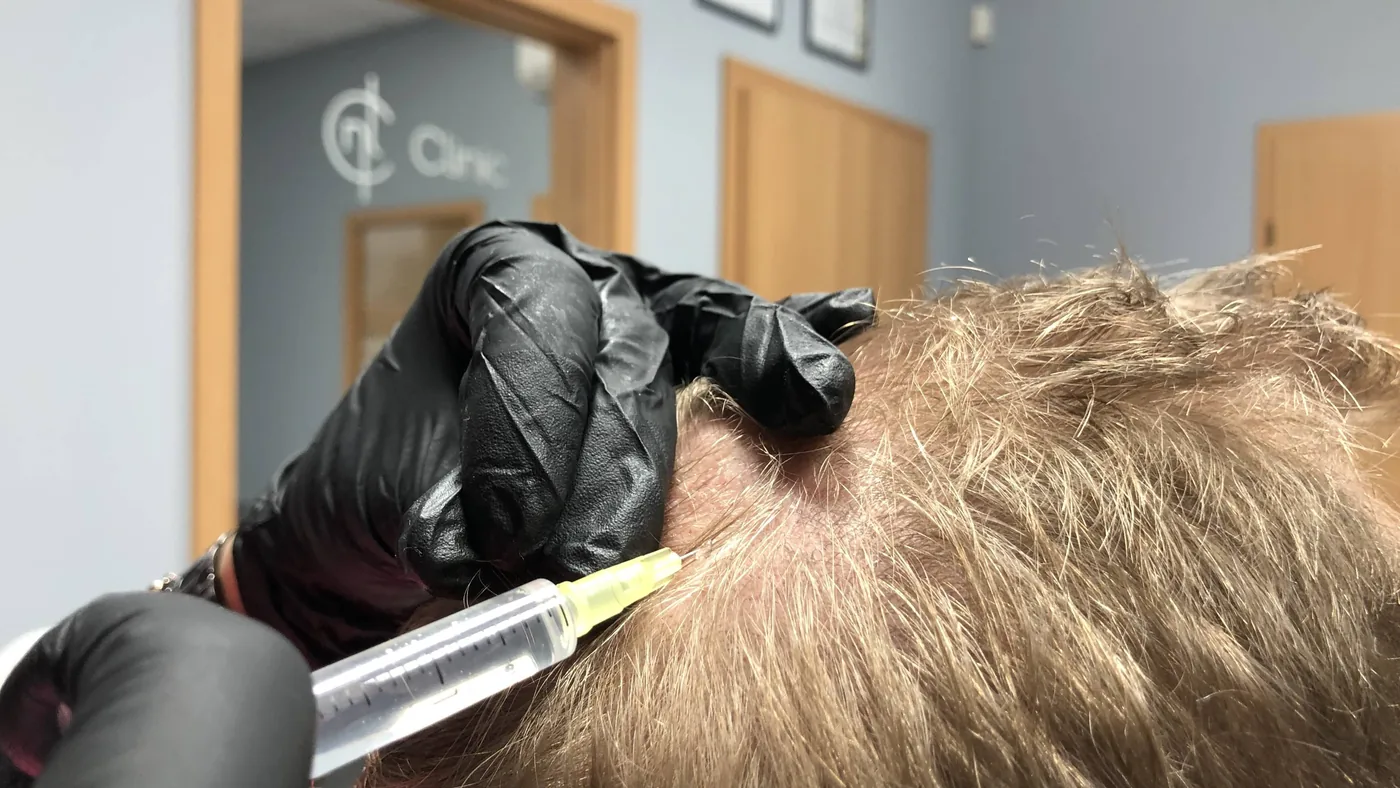
Active substances are delivered with fine needles into the dermis, shallowly and at specific points, around the hair follicles. Bypassing the epidermal barrier means the ingredients reach where they are meant to act, instead of remaining on the surface.
The described action includes improving microcirculation and tissue oxygenation, and supplying the follicles with the ingredients needed for hair growth. The extent of change depends on the cause of hair loss, the starting condition and consistency, which is why before qualification we do not give a number of sessions or an expected result.
Types of preparations
There is one name for the treatment, but the formulations vary widely. This is the first decision made at the consultation, and the one that changes the course of therapy the most.
Vitamin preparations
B vitamins, including pantothenic acid and biotin, plus vitamins A, C and E, supplemented with minerals: zinc, copper and magnesium.
Aimed mainly at people with weakened hair after an illness, an elimination diet or a period of intense stress, and also as a preventive measure.
Amino acid preparations
Cysteine, methionine, arginine, glycine, lysine, that is amino acids involved in keratin synthesis.
For thin and brittle hair, and for people who regularly put their hair through chemical and heat treatments.
Polynucleotides
Fragments of nucleic acids that stimulate fibroblasts, with an anti-inflammatory action.
Considered for a sensitive and problematic scalp, and also as a repair treatment after severe hair loss.
Biomimetic peptides
Short chains of amino acids that act on receptors, described as limiting the effect of dihydrotestosterone on the hair follicle.
Most often for hormone-related hair loss, in both women and men. It requires consistency and a full series.
Platelet-rich plasma is sometimes mentioned in the same context, but it is a procedure of a different kind: it requires drawing blood, preparing the formulation and medical qualification. It is covered on the platelet-rich plasma page.
The series and the pace of change
A typical plan is four to eight treatments at intervals of one to two weeks. Shorter intervals than with facial mesotherapy result from the hair growth cycle and from working on tissue that renews itself constantly.
Hair grows slowly, so assessing the effect only makes sense after a few months, not after two sessions. The first change most often reported is less hair left on the brush, with a change in density coming later. The further plan depends on whether the cause of the hair loss has been brought under control.
Erbium glass laser as a supplement
Erbium glass laser with a wavelength of 1550 nm creates controlled micro-injuries in the dermis, without damaging the epidermis. This activates fibroblasts and repair processes, improving blood supply and the conditions in which the hair follicles work.
It is sometimes used on its own, at the first signs of thinning, or combined with mesotherapy. In the combined variant, the micro-injuries increase the skin's permeability, which makes it easier for the applied ingredients to penetrate. The treatment is non-invasive and does not require recovery time.
What scalp mesotherapy will not do
It will not restore hair where the follicles have disappeared. In areas with long-term lack of growth, the starting point is a medical assessment, and the solution is sometimes a transplant, not a series of treatments.
It does not remove the cause of androgenetic alopecia, because that depends on genetic and hormonal factors. It can be carried out alongside treatment established by a doctor, not instead of it.
It does not replace diagnostics. Deficiencies, thyroid disorders and other systemic causes require testing, and without correcting them the effect of the treatments is often short-lived.
It does not work once and for all. After the series, maintenance treatments are planned, and their frequency depends on the cause and on whether it is still working.
Contraindications to scalp mesotherapy
Qualification includes taking a history of medications, chronic illnesses and allergies, and an assessment of the scalp.
Anticoagulant treatment increases the risk of bruising, so mention it before your appointment. Any change in medication is decided solely by the treating doctor.
The questions we are asked most often
How many treatments do I need?
Usually four to eight, at intervals of one to two weeks. The exact plan is set by the person carrying out the treatment after assessing the scalp, as it depends on the cause of the hair loss and the starting condition.
When will I see a difference?
Hair grows slowly, so the first noticeable change is usually fewer hairs on the brush, not immediately more density. Assessing the effect makes sense after a few months, not after two sessions.
Will the treatment stop androgenetic alopecia?
It does not remove the cause, as this is genetic and hormonal. It is sometimes carried out alongside treatment set by a doctor, and then it makes sense as support, not as the only action.
Does it hurt?
Anaesthesia is not required. The injections are shallow and quick, and the sensation is usually comparable to pinching. The scalp can be sensitive in places, so we adjust the pace as we go.
When can I wash my hair?
Usually a few hours after the treatment, with a mild shampoo. On the same day, skip the sauna, swimming pool and intensive exercise.
Are tests needed before the series?
With intense or sudden hair loss, yes. A blood count, ferritin and thyroid tests are often the starting point, as without correcting deficiencies the effect of the treatments is short-lived. The scope of tests is set by a doctor.
Do men also have this treatment?
Yes, and this is a common group. The protocol can differ from that used for women, as the cause of hair loss and the area treated are different, usually the crown and the frontal hairline.
Can it be combined with laser treatment?
Yes, this is a common option. An erbium glass laser increases skin permeability, so it is sometimes included in the same plan as mesotherapy. The order and intervals are set by the person carrying out the treatment.
How much does it cost?
The price depends on the preparation and the number of sessions, so we keep one current price list for cosmetology treatments. The cost of the whole series is discussed at the consultation, before the first treatment.
Before you decide
Consultation with a cosmetologist
The cosmetologist assesses the scalp, asks about the course of the hair loss and says whether we start with the treatment or first with a diagnosis from a doctor. The conversation does not commit you to having the treatment. A medical consultation is paid for according to the price list, as is preparing a home care plan.
This material is for information and does not replace a consultation or an assessment of suitability for the treatment.