
On this page
What it involves
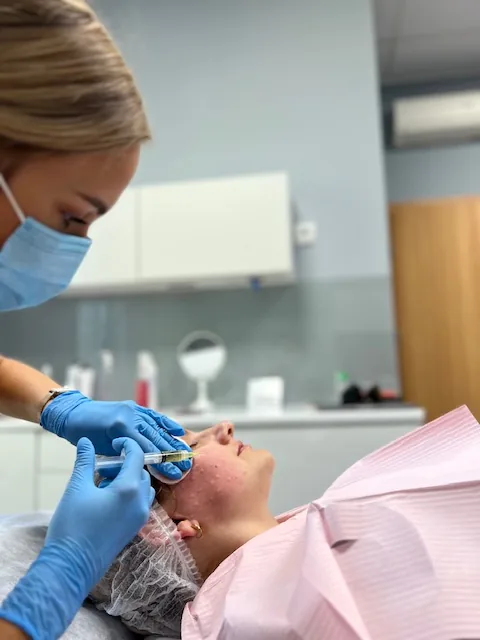
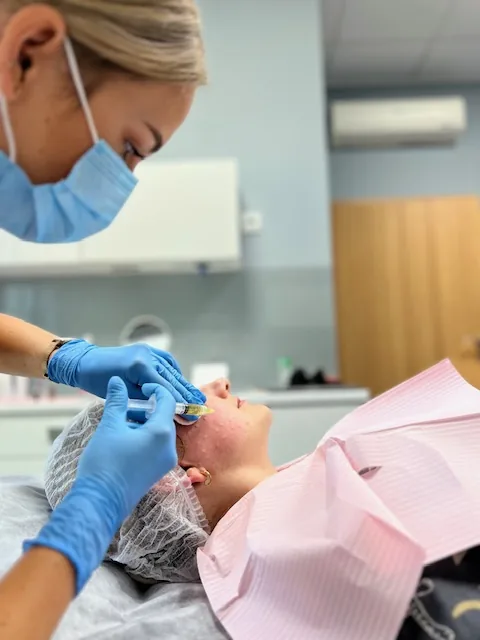
The treatment involves injecting small amounts of active substances directly into the dermis, with a fine needle. The preparation does not have to cross the barrier of the epidermis, so it reaches exactly where the fibroblasts responsible for collagen and elastin work.
The method is local and non-surgical, and has been carried out for over thirty years. The name comes from the Greek mesos, meaning middle, and refers to tissues derived from the mesoderm, one of the three germ layers.
A recording of the treatment
A recording from our treatment room, without editing to speed the work up.
What you can see in the recording
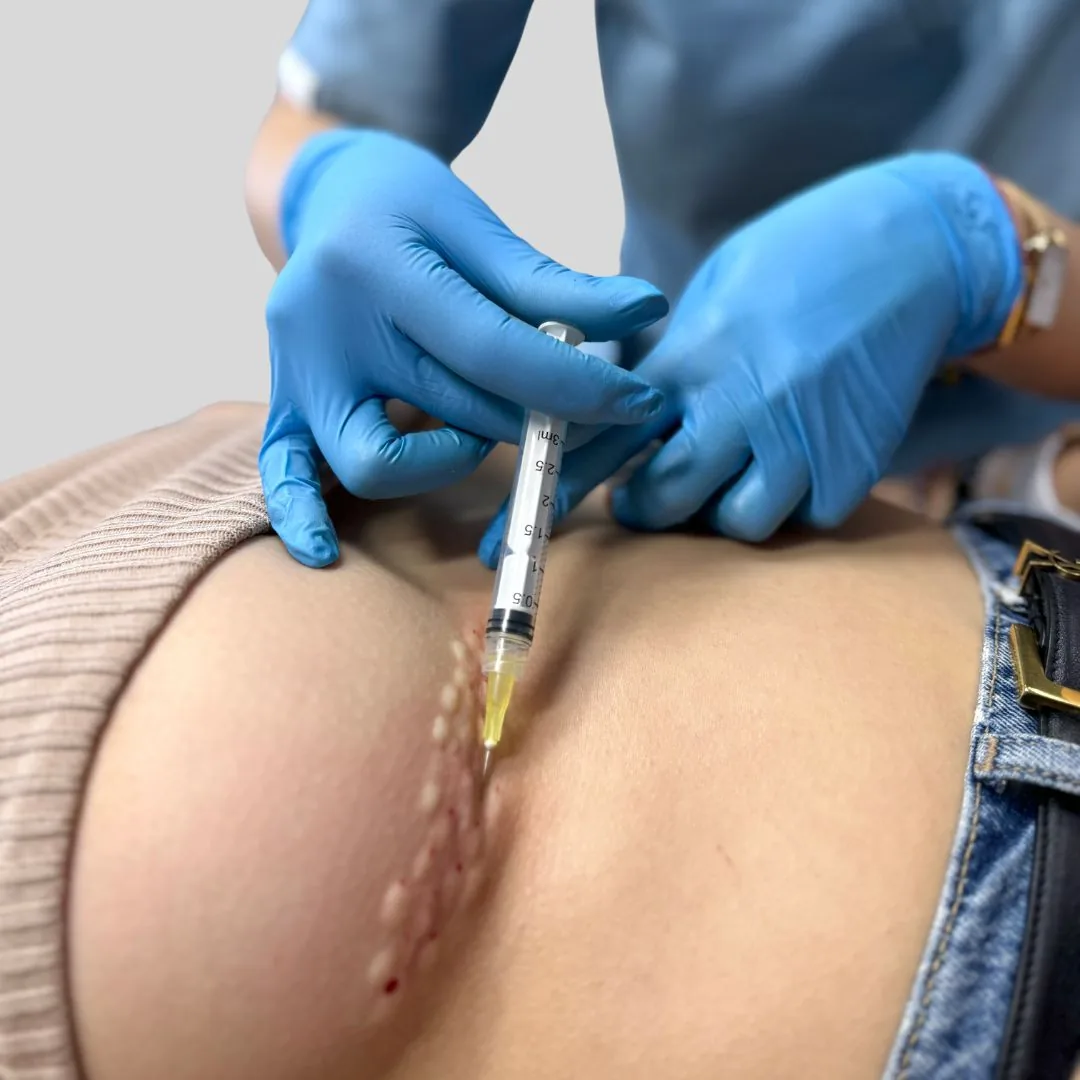
Papular technique
Injections point by point, at even intervals, to a depth of about 1 to 4 mm.
How the skin reacts
Redness appears at once and is an expected part of the treatment.
Papules at the injection points
Visible immediately after the injection, they usually disappear within a day.
The pace of work
The real time taken for one area, without speeding up the recording.
We do not publish before and after material. Without an identical frame, lighting and interval of time, such a comparison misleads.
The preparations and their role
The composition decides what the treatment actually does. The person carrying out the treatment chooses it after assessing the skin, and with tissue stimulators, a doctor does so during the consultation.
Hyaluronic acid
A substance occurring naturally in the body, whose amount in the skin falls with age. Injected as a gel it binds water, so it improves hydration and springiness. The preparations are of non-animal origin, which limits the risk of a reaction to foreign proteins.
Vitamin complexes and amino acids
Nourishing cocktails, aimed mainly at dehydrated, dull and tired skin. They support repair processes in the dermis.
Biomimetic peptides
Short chains of amino acids, chosen for a particular aim, for example supporting the firmness of the skin or the eye area.
Tissue stimulators
Preparations intended to prompt the rebuilding of the structure of the skin by stimulating fibroblasts. The group is wide, and the choice of preparation belongs to the aesthetic medicine doctor during the consultation.
Injection techniques
Papular technique
A series of punctures with a fine, short needle, point by point. After the treatment the skin is red, slightly swollen and covered with small papules, which are absorbed usually by the next day.
Nappage technique
Small but numerous punctures with steady pressure on the plunger, forming a dense grid on the skin. Used on larger surfaces.
Cannula
The rounded end does not pierce vessels, so it limits the risk of bruising. Used in selected, particular situations.
Indications
Needle mesotherapy is sometimes chosen when the aim is the quality of the skin, rather than a change in its volume or contour.
A loss of hydration and springiness
Dry and dull skin, with a visible network of dehydration lines.
Fine and medium static wrinkles
Lines present at rest, without a loss of volume yet.
Photoageing and uneven tone
Skin after years of exposure to the sun, needing support after the season.
Dark circles and laxity of the lower eyelids
Dedicated preparations of low viscosity, a delicate technique, usually more sessions.
Thin and lax skin
The aim: strengthening the collagen scaffolding and increasing the density of the dermis.
Skin after pregnancy and after illness
Improving the firmness and look of skin described as tired.
With scars and stretch marks, mesotherapy is sometimes one element of a combined therapy, usually with laser therapy, microneedling radiofrequency or peels. Deep folds and a loss of volume require other methods.
Treatment areas
Face
The quality, tone and hydration of the skin.
Eye area
Lower eyelids, reducing shadows, a delicate technique.
Lips and the surrounding area
Hydrating the skin, without changing the contour.
Neck and décolletage
The firmness of the skin and smoothing of fine wrinkles.
Hands
Thin and dry skin, smoothing of wrinkles.
Scalp
A separate protocol, once the cause of the hair loss has been established.
Preparing for the treatment
Good preparation reduces the risk of bruising and irritation. Below is a typical plan, which we adapt during the assessment.
7 to 10 days before
No sunbathing, sunbeds or intense exposure to the sun, with SPF 50 plus in summer. Put off aggressive procedures in the treatment area. Limiting anticoagulant and antiplatelet medicines only after consulting the doctor treating you.
3 to 5 days before
Stop retinoids, acids and irritating products, and use gentle cleansers. Do not plan treatments involving massage or pressure in the area of the injections. If you are prone to cold sores, ask about antiviral prevention.
The day before
No alcohol, no intense exercise. Hydrate and prepare a list of medicines, supplements and known allergies.
On the day of the treatment
Come with clean skin, without make-up or sunscreen on the treatment area. Eat a light meal and drink water.
Do not stop anticoagulant and antiplatelet medicines on your own. Any change is decided solely by the doctor treating you.
The visit step by step
The whole visit takes on average thirty to sixty minutes, the first one usually about forty-five.
After the treatment and how long it lasts
Immediately after the visit the skin can be red and slightly swollen, and small papules are visible where the preparation was injected; they usually disappear within a day. Bruising is possible, especially in delicate areas. For a few days give up the sauna, the swimming pool and intense exercise, and use SPF 50 plus sun protection whatever the season.
Full results are planned as a course of several sessions at intervals of two to four weeks, with maintenance treatments every few months. How long they last depends on age, the state of the skin, how often the treatments are carried out and the type of preparation, which is why we do not give a number of sessions before the assessment.
What decides the result
The same treatment name covers very different visits. Below are the variables set before the first session, which shift the outcome in different directions.
The composition of the preparation
Hyaluronic acid, a vitamin cocktail, peptides and a tissue stimulator do different things. That is the first and most important decision, because it decides whether the treatment works on hydration, on nourishment or on rebuilding the structure of the skin.
The depth and density of the deposits
The same 1 to 4 mm means one thing on the thin skin of the eyelids and another on the cheek. A denser grid of punctures is a stronger stimulus, but also a greater risk of bruising, so the balance is set to the skin, not to the price list.
The injection technique
The papular technique gives precise point deposits, nappage covers a larger surface with a shallower grid. The choice depends on the area and the aim, and sometimes both are used in one visit.
The number of sessions and the intervals
With three sessions the result can differ from six, and an interval shorter than two weeks does not give the skin time to respond. A whole course is usually two to four months.
Home care between sessions
The treatment delivers ingredients and a stimulus, while the skin barrier and hydration depend on what you do on the other days. Without that the result of a course lasts a shorter time.
Sun protection and lifestyle
Exposure to the sun, smoking, sleep and hydration affect how the skin responds to the stimulus. That is the part of the plan which cannot be carried out at the clinic.
The last two variables depend solely on the patient and are sometimes the difference between an average outcome and a good one. The rest cannot be set from a description on the internet or from an entry in a price list, because it follows from how a particular skin behaves.
Contraindications
The assessment covers a medical history and an examination of the skin. Below are the situations in which the treatment is not advisable or has to be put off.
Absolute
Relative, requiring a consultation or postponement
Cancer during treatment and the period after it has finished require an individual medical assessment. Doubts are settled by a doctor, who adapts the protocol to the state of health.
The questions we are asked most often
Is the consultation before the treatment paid for?
The consultation with a cosmetologist is free of charge and does not commit you to having the treatment. A consultation with an aesthetic medicine doctor is paid for in line with the price list. With chronic conditions, anticoagulant treatment and with tissue stimulators the assessment is carried out by a doctor.
Is it a good treatment before an important occasion?
Yes, but plan it in advance. Small marks from the injections and any bruising can last up to a few days, which is why before a big event we carry out the treatment 7 to 14 days beforehand.
Will I have bruises and how can they be limited?
The risk exists, because we work intradermally. Cooling after the treatment and avoiding alcohol and intense exercise reduce it. In delicate areas we use shallower deposits, and in selected situations a cannula.
I have sensitive, couperose skin; is mesotherapy for me?
Often yes, but the choice of preparation and technique has to be careful: soft formulas, shallower deposits, cooling. The person carrying out the treatment decides after assessing the skin. Sometimes it is better to deal with the thread veins first.
Can the treatment be carried out around the eyes?
Yes, with dedicated preparations of low viscosity and a delicate technique. This area usually needs more sessions than the cheeks or forehead. With clear excess skin or fat herniation, mesotherapy is not the right method.
I have acne with inflammatory lesions; what then?
Active pustular lesions in the treatment area are a local contraindication. First we calm the inflammation, then we come back to mesotherapy as support for the skin.
When can I go back to training?
For the first few days give up intense exercise, the sauna and the swimming pool, because the risk of swelling and bruising rises. You usually go back to light activity after one to two days, once the skin has settled.
How does needle mesotherapy differ from microneedle mesotherapy?
The needle method injects the preparation intradermally, point by point, with control over the composition and the depth. The microneedle method works above all through a mechanical stimulus: micropunctures start healing, and the preparation enters through the channels created. These are different techniques, also used alternately.
Can I combine mesotherapy with other treatments on the same day?
Sometimes yes, but we usually recommend separate visits and keeping intervals. The order depends on the indication and the area, and the person carrying out the treatment sets the schedule during the consultation.
Summer or winter, when should a course be planned?
It can be done all year round; in summer SPF 50 plus sun protection is essential. If you are planning a holiday in full sun, have the treatment at least a week before you leave.
Before you decide
Consultation with a cosmetologist
The cosmetologist assesses the skin, chooses the preparation and says how many sessions make sense in your case. The conversation does not commit you to having the treatment. A consultation with an aesthetic medicine doctor is paid for in line with the price list, and with chronic conditions, anticoagulant treatment or changes requiring diagnosis we refer you to a doctor.
This material is for information and does not replace a consultation or an assessment of suitability for the treatment.