
On this page
How scars form
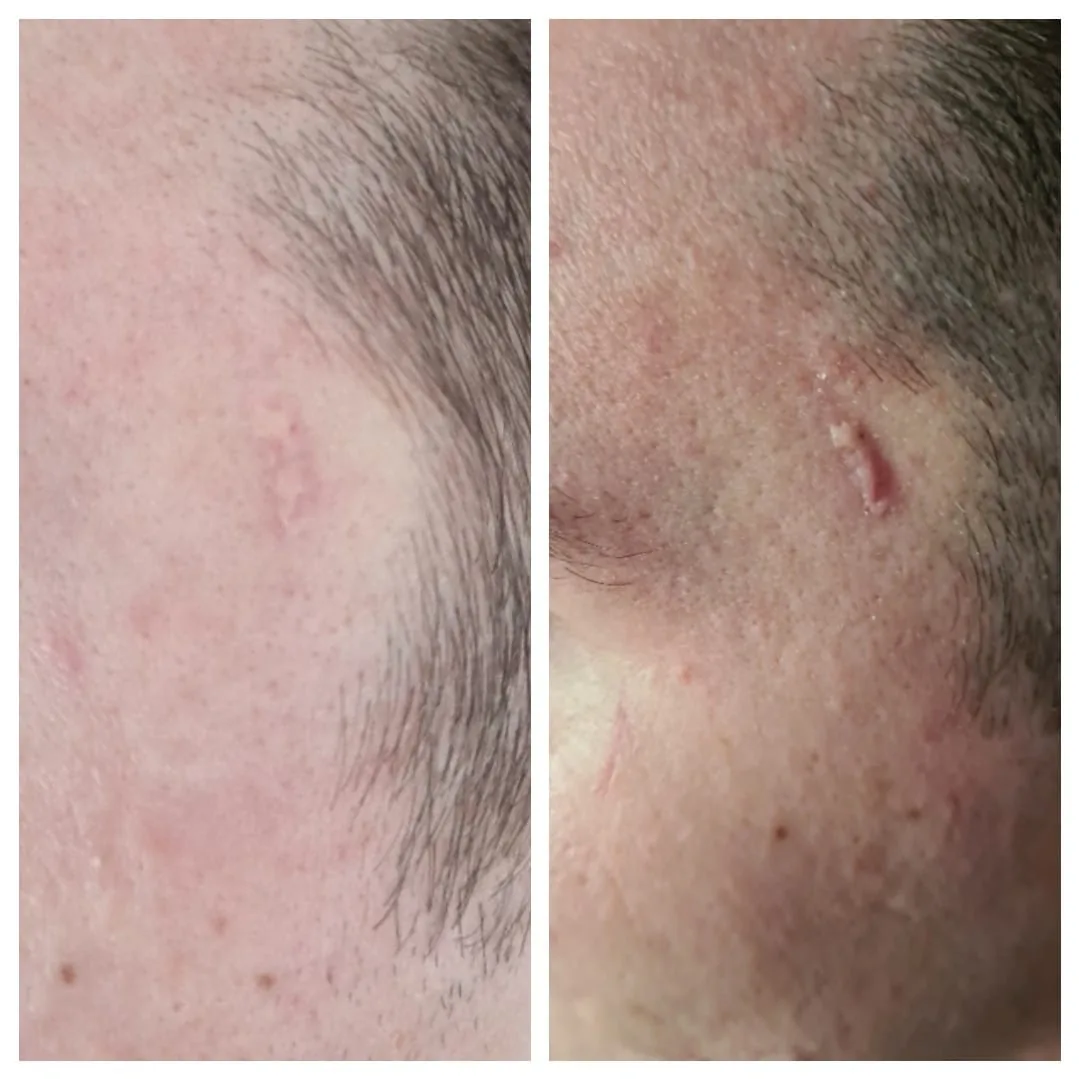
A scar is the final stage of wound healing and the result of the body's complex response to damage. The process takes place in several phases: inflammatory, proliferative and tissue remodelling. The final appearance of the scar depends on how these phases proceed, as well as on the cause of the damage and the characteristics of the skin.
The variety of causes translates into a variety of scars, and it is this variety that determines the choice of approach.
Where they come from
The most common causes of scars in clinical practice:
Physical injuries
Damage ranging from minor cuts to extensive wounds resulting from accidents. It initiates the healing process that ends in scar formation.
Surgical procedures
Surgical interventions carry a risk of postoperative scars. The appearance of the scar depends on the technique used, the location of the incision and individual healing predisposition.
Acne
In severe forms, inflammatory processes can lead to permanent scarring, most often in the form of depressions or raised areas.
Burns
Thermal and chemical burns can leave scars. Their degree and character depend on the depth and extent of the damage.
Skin conditions
Some conditions, such as chickenpox or shingles, can leave scarring once healed.
Stretch marks
They are not scars in the classic sense, but they share a similar aetiopathogenesis and similar treatment approaches.
A separate group consists of scars after surgical procedures, including abdominal surgery, laparoscopic procedures, after a caesarean section and other plastic surgery procedures.
Types of scars
Scars are classified according to their structure and mechanism of formation. This classification has practical significance, because each type requires different therapy, selected after an assessment of the skin's condition.
Atrophic scars
They are characterised by tissue loss and the formation of depressions on the skin's surface. They are often a consequence of inflammatory processes such as acne or chickenpox.
Raised scars (hypertrophic)
They form from excessive production of scar tissue that does not extend beyond the boundaries of the original wound. They can be raised and clearly visible.
Keloids (keloid scars)
They extend beyond the original boundaries of the wound and tend to recur, which makes them more difficult to treat. They require particular caution and management under medical supervision.
Scars of inflammatory origin
This group includes post-acne scars, which form after severe forms of acne. They present as depressions or raised areas and vary considerably.
Stretch marks are not technically scars, but they share a similar aetiopathogenesis: they form from micro-damage caused by excessive stretching of the skin, which leads to the tearing of collagen and elastin fibres. Stretch marks are covered on a separate page.
Are different scars treated the same way
No. Different types of scars require different methods, matched to their characteristics: depth, structure, location and individual skin characteristics. The right choice of therapy determines the result and helps limit the risk of adverse reactions.
Atrophic scars
Filling techniques are considered, for example with hyaluronic acid, along with microneedling, fractional laser treatment and chemical peels. The aim is to stimulate collagen production and improve skin texture.
Hypertrophic scars
Corticosteroid injections are sometimes used to reduce inflammation and tissue overproduction, along with laser therapy and silicone dressings and gels that support smoothing and softening of the scar.
Keloids
Because of their tendency to recur, they are particularly difficult to treat. Treatment is carried out with great caution and under medical supervision, and some methods fall outside the scope of aesthetic medicine.
Stretch marks
Microneedling, laser therapy and medical peels are considered, supporting collagen production and skin elasticity.
At NL Clinic, we use methods selected individually to the type and maturity of the lesion, including microneedling, fractional RF, fractional laser treatment, chemical peels and mesotherapy. Their aim is to support skin regeneration and improve its structure and appearance, not to remove the scar completely.
Why timing matters
Not every scar needs treatment. However, neglecting a scar that requires attention can lead to the change becoming permanent, and with some scars, also to functional consequences: reduced mobility, fibrosis and discomfort.
Burn scars can be extensive and may affect not only appearance but also the range of movement in the area concerned. Hypertrophic scars left untreated can retain their raised shape permanently. Scars after surgical procedures, including caesarean sections, left without therapy can become permanent and clearly visible.
An early, planned assessment makes it possible to match treatment to the stage of healing. Action started sufficiently early can reduce the cost of therapy and improve its final result.
Treatments that are sometimes considered
Below are the directions only. A description of the course of treatment, preparation, possible reactions afterwards and prices can be found on the pages for each method. The choice is made after an assessment of the scar at a consultation.
Eligibility and limitations
The choice of method depends on the type of scar, its maturity, location, skin type and the patient's expectations. Treating scars is a process that requires time and regularity, and many methods are carried out in a series. Keloids and scars with features requiring diagnosis require particular caution and a medical assessment before any treatment.
We do not give the number of sessions or the degree of improvement before qualification, and for some people the improvement is limited. We discuss the range of possible reactions after the treatment for the specific method, together with aftercare recommendations.
Editorial responsibility
Responsible for the content
NL Clinic, Katowice
How the content is created
Last updated
15 August 2026
This material is for information purposes only and does not replace a medical consultation or qualification.
Frequently asked questions
Does every scar need treatment?
Not every one. A scar is not a disease, and treatment is most often carried out for aesthetic reasons. With some scars, for example after burns, functional factors also matter, such as reduced mobility or discomfort. Whether treatment is needed is decided by an assessment at the consultation.
Will a scar disappear completely?
A scar cannot be removed without a trace. The aim of treatment is to reduce its visibility and improve the structure and elasticity of the skin, not complete removal. The extent of possible improvement depends on the type and maturity of the scar and on the features of the skin.
What is the difference between a hypertrophic scar and a keloid?
A hypertrophic scar forms from an excess of scar tissue but stays within the boundaries of the original wound. A keloid extends beyond these boundaries and tends to recur, so it requires particular caution and treatment under medical supervision.
Are stretch marks scars?
Technically not, but they have a similar aetiopathogenesis. They form as a result of micro damage from excessive stretching of the skin, which leads to tearing of collagen and elastin fibres, and similar treatment methods are used for them as for scars.
When to start treatment for a post-surgical scar?
After the wound has fully healed, and the exact timing is set by the doctor, because the pace of healing is individual. A caesarean section scar has a separate page describing the right time.
The content is for information. It does not replace a consultation, an examination or an individual medical assessment.