
Technologies and equipment
The renaissance of IPL, what intense pulsed light can do
IPL does not penetrate tissue as deeply as a laser. This is both an advantage and a limitation of the technology, and it is where the conversation about when it is worth using begins.
Published 24 December 2024. Last verified 16 August 2026.
Category
Technologies and equipment
Full description of the technology
Author
NL Clinic team
Where IPL came from
IPL technology, or Intense Pulsed Light, is currently going through a clear comeback in clinical practice. Since its invention in 1991 by Shimon Eckhouse, an Israeli scientist, it has undergone significant evolution and become one of the more versatile tools in aesthetic medicine and cosmetology.
The first device was designed with vascular lesions and pigmentation in mind, offering an alternative to more invasive methods. The capabilities of this first generation were limited. Over the following decades IPL gained new functions, and today it is used in applications as varied as photorejuvenation, redness reduction, supporting acne therapy and hair reduction.
Why IPL is making a comeback
Modern IPL systems are far more advanced than their original versions. More precise band selection, control over pulse intensity and skin cooling have improved the effectiveness and safety of the treatment. The devices allow parameters to be adjusted to the phototype and the type of lesion.
IPL does not penetrate tissue as deeply as a laser. This is both an advantage and a drawback. In the hands of an experienced practitioner, however, it can be a valuable tool for working with pigmentation and redness, as well as a complement to laser, microneedling or RF treatments.
What IPL is and how it works
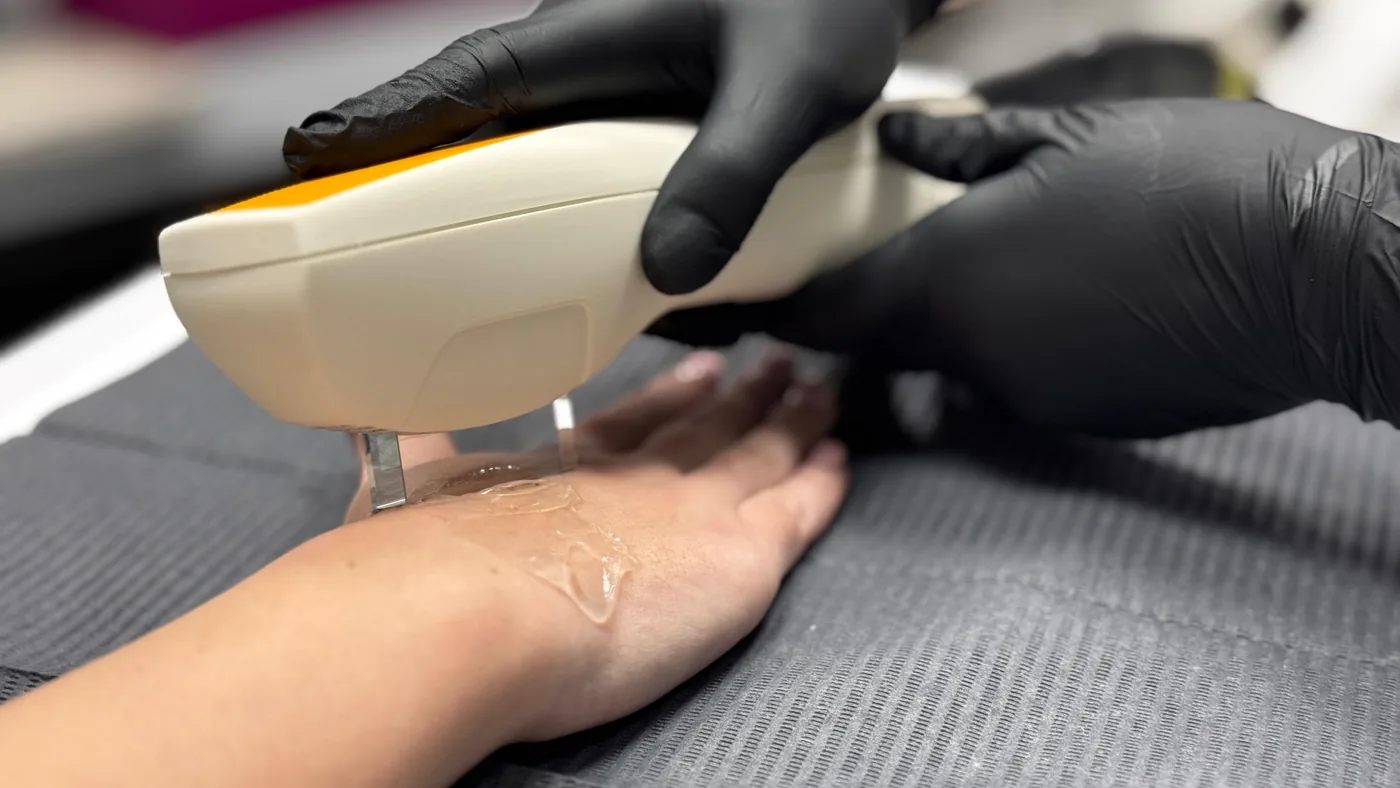
Intense pulsed light is a technology that uses a beam of polychromatic light with a broad spectrum of wavelengths. Unlike a laser, which emits light of a single wavelength, IPL acts on several structures at once, which makes it more versatile.
The mechanism is based on selective photothermolysis. Light energy is absorbed by specific chromophores in the skin, including melanin, haemoglobin and water, and is then converted into heat, which modifies selected structures while limiting the effect on the surrounding tissue.
Three chromophores, three targets
What a given treatment affects depends on which chromophore absorbs the energy:
- haemoglobin contained in dilated vessels: working on redness, telangiectasia and the redness that accompanies rosacea,
- melanin: working on pigmentation and evening out skin tone,
- water in the deeper layers of the skin: heating the tissue stimulates fibroblasts, the cells responsible for producing collagen and elastin, which is used in photorejuvenation.
Specific bands are selected using the filters and applicators of a given platform. We describe the ranges we work with on the technology page: IPL, broadband light. We give the list of bands there according to the platform manufacturer's specification.
The greatest advantage of IPL is the ability to select the band to match the aim of the treatment, even within a single session. This does not mean that several indications are always combined at once. The practitioner sets the scope after assessing the skin.
Indications for IPL treatments
Light treatments may be considered for people who want to:
- reduce pigmentation, whether sun-induced, hormonal or post-inflammatory,
- improve the elasticity and texture of the skin,
- reduce the visibility of vessels and redness,
- support treatment for acne lesions and rosacea,
- work on the condition of the skin using a non-invasive method.
IPL is also combined with other treatments: erbium glass laser, thulium laser or mesotherapy.
Treatment options
Pigmentation
Excess melanin leads to the formation of darker patches with various underlying causes. Solar pigmentation, or lentigo solaris, results from long-term UV exposure in areas exposed to the sun: the face, hands and neckline. Melasma is hormone-dependent pigmentation, more common in pregnant women and those using hormonal contraception. Post-inflammatory pigmentation can follow acne, skin injuries or treatments.
Light absorbed by melanin turns into heat, which breaks down the excess pigment. The aim of a course of treatments is to even out skin tone and reduce the visibility of the lesions, not to guarantee they disappear completely. Melasma calls for particular caution here, as it tends to recur.
Redness and vascular lesions
Episodic and persistent erythema, telangiectasia and blotchiness are a common problem, especially for people with fair skin. Light absorbed by haemoglobin causes the thermal closure of vessels, which are absorbed by the body over time. Redness and the visibility of vessels are reduced.
Photorejuvenation
IPL photorejuvenation is sometimes combined with an erbium glass laser and a thulium laser. Treatment is aimed at evening out skin tone, improving elasticity through collagen and elastin stimulation, softening fine lines and reducing the visibility of pores.
Acne lesions
Light acts on Propionibacterium acnes bacteria, now classified as Cutibacterium acnes, which are involved in the inflammation seen in acne. The described effect includes reducing bacterial numbers and decreasing sebum production. In practice IPL is a supporting treatment here: it reduces redness around the lesions and supports healing, but it does not replace dermatological treatment where this is indicated.
Rosacea
Rosacea is a chronic skin condition that presents with redness, visible vessels and inflammatory papules. Light treatment can be one part of management: it reduces redness, constricts the vessels and eases inflammation. The condition remains chronic, though, so we are talking about easing symptoms, not a cure.
Narrow band and broad band
Two approaches have developed in IPL technology. The first narrows the beam with filters, making IPL light resemble laser light. The second focuses on delivering more energy across a broad spectrum. It is worth distinguishing between them, as they differ not only in technique but also in their underlying philosophy.
In narrowband technology, described as Selective Wavelength Technology, advanced filters narrow the light to a selected range, allowing selective action on melanin or haemoglobin. A feature of this approach is aiming for the effect at the lowest possible fluence, meaning the amount of energy per unit of skin surface area. Unnecessary heating of water in the skin is also limited, which reduces the risk of tissue overheating and swelling after the treatment. The device lamp emits broadband light, but only the band restricted by the filters reaches the skin.
Broadband technology uses a fuller spectrum without such precise narrowing. It allows more energy to be delivered and acts on several chromophores at once, so it is sometimes described as more versatile. This does, however, involve more intense heating of water in the skin, which on one hand supports collagen stimulation and on the other raises the risk of tissue overheating, swelling and discomfort. That is why devices described as broadband also use filters that narrow the band.
Feature
A narrowed band
A broad band
Wavelength range
Narrowed by filters to the treatment target
Wide, covering multiple wavelengths
Energy delivery
Lowest possible fluence while maintaining the effect
Higher amount of energy, more intense action
Effect on water
Limited to the necessary range
Greater, with a risk of tissue heating
Precision
High, targeted at a specific chromophore
Action on several problems at once
Swelling after the treatment
Limited by low fluence, dependent on intensity
Possible, especially with intensive treatments
Use
Vascular changes, pigmentation, skin quality
Multi purpose treatments, photorejuvenation, acne
Both approaches aim for patient safety, but place the emphasis differently. The narrow band focuses on precision and low fluence, the broad band on versatility, requiring greater care in selecting parameters.
The questions we are asked most often
What is IPL technology and how does it differ from a laser
IPL uses intense pulsed light with multiple wavelengths, absorbed by chromophores in the skin, such as melanin or haemoglobin. A laser emits light of a single wavelength, so IPL works across multiple spectra, with the parameters selected using filters.
Where pigmentation and dilated vessels occur together, a single protocol can address both issues.
Are IPL treatments painful and do they require anaesthesia
The treatments usually cause a sensation similar to an elastic band snapping against the skin. Modern devices have cooling systems that increase comfort. Anaesthesia is not usually necessary, although a numbing cream can be used for a low pain threshold.
During a treatment for pigmentation, a brief, localised warmth may be felt.
Which skin problems can be treated with IPL
IPL is used to reduce pigmentation, including solar lentigo and melasma, vascular changes such as redness and telangiectasia, to improve skin texture and firmness as part of photorejuvenation, and as a supportive element in the treatment of acne and rosacea.
A patient with spider veins and pigmentation at the same time can be managed with a single protocol.
How many IPL treatments are usually needed
A series of 3 to 5 treatments is usually planned, spaced around 3 to 4 weeks apart. The effects appear gradually during subsequent sessions and after they are completed, and the number of treatments is determined after a skin assessment.
For pigmentation, the first changes are sometimes visible after one or two treatments, while improving texture usually requires the full series.
Are there any contraindications to IPL treatments
Contraindications include, among others, active infections at the treatment site, recent tanning, the use of photosensitising medication, pregnancy and a tendency to keloid scarring.
After intensive sun tanning, the specialist may recommend waiting a few weeks.
How to prepare for an IPL treatment
Intensive sun exposure should be avoided for 4 weeks before the treatment, self tanning products should not be used, and the specialist should be informed about any photosensitising medication. Some practices also recommend stopping chemical peels and retinoids a few days before the treatment.
Before IPL hair removal, hair should not be removed with wax or tweezers, so that melanin remains in the hair.
What skin care looks like after an IPL treatment
The skin may be slightly reddened and warm. Gentle cosmetics are used, sun exposure is avoided and creams with SPF 30 to 50 are used. Intensive exercise, the sauna and the swimming pool are not recommended for a few days after the treatment.
After a treatment for pigmentation, darker spots may appear, which flake off after a few days. This is a typical course.
Are IPL treatments safe for every skin type
IPL is usually used on lighter phototypes. For darker skin tones, the parameters require particularly careful selection to limit the risk of pigmentation.
With darker skin, lower energies or a different technology are considered.
Can IPL treatments be combined with other procedures
Yes, IPL can be combined with fractional lasers, chemical peels or micro-needling radiofrequency. Combined therapies allow different layers of the skin to be treated, but they require planning the order and intervals.
Combining IPL with a fractional laser addresses pigmentation and skin quality in one plan.
When effects are visible and how long they last
Effects appear gradually, usually after a few weeks, as the skin regenerates. Durability depends on sun protection, skincare and avoiding irritants. To maintain the effect, maintenance treatments are recommended once or twice a year.
Without consistent photoprotection, pigmentation returns, regardless of the technology used.
About this text
This text was prepared by the NL Clinic team. Published 24 December 2024, verified 16 August 2026.
The content is for information and does not replace a consultation.
Consultation before a light treatment
Before the treatment we assess skin phototype, current skin tone, the type of lesion and any medication taken. Only then do we select the wavelength band and parameters.