Patient guide
Facial redness, when flushing is more than a blush
Everyone blushes from time to time: from embarrassment, from emotion, after exertion. The situation is different when the redness does not fade, persists for hours or is constantly visible.
Published on 8 April 2025. Last verified on 16 August 2026.
Persistent or paroxysmally recurring facial redness is not only a matter of appearance. It can be a source of discomfort, limit freedom in everyday situations and affect how a patient feels without make-up, in the sun or after leaving a sauna.
Where does redness come from
It most often results from overreactive blood vessels. It can be paroxysmal, meaning it appears suddenly under the influence of emotion, heat, alcohol or stress, or persistent, meaning it is visible all the time, particularly around the cheeks, nose and chin.
Over time it may be accompanied by a burning sensation, skin tightness and small telangiectasias, commonly known as spider veins. This does not automatically mean rosacea, although people with redness may be predisposed to it.
Why it can be bothersome
Redness is visible. Even with well cared for skin, a red facial tone draws more attention than individual imperfections. The problem intensifies in winter and summer, when the skin reacts to temperature differences, sun and wind. Illuminating or warming cosmetics usually make the situation worse.
Working with light, IPL and SWT
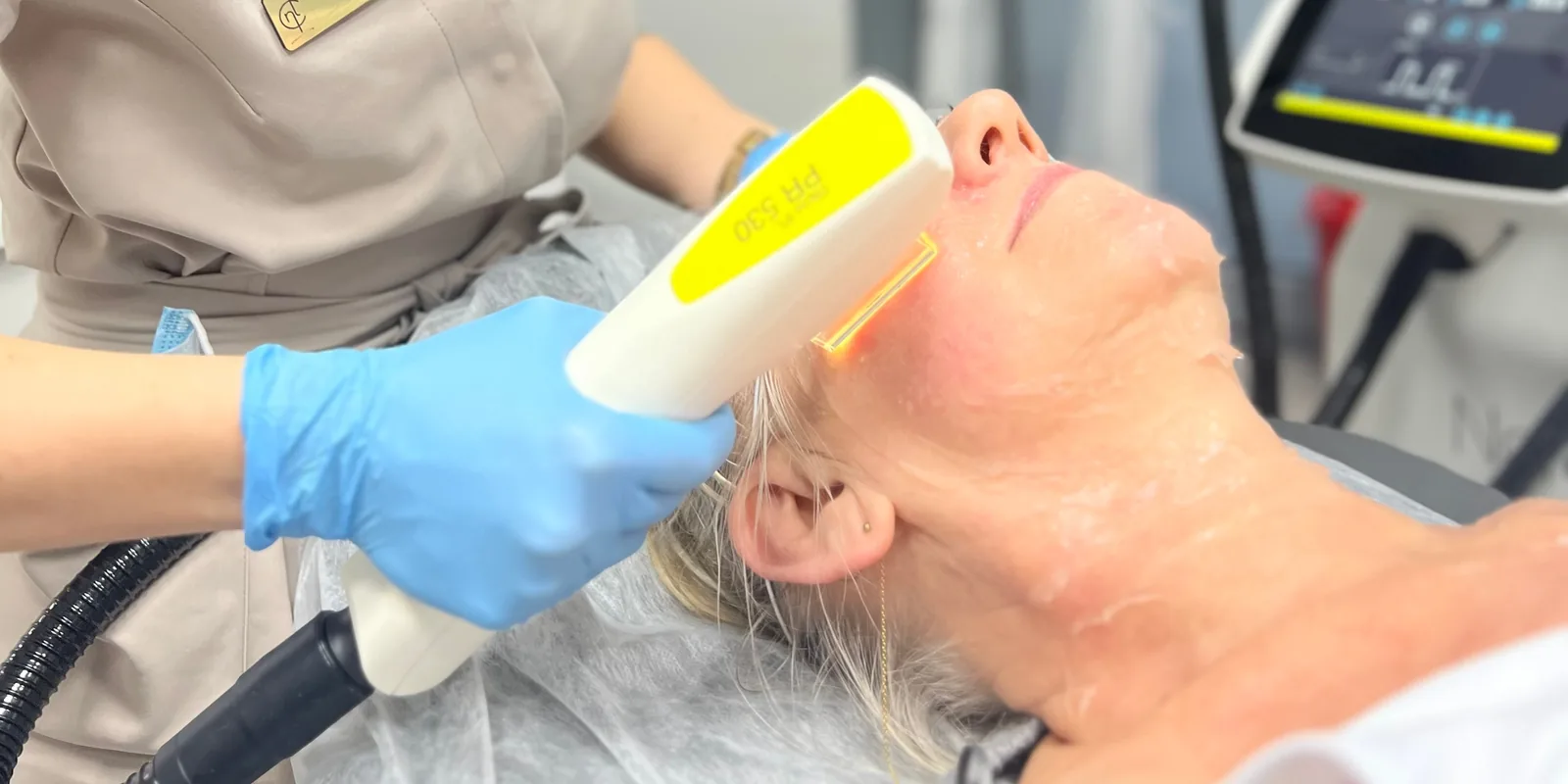
In the reduction of vascular lesions, IPL therapy is used, meaning Intense Pulsed Light, or more precisely SWT technology, Selective Waveband Technology, which uses broadband and narrowband light. In the practice we work with a system that allows the treatment to be carried out selectively, with the waveband matched to the type of lesion.
Thanks to double filtering, the system cuts off wavelengths that would be absorbed by water. This limits tissue overheating and swelling after the treatment, which does not mean that a post-treatment reaction does not occur at all.
How light works on blood vessels
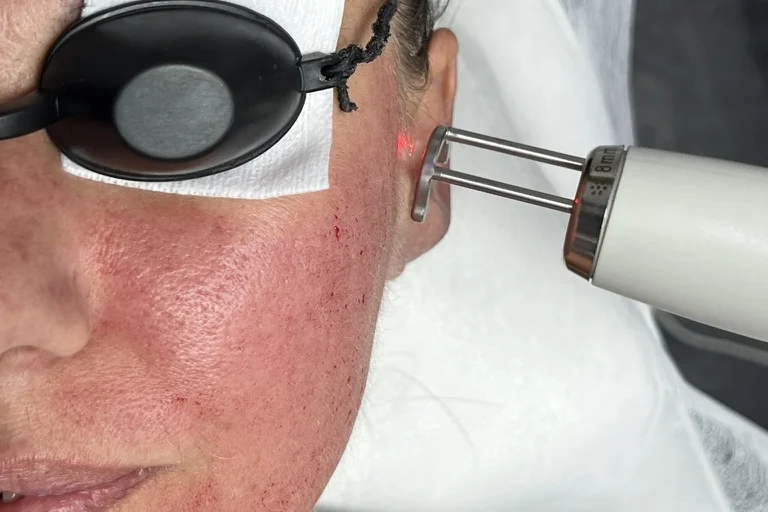
Light energy penetrates the skin and reaches the haemoglobin contained in the dilated vessels. There it is converted into heat, which leads to the closure of small vessels. Narrowband light acts selectively, so it limits the effect on skin not affected by the lesions.
The aim of the series is to reduce redness and the number of visible vessels, and to even out skin tone. The first changes can be visible after the first session, but a series of 3 to 5 treatments is usually planned, and the number is determined after an assessment of the skin.
When this is not a cosmetic issue
Persistent redness requires assessment before the treatment. Redness does not automatically mean rosacea, but some diagnoses in this area require medical rather than cosmetological management.
Working with light is not suitable for everyone. Contraindications include, among others, very dark skin tone, a tan, pregnancy, certain skin conditions and photosensitising medications.
What you feel during the treatment
Patients most often describe the sensation as a gentle rubber band snap or a feeling of warmth. The skin may be slightly pink for a few hours after the treatment, sometimes for a day, similar to after mild sun exposure. After each session it is important to avoid the sun and use high SPF protection for a few weeks.
For which type of redness the therapy may be considered
- persistent redness, meaning constant redness of the cheeks and nose,
- paroxysmal redness, meaning sudden redness in certain situations,
- mild vascular lesions, telangiectasias,
- skin prone to overreactivity.
Qualification is decided by skin assessment, phototype, current skin tone and medical history, including medications taken.
When to plan sessions
Treatments are best carried out outside periods of intense sun exposure: in autumn, winter or early spring. If redness makes everyday functioning difficult, it is worth starting with an assessment rather than the choice of device. Management is determined after a consultation, and its aim is to reduce the changes, not to promise their complete removal.
About this text
Text prepared by the NL Clinic team. Published 8 April 2025, verified 16 August 2026.
The content is for information and does not replace a consultation.
Assessment of skin with erythema
During the consultation, we assess the type of erythema, the condition of the vessels and any contraindications, and then determine whether light-based treatment or another approach is appropriate.