
On this page
How RF microneedling works
The method combines two stimuli. The first is mechanical: the microneedles break the continuity of the skin and trigger healing. The second is thermal: a radio wave flows through the needle electrodes, warming the dermis at the chosen depth.
Because the energy is delivered directly into the tissue rather than through the epidermis, it is possible to work deeper than with many lasers, with less strain on the surface layer. The result is activation of fibroblasts, increased production of collagen and elastin, and tissue remodelling, including within scars.
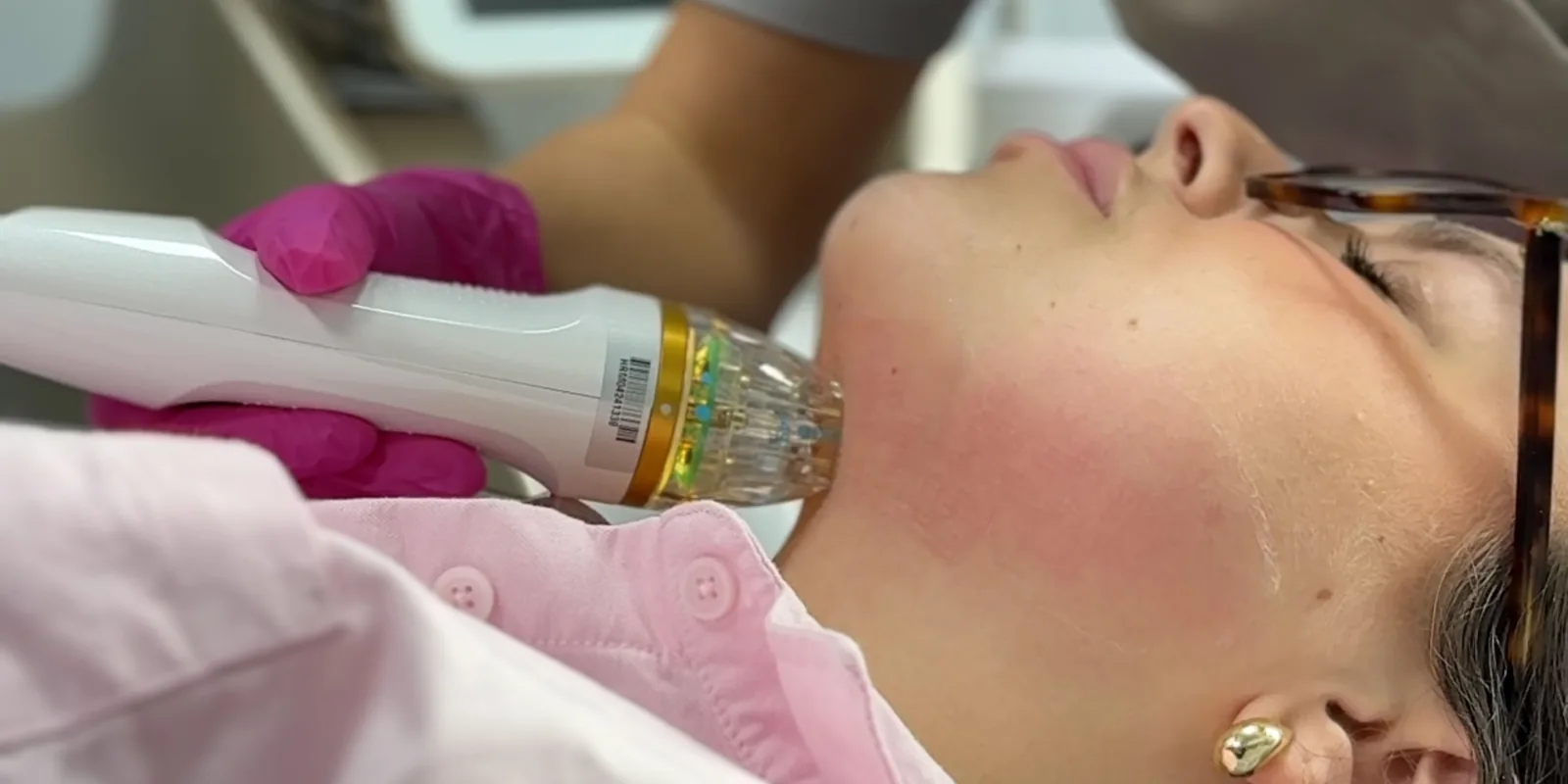
The treatment on video
We do not publish before and after material, because without an identical frame, lighting and time interval such a comparison is misleading.
Insulated or non-insulated needles
This is one of the more important decisions when planning the treatment, because it changes both the scope of action and the safety profile.
Insulated needles
The radio wave is emitted only from the exposed part of the electrode, so heat concentrates in the deeper layers of the skin.
Most often recommended. They work well for laxity requiring strong collagen stimulation, and for deeper wrinkles, scars and stretch marks with a clearly defined area.
Lower risk of overheating the epidermis, erythema and pigmentation, also for people concerned about longer healing.
Non-insulated needles
The energy acts along the whole length of the insertion, so heat affects the surface and deeper layers at the same time.
Considered when remodelling is needed at several levels at once, for example with extensive stretch marks and numerous, scattered lesions.
Higher risk of irritation and complications within the epidermis. They require more careful selection of power and pulse time, especially for delicate skin.
Phototype also matters. In people with darker skin tones the risk of post-inflammatory pigmentation is higher, which is why we more often choose insulated needles and more cautious parameters.
Frequency and depth of action
The frequency of the radio wave determines how deep the energy reaches. In simple terms, it looks like this:
The device we work with operates in the 2 MHz range. This allows us to work within the dermis and effectively stimulate fibroblasts, while limiting overheating of the skin surface. It also reduces the risk of unintended reduction of fatty tissue, which accompanies deep thermal treatments, especially around the face.
Indications, or what it helps with
We carry out the treatment on the face, neck, decolletage and hands, as well as on body areas requiring skin remodelling. It may be carried out on its own or as combined therapy, for example with chemical peels or lasers, with the intervals maintained.
The treatment step by step
The procedure itself takes 30 to 60 minutes, and the whole visit including numbing takes 60 to 90 minutes, depending on the area.
The results and when they are visible
The first changes can be noticeable after a few days, but this is not yet the treatment result. A fuller picture appears after four to six weeks, when regeneration and collagen synthesis reach their peak, and the effects continue to build over the following months.
How long the result lasts depends on age, skin condition, lifestyle and home care. The skin continues to age, so the result needs maintaining, and with advanced skin laxity the improvement can be limited, in which case we say so directly instead of planning further sessions.
Recommendations after the treatment
Sun
Avoiding sun exposure for at least two weeks and using SPF 50. This is a condition, not a suggestion, because the skin is prone to pigmentation after the treatment.
Aftercare
Soothing and regenerating preparations, for example with panthenol. Active ingredients return once agreed with the person conducting the treatment.
Sauna, swimming pool, exercise
Give these a rest for a few days. Sweat, high temperature and chlorine increase the risk of irritation and infection.
Expected reactions
Redness that usually subsides within one to two days, minor swelling and tiny scabs, a feeling of warmth and skin tightness.
Reactions such as redness, swelling, tiny scabs and mild flaking are expected and usually subside within a few days.
Contraindications and side effects
A tendency to keloid scarring and pigmentation requires a separate conversation, as it changes the choice of needles and parameters. Filler previously administered in the treatment area requires consultation with a doctor.
RF microneedling or fractional laser
Both methods cause controlled micro-injuries, but through a different carrier. Microneedling RF delivers energy through needles, while fractional laser uses light absorbed by water in the tissues.
The practical differences: radiofrequency reaches deeper than many lasers and does not extensively damage the outer layers of the skin, so recovery can be shorter. Laser remains stronger for working on the surface, texture and some scars. The choice depends on skin condition, expectations and contraindications, which is why it is settled at the consultation, not at booking.
The questions we are asked most often
Does RF microneedling hurt?
Numbing cream is necessary here, not optional. Even with it, intense heat, stinging and tingling can be felt, and when working on deeper layers the treatment can be unpleasant. This is a very individual matter, and you can ask for a break during the treatment.
How many sessions are needed?
Usually three to five treatments at intervals of four to six weeks. The interval follows the pace of healing and remodelling, and the exact number is determined by the person conducting the treatment after assessing the skin.
When will I see results?
The first changes can be visible after a few days, but a fuller picture appears after four to six weeks, when collagen synthesis reaches its peak. The result continues to build over the following months.
How long does the result last?
This depends on age, the skin's starting condition, lifestyle and care. The skin continues to age, so the effect is not permanent and needs maintaining. We do not state a number of months in advance, as that would be a promise without substance.
How should I prepare for the treatment?
For at least seven days, avoid sunbathing and self-tanning products. Stop chemical and mechanical peels a week before the visit. Report any medication you are taking, previous treatments in this area and a tendency to cold sores.
What are the possible side effects?
Most often redness that subsides within one to two days, minor swelling and tiny scabs that disappear within a few days, and a feeling of warmth and tightness. Less often irritation and post-inflammatory pigmentation, more common with non-insulated needles and darker skin phototypes.
Will the treatment damage my skin?
This question comes up often, and the answer is: no, if the parameters and needle type are matched to the skin and the aftercare recommendations are followed. The risk increases with overly aggressive settings, working on a fresh tan and a lack of sun protection.
How does it differ from fractional laser?
In the energy carrier. RF delivers it through needles straight into the dermis, laser through light absorbed by water in the tissues. Radiofrequency reaches deeper than many lasers and puts less strain on the surface layer, laser can be stronger for working on texture. The choice depends on the skin and the goal.
Can it be combined with other treatments?
Yes, but not on the same day. Microneedling RF can be part of combined therapy with chemical peels or lasers, with intervals maintained between them. The order is set by the person conducting the treatment, because two strong stimuli in a short time mean double the risk, not double the effect.
Which areas can it be performed on?
The face, neck, décolletage and hands, as well as areas of the body requiring skin remodelling, including the abdomen, thighs and buttocks. The working parameters differ for each area.
Before you decide
Consultation with a cosmetologist
For this treatment, the consultation is not a formality. We determine the needle type, depth and power, check the skin phototype and go through the list of contraindications, because some of them, such as metal implants in the treatment area or autoimmune diseases, rule it out regardless of skin condition. The conversation does not commit you to having the treatment.
This material is for information and does not replace a consultation or an assessment of suitability for the treatment.