
Cosmetology
Acids in summer, which can be used and how safely
In summer the skin is more exposed to UV radiation, and any exfoliation increases its sensitivity. This does not mean, however, that acids have to be stopped for four months. What matters is choosing the right product and being consistent with sun protection.
Published on 15 July 2024. Last reviewed on 26 September 2026.
Why summer changes the rules
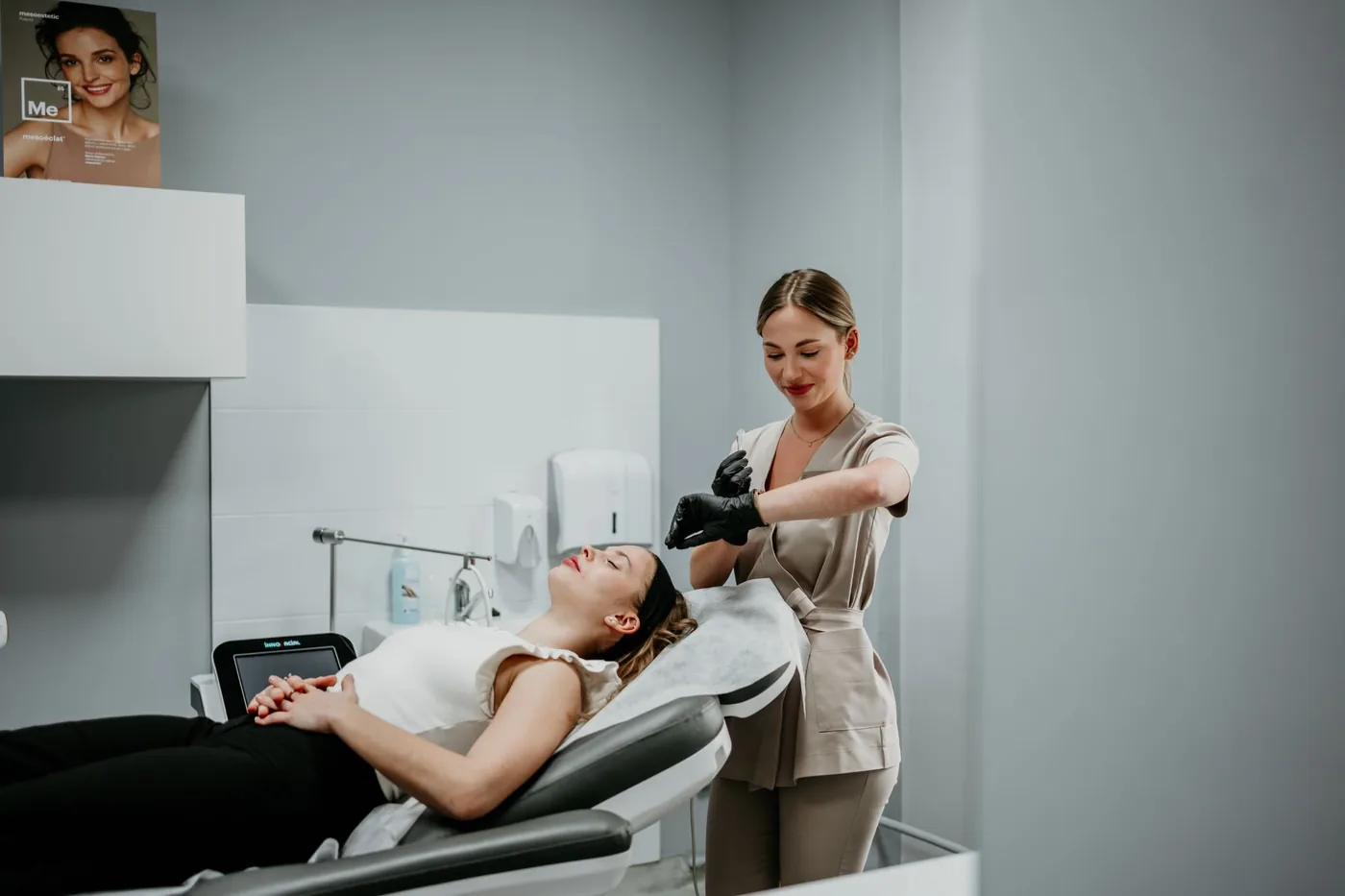
Acids exfoliate the top layer of the epidermis. After the treatment the skin is thinner and more sensitive to UV radiation for a time, which increases the risk of irritation and post-inflammatory pigmentation. The mechanism itself does not change with the season, but the dose of radiation the skin receives every day does.
On the other hand, summer promotes dryness, excess sebum production and flare-ups of acne lesions. Giving up exfoliating care for several months is not always beneficial. In practice, then, it is about choosing the right product and being disciplined with sunscreen, not about a ban.
Acids with a gentler effect
Mandelic acid
Mandelic acid has large molecules, so it penetrates the skin more slowly and works more gently than acids with a lower molecular weight. It is sometimes used for sensitive and acne-prone skin, also in the summer months. It has an antibacterial effect, supports an even skin tone and helps with minor acne lesions.
Azelaic acid
Azelaic acid has an anti-inflammatory and antibacterial effect, and also inhibits the activity of the enzyme responsible for melanin production. It is sometimes used in managing acne, rosacea and pigmentation. It does not sensitise the skin to sunlight to the same extent as acids with a stronger exfoliating action.
Lactic acid
Lactic acid belongs to the alpha hydroxy acids, but it has larger molecules than glycolic acid, which makes it act more gently. It binds water in the epidermis, so alongside exfoliation it supports hydration. It is sometimes chosen for dry and dehydrated skin.
Polyhydroxy acids
PHA acids, for example gluconolactone and lactobionic acid, have larger molecules than AHA acids. They work superficially and have moisturising and antioxidant properties. They are sometimes used on reactive skin that does not tolerate stronger preparations.
Ferulic acid
Ferulic acid is primarily an antioxidant. It limits the effects of oxidative stress caused by radiation and supports the stability of vitamin C in preparations. It does not replace sunscreen: an antioxidant acts on the effects of exposure, not instead of photoprotection.
Acids usually postponed to cooler months
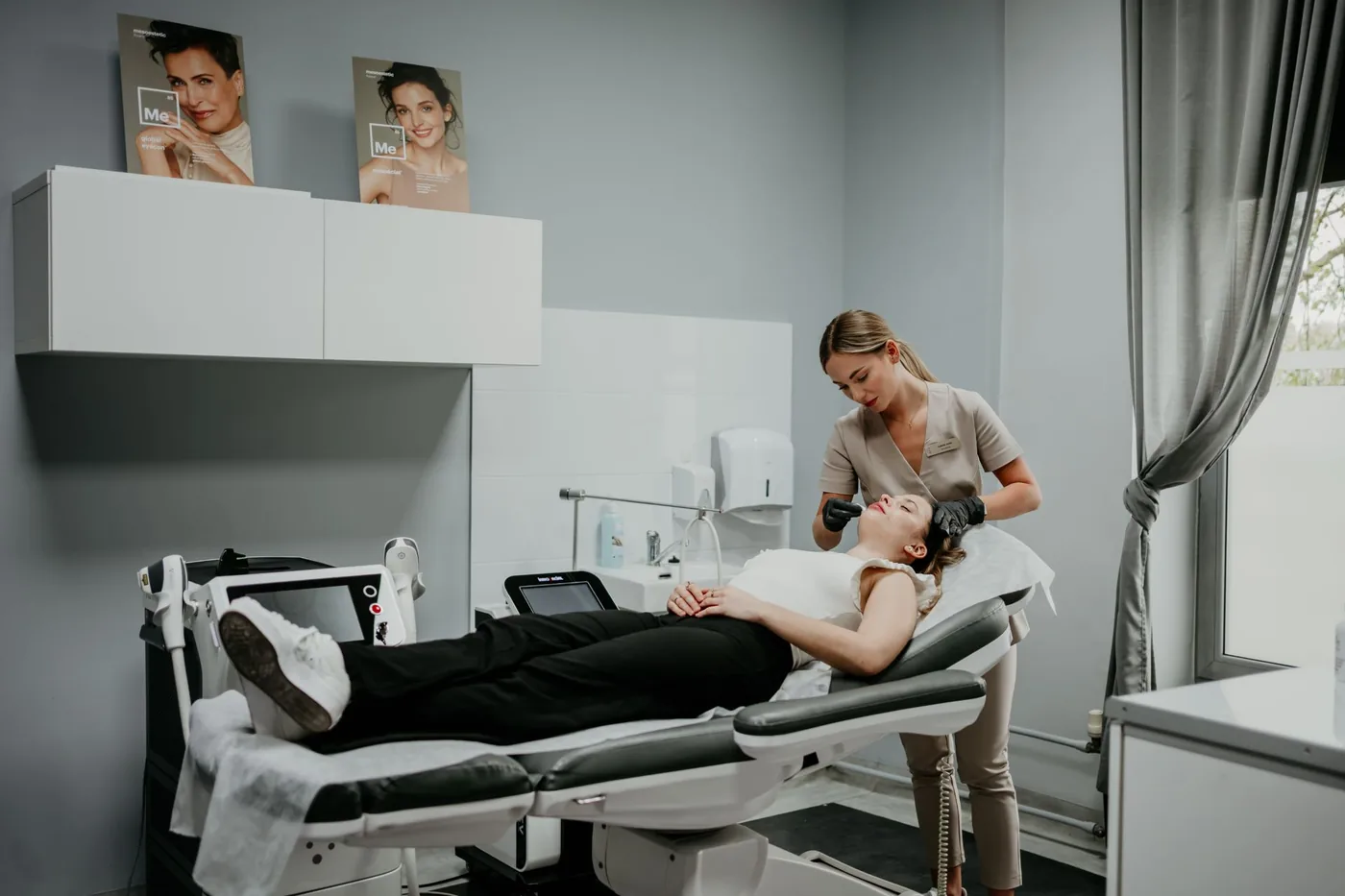
With high sun exposure, preparations with a deeper exfoliating action are usually postponed: glycolic acid at higher concentrations, trichloroacetic acid and pyruvic acid. The reason is greater interference with the epidermal barrier and a longer skin recovery time, during which the risk of pigmentation is higher.
This is not an absolute rule. The timing is decided by the person carrying out the treatment after assessing the skin, phototype, previous reactions and the realistic possibility of avoiding the sun in the coming weeks. Remote work in the city and two weeks of holiday by the sea are two different situations.
Rules that safety depends on
- A high-factor sunscreen every day, including cloudy days, reapplied during the day when spending longer periods outdoors.
- Avoiding the sun during the hours of strongest sunlight and wearing a head covering during longer exposure.
- Moisturising and supporting the epidermal barrier between treatments.
- No combining acids with retinoids on the same day, unless the person overseeing skincare advises otherwise.
- No treatment on skin that is freshly tanned or irritated.
The concentration of the preparation, the number of treatments and the intervals between them result from the skin assessment. The same acid at a different concentration is a different treatment.
After the treatment
For a few days after exfoliation the skin may be red, tight and more sensitive. During this time the sauna, swimming pool, intensive exercise and exfoliating treatments at home are avoided. Skincare is based on soothing and moisturising preparations and on sunscreen.
If intense burning, swelling, blisters or oozing appear after the treatment, contact the practice. Such symptoms are not part of the expected course and require assessment before the next treatment.
Preparations intended for use in the practice differ in concentration and pH from cosmetics available without a consultation. The brands used at NL Clinic, including NOON Aesthetics and Retix.C, have their own protocols, in which the choice of concentration and frequency belongs to the person carrying out the treatment.
The questions we are asked most often
Can acids be used in summer at all
Yes, provided these are milder-acting preparations and the skin is protected from the sun. In summer, mandelic acid, azelaic acid, lactic acid and polyhydroxy acids are used more often, while deeper peels are postponed to cooler months.
Which acids are better avoided in the summer months
With high sun exposure, peels with a deeper action are usually postponed, including glycolic acid at higher concentrations, trichloroacetic acid and pyruvic acid. The decision is made by the person carrying out the treatment after assessing the skin.
How to protect the skin after an acid treatment in summer
The basis is a high-factor sunscreen applied every day and reapplied during the day, avoiding the sun during the hours of strongest sunlight, a head covering and moisturising the skin. Detailed recommendations depend on the preparation used.
Can pigmentation appear after acids
Skin can be more sensitive to UV radiation after exfoliation, and without sun protection the risk of pigmentation increases. That is why sunscreen is a must with every type of acid, including those considered milder.
Can acids be combined with retinoids in summer
Combining acids with retinoids increases the risk of irritation, so it requires agreement with the person overseeing skincare. In summer they are more often used alternately rather than at the same time.
What the research says
Papers on the acids described here and on why sun protection is a condition for exfoliation in summer.
A randomised, double-blind study in 29 people. After four weeks of daily use of a preparation with 10% glycolic acid, redness appeared at a lower dose of UV radiation than after placebo, and more sun-damaged cells formed in the skin. A week after the acid was stopped, the difference disappeared. This is the basis for the statements about the skin's greater sensitivity to UV while acids are in use.
Kaidbey K, Sutherland B, Bennett P, Wamer WG, Barton C, Dennis D, Kornhauser A. Topical glycolic acid enhances photodamage by ultraviolet light. Photodermatology, Photoimmunology & Photomedicine. 2003;19(1):21–27.
A review of the uses of azelaic acid in dermatology. The acid has anti-inflammatory, antioxidant and antibacterial effects and inhibits tyrosinase, the enzyme needed to produce melanin; it is used for acne, rosacea and hyperpigmentation. Side effects are usually limited to mild, transient skin irritation.
Sauer N, Oślizło M, Brzostek M, Wolska J, Lubaszka K, Karłowicz-Bodalska K. The multiple uses of azelaic acid in dermatology: mechanism of action, preparations, and potential therapeutic applications. Advances in Dermatology and Allergology. 2023;40(6):716–724.
A laboratory study of the stratum corneum using spectroscopy. Lactic acid behaved as a water-binding substance and at the same time strengthened the epidermal barrier. This is the basis for the statement that, besides exfoliating, lactic acid supports hydration.
Vyumvuhore R, Tfayli A, Manfait M, Baillet-Guffroy A. Vibrational spectroscopy coupled to classical least square analysis, a new approach for determination of skin moisturizing agents' mechanisms. Skin Research and Technology. 2014;20(3):282–292.
A review of polyhydroxy acids such as gluconolactone and lactobionic acid. They give effects similar to alpha hydroxy acids, but without the stinging and burning typical of them, they are well tolerated by sensitive skin, and in addition they moisturise and mostly act as antioxidants.
Grimes PE, Green BA, Wildnauer RH, Edison BL. The use of polyhydroxy acids (PHAs) in photoaged skin. Cutis. 2004;73(2 Suppl):3–13.
A study on pig skin. A solution of 15% vitamin C and 1% vitamin E with added ferulic acid was more chemically stable and protected the skin against simulated solar radiation roughly twice as well as without this addition. This is the basis for the statement about the role of ferulic acid in the stability of vitamin C.
Lin FH, Lin JY, Gupta RD, Tournas JA, Burch JA, Selim MA, Monteiro-Riviere NA, Grichnik JM, Zielinski J, Pinnell SR. Ferulic acid stabilizes a solution of vitamins C and E and doubles its photoprotection of skin. Journal of Investigative Dermatology. 2005;125(4):826–832.
A review in which peels are divided by depth of action into superficial, medium-depth and deep. The authors note that greater depth is associated with longer healing and a higher risk of complications. Hence the reasoning in this entry for postponing deeper peels until the cooler months.
Rendon MI, Berson DS, Cohen JL, Roberts WE, Starker I, Wang B. Evidence and considerations in the application of chemical peels in skin disorders and aesthetic resurfacing. Journal of Clinical and Aesthetic Dermatology. 2010;3(7):32-43.
An international consensus of experts from Africa, Asia, Europe and the Americas, prepared using the Delphi method, on the management of hyperpigmentation, including melasma and post-inflammatory hyperpigmentation. The authors place particular emphasis on broad-spectrum sun protection. This is the basis for the rule of using sunscreen every day.
Passeron T, Desai SR, Abdallah M, Al-Niaimi F, Dlova N, Grimes PE, Ocampo-Candiani J, Sarkar R, Xiang LF, Miot HA. Global consensus on the management of melanin hyperpigmentation disorders. Journal of the European Academy of Dermatology and Venereology. 2026;40(5):760–772.
A review of hyperpigmentation management prepared as training material for doctors. The authors discuss the evidence for photoprotection, lightening preparations, chemical peels and lasers, and point out that many treatment methods carry a risk of worsening hyperpigmentation. This is the basis for the answer about the risk of pigmentation after acids.
Ko D, Wang RF, Ozog D, Lim HW, Mohammad TF. Disorders of hyperpigmentation. Part II. Review of management and treatment options for hyperpigmentation. Journal of the American Academy of Dermatology. 2023;88(2):291–320.
About this text
Text prepared by the NL Clinic team. Published 15 July 2024, verified 18 August 2026.
The content is for information and does not replace a consultation.
Choosing an acid for the summer months
At the consultation we assess the condition of the skin, phototype and plans for the coming weeks, including holidays. This determines whether we carry out the treatment now or after the season.