
Cosmetology
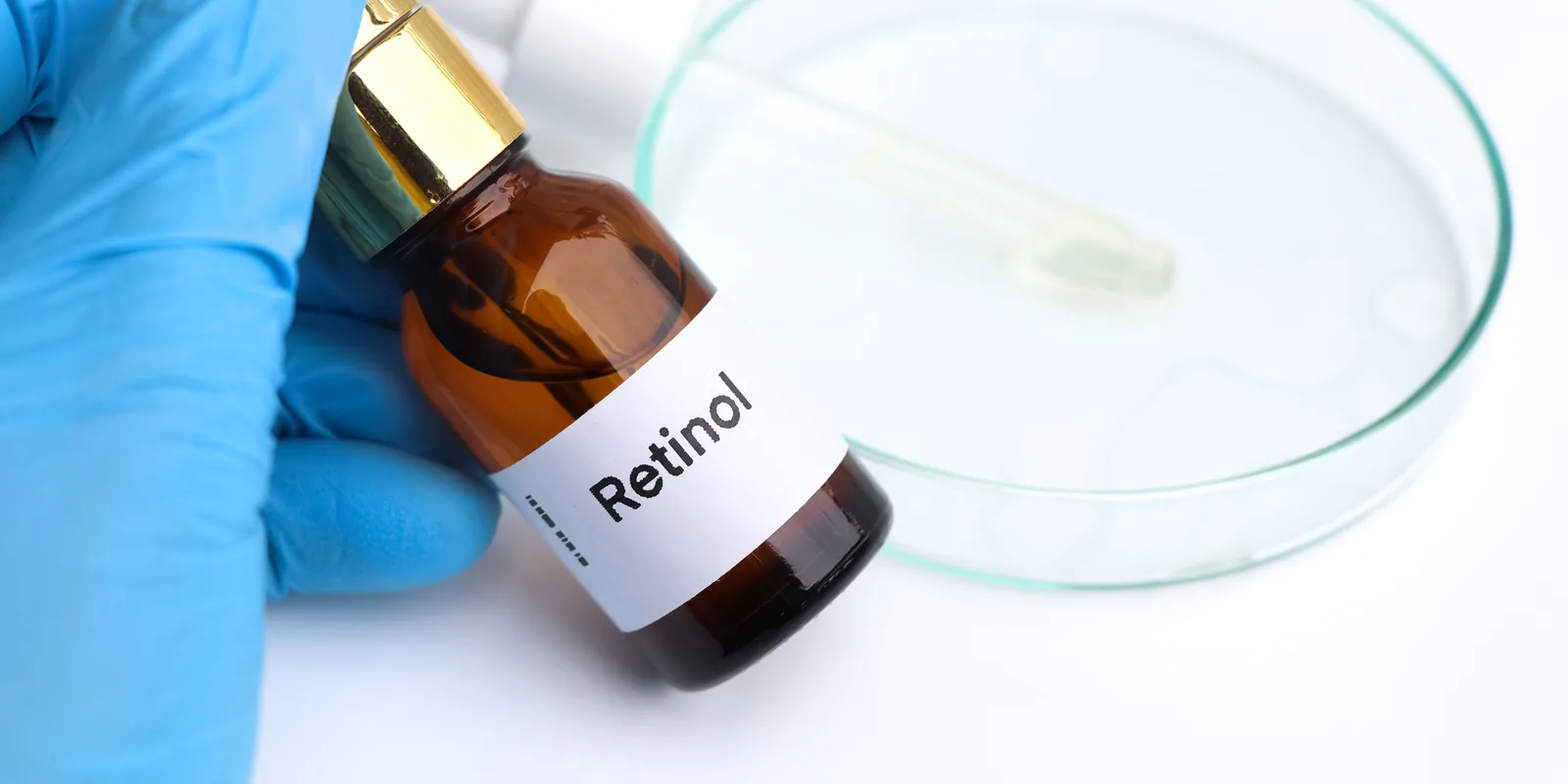
Retinol and vitamin A derivatives, how they act on the skin
Retinoids are a group of compounds derived from vitamin A. They differ in structure and strength, which is why some end up in cosmetics and others are used only in therapies carried out under a specialist's supervision.
Published 22 October 2024. Last verified 16 August 2026.

Retinol, retinal, tretinoin
These are names that appear in the context of anti-ageing and anti-acne skincare. Retinoids differ in chemical structure and strength. Retinol is the mildest form and is widely available in cosmetics. Retinal, or retinaldehyde, and tretinoin act more strongly, and tretinoin is a medicinal substance used in therapies carried out by a doctor.
Each of these forms penetrates the skin, where it affects regenerative processes, stimulates collagen production and speeds up cell renewal. That is why retinoids are used to work with wrinkles, pigmentation and acne.
How they work on the skin
Retinoids act at the cellular level. They speed up epidermal renewal by affecting the proliferation of keratinocytes, the cells that produce new layers of the epidermis, while also exfoliating the keratinised layers.
By stimulating fibroblasts, they support collagen production, the protein responsible for skin firmness and elasticity. Regular use is sometimes described as a reduction in the depth of wrinkles, a more even skin tone and improved skin structure. The response is individual, and the effect builds up over months, not weeks.
Forms and concentrations in cosmetics
Effectiveness depends on the type of compound and its concentration. Retinol, the most popular cosmetic form, is relatively mild and suitable for home skincare. The concentration given in cosmetic literature is 0.5 to 1 per cent, a range where effects are noticeable with a limited risk of irritation.
Retinal and tretinoin are considerably stronger and require specialist supervision. Higher concentrations are used in clinic treatments, which shortens the time to the first changes but also increases the risk of a skin reaction.
Retinoid treatments at the practice
At NL Clinic we run three protocols based on vitamin A derivatives:
- Retix.C, a therapy combining retinol with vitamin C, ferulic acid and antioxidants. Aimed at wrinkles, pigmentation, acne changes and skin texture.
- Retibooster, a biostimulation protocol using vitamin A derivatives, aimed at regeneration, epidermal renewal and fibroblast activity.
- Retix.C Eye, a protocol for the eye area, where the skin is thin and requires lower concentrations than the rest of the face.
The choice of protocol and concentration is determined by a skin assessment during a cosmetology consultation.
Side effects and how to avoid them
Using retinoids, especially at higher concentrations, can lead to redness, dryness and skin peeling. That is why they are introduced gradually, starting from lower concentrations and increasing them as the skin adapts.
- Use retinoids in the evening.
- Avoid them during periods of intense sun exposure.
- Moisturise your skin regularly and use a cream with a high SPF.
When we do not use retinoids
Women who are pregnant or breastfeeding should avoid products containing retinoids because of the risk of adverse effects on the foetus. This contraindication also applies to in-practice treatments.
Extra care is needed for very sensitive skin and skin conditions such as eczema. In these situations, the decision to start the course of treatment is preceded by a medical consultation.
Recommendations for patients
Retinoids are introduced gradually, starting with the lowest concentrations, once or twice a week, increasing the frequency as the skin becomes used to them. At the same time, we maintain moisturising and barrier care as well as sun protection, because the skin is more sensitive to UV during the course of treatment.
If intense burning, swelling or flaking appear beyond the first weeks of adaptation, the course of treatment is stopped and reassessed. We do not combine retinoids with intensive acids or exfoliating treatments without establishing an interval.
About this text
This text was prepared by the NL Clinic team. Published on 22 October 2024, verified on 16 August 2026.
The content is for information and does not replace a consultation.
Cosmetology consultation
The concentration, frequency and timing of starting the course of treatment are adjusted to the condition of the skin and the time of year. The cosmetology consultation is free of charge.