
On this page
Why this is not an exfoliating peel
The name is misleading and it is worth clarifying this from the start. Chemically, ferulic acid is a hydroxycinnamic acid, but it does not belong to the alpha or beta hydroxy acids, the groups on which classic peels are based. It does not loosen the connections between corneocytes and does not remove the stratum corneum of the epidermis.
Its role is different: it neutralises free radicals, molecules that form in the skin under the influence of ultraviolet radiation and pollution, which damage skin proteins and lipids. This action is largely preventive rather than corrective through tissue removal.
Practical consequence: after this treatment there is usually no peeling or a "freshly exfoliated" skin effect. If that is what you are looking for, one of the exfoliating acids will be more suitable.
What it does in the skin
Neutralises free radicals
Captures molecules that form in the skin under the influence of ultraviolet radiation and air pollution, which damage skin proteins and lipids.
Limits the formation of pigmentation
Works on the side of preventing hyperpigmentation, rather than removing pigment already deposited in the epidermis.
Supports structural proteins
Described as supporting the renewal of fibres responsible for skin firmness and elasticity.
Stabilises other ingredients
In blends it enhances the effect of other substances, in particular vitamin C, which is itself unstable.
Descriptions of the action relate to the ingredient, not a guaranteed effect in a specific person.
Which protocols it appears in
At our practice, ferulic acid is offered as a standalone protocol when the goal is antioxidant support rather than exfoliation. This option is sometimes chosen, among other things, during periods of intense sun exposure, when stronger peels are postponed.
It is worth knowing that the same acid also appears as an ingredient in blends, where it enhances and stabilises other substances, in particular unstable vitamin C. It is, among others, one of the ingredients in the GLOW-X9 peel, alongside exfoliating acids and pro-retinol. This means you may encounter it in two different roles.
Who it suits and who it does not
Often chosen
Skin exposed to sun, smog and urban pollution.
Skin prone to pigmentation, where the goal is to prevent new changes.
A period of intense sun exposure, when stronger peels are postponed.
An addition to a plan based on other treatments, as antioxidant support.
Probably not here
Expecting a visible change after one treatment.
Rough skin, blackheads and clogged pores, where exfoliation is needed.
Established pigmentation requiring a stronger tool.
Not being ready for daily photoprotection, without which this approach loses its point.
For pigmentation that has already formed and recurs, a stronger tool is sometimes tranexamic acid, which acts on the pathway of pigment formation. Ferulic acid works more on the side of protection than correction.
What it will not do
It will not replace sunscreen. An antioxidant limits the effects of oxidative stress, but does not block ultraviolet radiation.
It will not smooth rough skin or clear blackheads, because it does not exfoliate the stratum corneum.
It will not remove existing pigmentation at the pace of an exfoliating peel. It works more as prevention.
It will not work after a single session. Antioxidant protection makes sense as part of ongoing care, including at home.
Course and aftercare
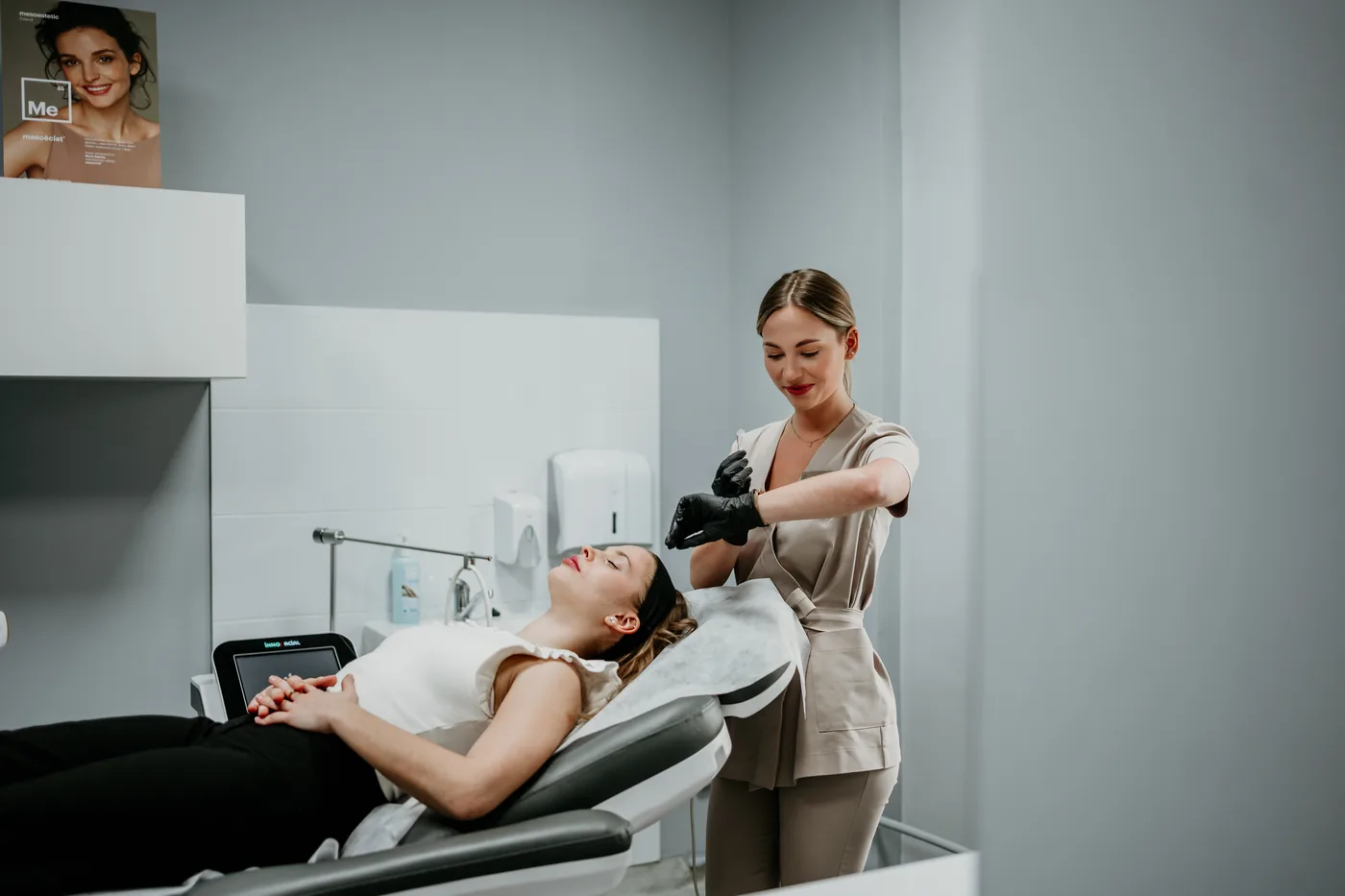
The treatment is carried out by a cosmetologist, after assessing the skin. The reaction after the treatment is usually mild: the skin may be temporarily red, and noticeable flaking is not typical. The concentration of the preparation, the number of sessions, and whether ferulic acid is used on its own or in a mixture, are decided by the cosmetologist, so we do not give these values before qualification.
Daily sun protection applies after the treatment. This is not a formality: without a filter, antioxidant support loses much of its point, because it then works against a stimulus that keeps arriving.
Contraindications
When ferulic acid is part of a mixture, the contraindications of its other ingredients also apply, and they are usually broader than its own. You will find the full list for all acids on the acid peels page.
Editorial responsibility
Responsible for the content
NL Clinic, Katowice
How the content is created
Last updated
13 August 2026
The material is for information purposes and does not replace a consultation or qualification.
The questions we are asked most often
Does ferulic acid exfoliate the skin?
Not in the sense that exfoliating acids do. Despite its name, it does not belong to the alpha or beta hydroxy acids, and it does not work by removing the stratum corneum. It acts as an antioxidant, so there is usually no flaking typical of superficial peels after the treatment.
How can you tell that it has worked?
It is harder to tell than with exfoliating acids, because the antioxidant action is largely preventive. There is no freshly exfoliated skin effect here after a single treatment. What matters more is the condition and tone of the skin over a longer period, and a lower tendency to develop new pigmentation.
Will ferulic acid replace sunscreen?
No. The antioxidant limits the effects of oxidative stress caused by ultraviolet radiation, but it does not block the radiation itself. Sunscreen and the antioxidant act at two different stages, and one does not replace the other.
Is it used on its own or in mixtures?
We run it as a standalone protocol when the aim is antioxidant support rather than exfoliation. However, the same acid is also used as an ingredient in mixtures, where it strengthens and stabilises the other substances, in particular vitamin C. It is, among other things, one of the ingredients of the GLOW-X9 peel, so you may come across it in two roles.
Can the treatment be done in summer?
Yes, and that is its advantage over exfoliating acids, which are often postponed during intense sun exposure. Sun protection still applies, because without it antioxidant support loses its point.
For whom does this protocol make the least sense?
For someone who expects a fast and visible change after a single treatment, smoothing of rough skin, or work on blackheads. For these purposes, exfoliating acids are more suitable, for example salicylic acid for oily skin or mandelic acid for uneven texture.
The content is for information. It does not replace a consultation, an examination or an individual assessment.