
On this page
How it differs from other acids
Mandelic acid belongs to the alpha hydroxy acids, like lactic and glycolic acid. What sets it apart is the size of its molecule: the largest in this group. The larger the molecule, the slower and more even the penetration into the epidermis, and so the lower the risk of a sudden reaction.
This is where its role in the practice comes from. It works well wherever control matters: for a first acid series, for reactive skin, and for skin that has a tendency to both blemishes and pigmentation at the same time. Besides exfoliating, it also has a moisturising effect, which sets it apart from acids with a stronger keratolytic action.
Who it tends to be chosen for
First acid series
Skin that has had no previous contact with exfoliating treatments needs a gentle start. Mandelic acid makes it possible to check tolerance without a sudden reaction.
Combination and oily skin with dyschromia
Uneven skin tone and a tendency towards excess sebum production occurring together. Mandelic acid works on both at the same time.
Skin with imperfections
Blackheads and isolated blemishes without active inflammation. With purulent lesions, the treatment is postponed.
Enlarged pores and rough surface
Thick skin with an uneven texture, requiring gradual evening out.
Reactive skin
Where stronger acids tend to be poorly tolerated, but exfoliation is still needed. The concentration is then chosen lower.
With inflammatory changes involving pustules and pronounced seborrhoea, salicylic acid tends to be more suitable, while for skin prone to inflammatory conditions and redness, azelaic acid is often the better option. The choice is made by the cosmetologist, after assessing the skin.
What it works on
Skin tone
Evening out and brightening skin with uneven pigmentation.
Texture
Smoothing the surface and reducing the visibility of pores.
Seborrhoea
An effect on the activity of the sebaceous glands, with less tendency towards oiliness.
Imperfections
Reducing the conditions that favour the formation of blackheads and inflammatory changes.
Hydration
Unlike stronger acids, it also has a hydrating effect.
Absorption of skincare products
A smoother epidermis takes in ingredients from home skincare better.
The scale of change depends on the skin's starting condition, the concentration of the preparation and the number of sessions. A single treatment mainly gives a refreshing effect and smooths the surface, while working on skin tone or imperfections requires a course of treatments.

How the treatment goes
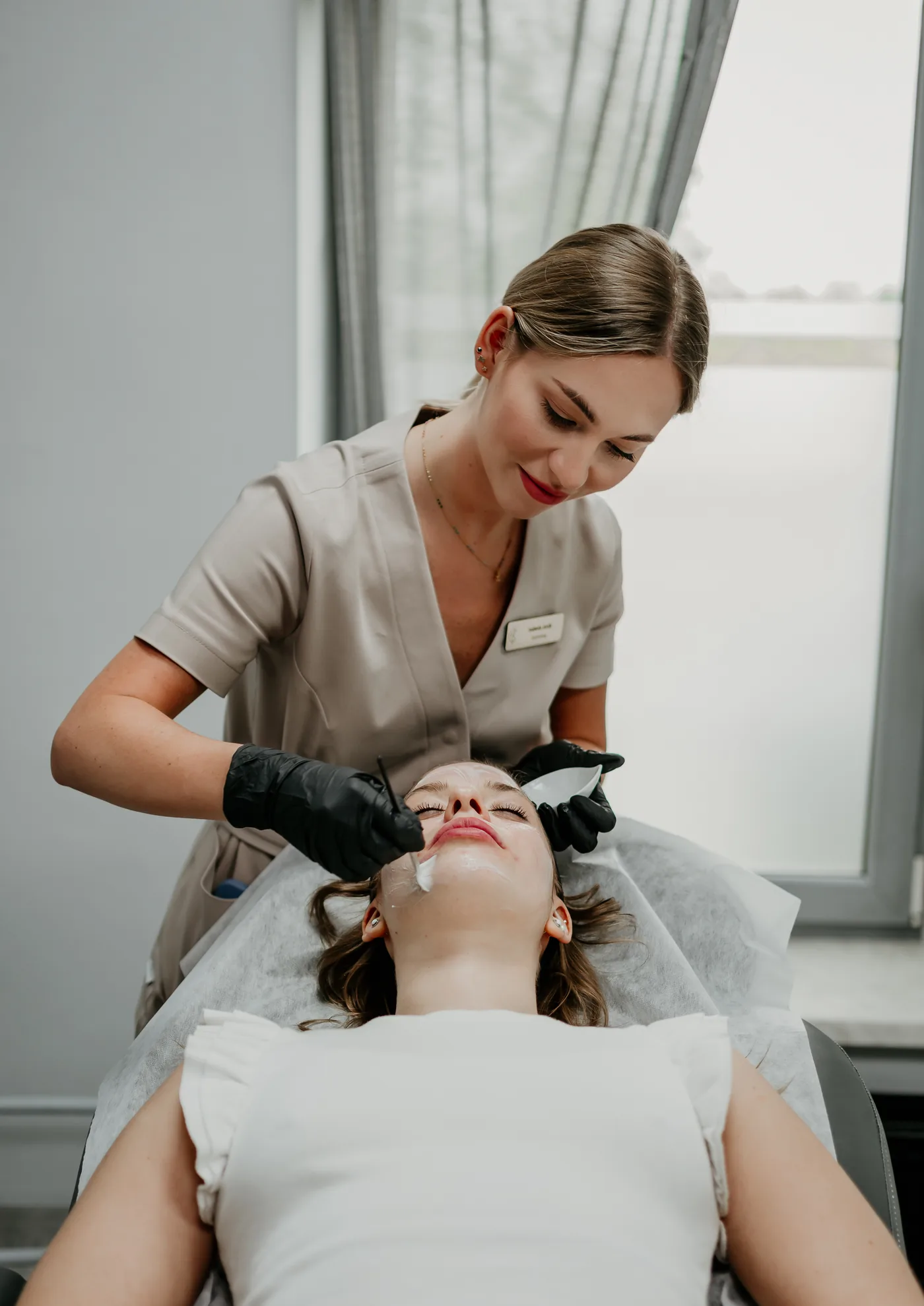
The first visit takes around forty-five minutes, including the consultation and skin assessment. Subsequent visits are shorter. A week before the course, the cosmetologist may recommend using an evening cream with mandelic acid and polyhydroxy acids to prepare the epidermis.
Series and season
A typical course consists of around ten treatments, spaced seven to fourteen days apart. The interval depends on the skin's reaction to the previous session, not on the calendar.
Treatments are carried out mainly in autumn and winter, when sun exposure is lower. They are possible in summer, but require giving up sunbathing and consistent use of a high factor sun filter, because the acid increases the skin's sensitivity to UV radiation.
After the treatment
The treatment does not require recovery time, and you return to your daily activities straight afterwards. The skin may be slightly red for the first few hours, and mild peeling appears in some people after a few days.
A high factor sun filter is a requirement, not a suggestion. Without it, the risk of post-inflammatory pigmentation increases, which is exactly what the peel is meant to counteract.
Active preparations, including retinol and strong acids, return to your skincare routine once agreed with the cosmetologist, not the next day.
A preparation left on the skin for too long, or chosen at the wrong concentration, can cause irritation and burns. That is why the exposure time is measured in the practice, not at home.
Contraindications
Very sensitive skin requires particular caution: the concentration and exposure time are then chosen lower, and the first session is treated as a tolerance test. You will find the full list of contraindications for all acids, together with photosensitising medications and the break required after isotretinoin, on the acid peels page.
The questions we are asked most often
What does a mandelic acid peel do and what does it help with?
It works on skin tone, texture and imperfections: it evens out pigmentation, smooths the skin's surface, reduces the visibility of pores and reduces the tendency towards oiliness. Unlike stronger acids, it also has a hydrating effect. It does not contour the shape of the face and does not fill in wrinkles.
How long before you see results?
A refreshed, smoother surface can be visible after the first visit, but this effect is short lived. A change in skin tone and texture usually appears after three to four sessions, and the full assessment is made once the course is complete. If nothing is visible after the first treatment, it does not mean the acid has not worked.
What does the face look like right after the treatment?
Usually much the same as normal, with slight redness for the first few hours and a feeling of tightness. There is no swelling or visible marks, so you can go back to work the same day. It is best to skip make-up on the day of the treatment, and in the evening opt for gentle cleansing and a moisturising cream.
Does the skin peel after mandelic acid?
In some people, mild, fine flaking appears between the second and fifth day and usually lasts two to three days. In others, it is not visible at all, because this is a mild acting acid. The skin should not be scraped or scrubbed, as this is how post-inflammatory pigmentation develops.
Does the absence of peeling mean the treatment has not worked?
No. Exfoliation after mandelic acid happens mainly at a level invisible to the naked eye, and intensive skin peeling is typical of stronger preparations, not this one. We assess the result by the condition of the skin, not by the amount of flaking.
How often to do a mandelic acid peel and how many treatments are needed?
Usually around ten treatments at intervals of 7 to 14 days. The interval depends on how the skin reacted to the previous session. The series can be repeated within a year, and home care does the work between series.
How much does a mandelic acid treatment cost?
The price depends on the area, that is face, face with neck, or decolletage, and on the number of sessions. We keep one current price list for cosmetology treatments instead of scattered figures on separate pages, and we discuss the cost of the whole series at the consultation, before the first treatment.
What concentrations are used and what does 40 percent mandelic acid mean?
Concentration tells you how much active substance the preparation contains, but the strength of the effect depends on it together with the pH, the number of layers, and the exposure time. The same percentage in two preparations does not mean the same thing. The cosmetologist selects the value after assessing the skin, starting lower for the first series and for sensitive skin.
What are the side effects?
Most often temporary redness, a feeling of tightness, and mild flaking. Less often irritation, and with too long an exposure time or the wrong choice of concentration, burns and post-inflammatory pigmentation. If severe pain, blisters, or oozing appear after the treatment, call +48 881 202 202 instead of waiting for the next visit.
How does it differ from an acid from the drugstore, and how often should it be used at home?
By concentration, pH, time control, and neutralisation. The in-practice preparation works deeper and is removed at a measured moment. A home cosmetic with mandelic acid is part of daily care, usually in the evening, at a frequency agreed with the cosmetologist, and it is sometimes paused during a series.
Before you decide
Consultation with a cosmetologist
The type of acid, the concentration, and the number of layers follow from the assessment of the skin, not from a choice made at booking. At the consultation we also check whether mandelic acid is the right starting point for you, or whether another direction would be better. The conversation does not commit you to having the treatment. A consultation with an aesthetic medicine doctor is paid according to the price list, as is preparing a home care plan.
This material is for information and does not replace a consultation or an assessment of suitability for the treatment.