
On this page
Composition and mode of action
The preparation combines substances of different strength and different points of action: from acids working on the stratum corneum of the epidermis to those that can reach deeper. Below is a description of each ingredient.
Trichloroacetic acid (TCA)
A derivative of acetic acid, described as the strongest organic acid used in cosmetology and aesthetic medicine. It causes chemical damage to the epidermis, which can reach as far as the papillary layer of the dermis. It initiates self-repair processes involving the replacement of damaged cells. It affects the metabolism and structure of the skin, as well as the synthesis of collagen and elastin.
Phenol
Responsible for rebuilding the layers of the skin and improving skin tightness. In the preparation's materials it is described as an ingredient that works on smoothing wrinkles, deep pigmentation and post-acne scars.
Ferulic acid
A powerful antioxidant, described as one of the more effective ingredients in delaying exogenous ageing. It builds up the skin's resistance to ultraviolet radiation and to the effects of air pollution. It blocks the formation of pigmentation and hyperpigmentation, and stimulates the renewal of the skin's supportive proteins.
Salicylic acid
Works keratolytically and antibacterially. It regulates cell renewal and exfoliates the dead stratum corneum of the epidermis. It cleanses and narrows the openings of the sebaceous glands, which limits the worsening of acne, and also smooths pores and scars.
Glycolic acid
Has exfoliating and dermoplastic properties. It stimulates fibroblasts to produce collagen, glycosaminoglycans and elastin. It exfoliates, removing pigmentary changes, and cleanses the sebaceous glands by breaking down accumulated corneocytes.
Mandelic acid
Supports cell turnover with a low level of skin irritation. It reduces the visibility of fine lines and pores, and improves skin structure by stimulating the production of collagen and elastin.
Phytic acid
An antioxidant with moisturising and firming effects. It stabilises vitamin C and strengthens the synergistic action of the other active ingredients.
Pro-retinol
A gentler form of retinol. It stimulates the proliferation and renewal of the epidermis, brightens the skin and reduces pigmentation.
What this means in practice
Trichloroacetic acid and phenol are substances whose action reaches deeper than a typical superficial peel. The depth of action depends on the concentration and the protocol, not just on the presence of the ingredient. That is why a skin assessment is required before the treatment, and the intensity is chosen individually. This is not a treatment carried out without a qualification.
Effects
Below are the effects described for the preparation. The extent of change is individual and depends on the condition of the skin, the protocol and the number of treatments. These are not guaranteed results.
Rebuilding and redermalisation of the epidermis and dermis.
Stimulation of the skin's self-repair and regenerative processes.
Synthesis and remodelling of collagen and elastin, and stimulation of endogenous hyaluronic acid regeneration.
Thickening of the skin structure and improved firmness.
Brightening and evening out the complexion, reducing pigmentation and pigmented patches.
Tightening and smoothing the skin, shrinking enlarged pores, reduction of post-acne scars.
Normalisation of keratolytic processes and reduction of acne lesion formation.
Indications
Whether GLOW-X9 is the right choice is decided by a skin assessment. For some indications, it makes more sense to start with a milder acid peel, and for scars and stretch marks to consider methods that work mechanically, for example microneedling mesotherapy.
Procedure and combining with other treatments
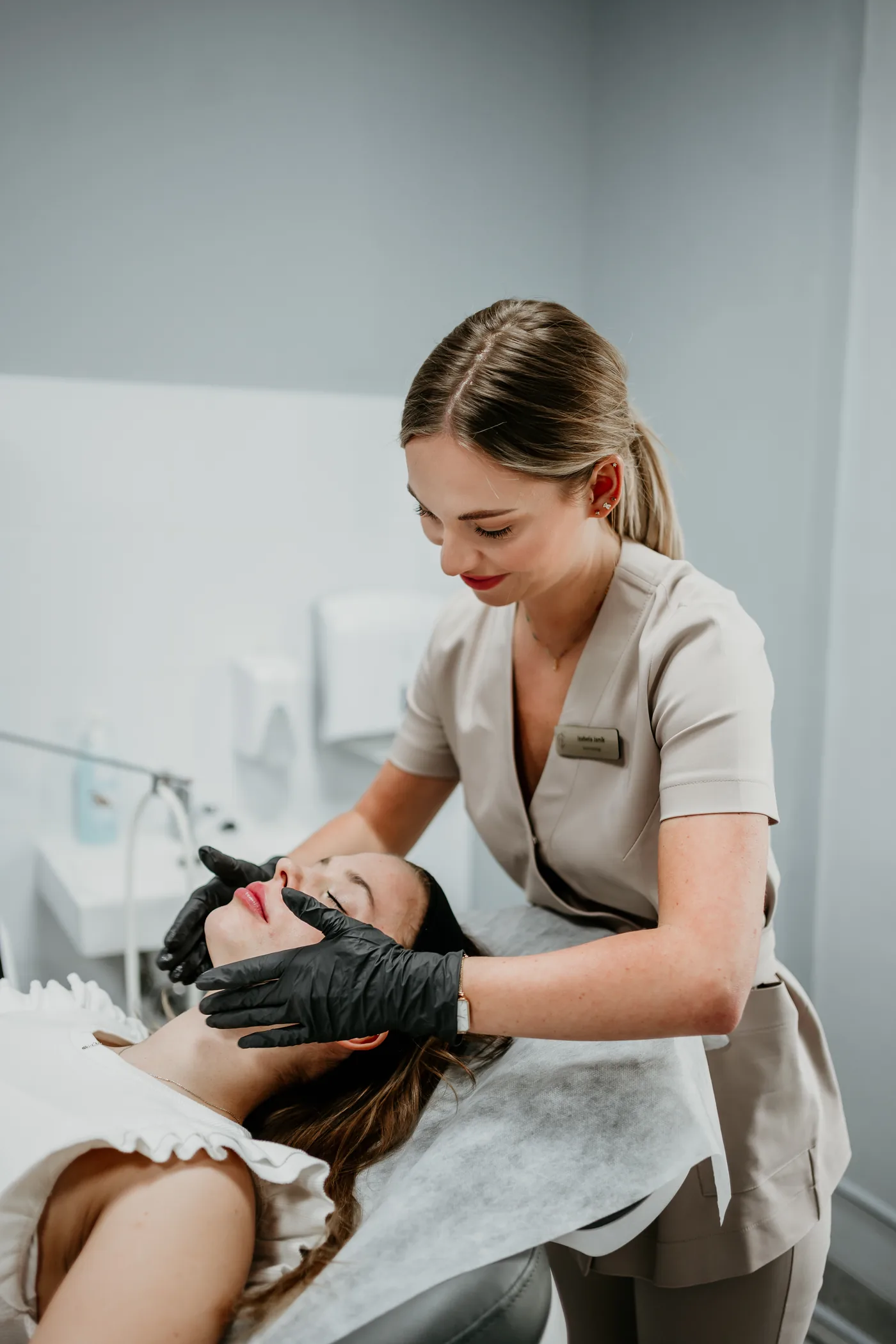
The treatment is performed by a cosmetologist. The first treatment takes around 60 minutes, and anaesthesia is not required.
The preparation can be used on its own or in combined protocols with other cosmetology treatments and aesthetic medicine treatments. It can be combined with needle mesotherapy, microneedling mesotherapy, laser therapy and manual treatments. Whether and with what to combine it is decided by the cosmetologist, taking into account the condition of the skin and the intervals between treatments.
A multitude of protocols is an advantage only when the protocol is well matched. The same intensity that gives one person a result can cause excessive irritation in another.
Exfoliation and post-treatment recommendations
You can return to your daily activities after the treatment, without taking time off work. This does not mean the skin needs no time, though: a keratolytic effect may occur, that is, the epidermis peeling off in flakes, and the recommendations apply until the skin has finished rebuilding.
No make-up for up to 12 hours after the treatment.
Immediately after the treatment, avoid exposure to ultraviolet radiation, natural and artificial, and avoid the sauna and swimming pool.
Rich regenerating creams and a high UV filter.
If flaking occurs, do not remove or pull off the flakes of skin.
No other exfoliating or irritating preparations until the skin has finished rebuilding.
Flakes of peeling skin must not be removed or pulled off. Taking them off too early risks irritation, prolonged redness and post-treatment pigmentation.
Contraindications
Before the treatment, tell your cosmetologist about any medicines and skin preparations you are taking, any previous treatments, and any tendency to herpes and post-inflammatory pigmentation.
Eligibility and limitations
The intensity of the therapy and the number of treatments are matched to the condition of the skin, so we do not state them before qualification. The extent of possible improvement is individual, and for some people the right course of action will be a different treatment or none at all.
Possible reactions after the treatment include redness, a feeling of tightness, flaking and, less often, prolonged redness and post-treatment pigmentation. The risk increases with sun exposure, a tendency to pigmentation, and failure to follow post-treatment recommendations. Photoprotection after the treatment is not optional.
Before you decide
Consultation with a cosmetologist
Free of charge. We assess the condition of the skin, determine whether GLOW-X9 is the right method here and at what intensity, and if not, we suggest a different direction.
Editorial responsibility
Responsible for the content
NL Clinic, Katowice
How the content is created
Last updated
13 August 2026
This material is for information purposes only and does not replace a consultation or qualification.
Frequently asked questions
Does the skin flake after a GLOW-X9 peel?
A keratolytic effect may occur, that is, the epidermis peeling off in flakes. The flakes must not be removed or pulled off. You can return to your daily activities after the treatment, but the skin needs time to rebuild, and until this is complete, no other exfoliating or irritating preparations should be used.
How long does the treatment take?
The first treatment takes around 60 minutes. Anaesthesia is not required.
How does GLOW-X9 differ from a regular acid peel?
A regular acid peel is usually based on a single acid and works superficially. GLOW-X9 combines several substances, including trichloroacetic acid and phenol, and is a stronger treatment. For this reason, it requires a skin assessment before the treatment and a more careful choice of intensity.
Can GLOW-X9 be combined with other treatments?
The preparation can be used on its own or in combined protocols, including with needle mesotherapy, microneedling mesotherapy, laser therapy and manual treatments. The order, intervals and intensity are decided by the cosmetologist after a skin assessment.
Who cannot have this treatment?
Contraindications include pregnancy and lactation, bacterial and fungal infections at the treatment site, viral skin infections, including active herpes, dermatological therapies using isotretinoin and vitamin A derivatives, hypersensitivity or allergy to any ingredient of the preparation, acute and chronic dermatoses, and cancer and treatment with chemotherapy or radiotherapy.
Can the treatment be done in summer?
Immediately after the treatment, avoid exposure to ultraviolet radiation, natural and artificial, and using the sauna and swimming pools, and use a high UV filter. The date is chosen by the cosmetologist, taking into account the time of year and planned sun exposure.
How many treatments are needed?
The intensity of the therapy and the number of treatments are matched to the condition of the skin, so we do not provide them before qualification. The protocol is set by the cosmetologist after a skin assessment at the consultation.
The content is for information. It does not replace a consultation, an examination or an individual assessment.