
On this page
Why acids sting
Low pH acid in contact with the skin stimulates nerve endings called type C nociceptors. This triggers a reaction known as neurogenic inflammation: blood vessels dilate, which causes redness, fluid gathers in the tissue, which shows as swelling, and mast cells release histamine. A nerve impulse reaches the brain, and this is where the burning, stinging and itching come from.
This is why lower concentrations and shorter exposure times are usually used on reactive skin. The trade off is obvious: less irritation, but also weaker action.
The treatment on video
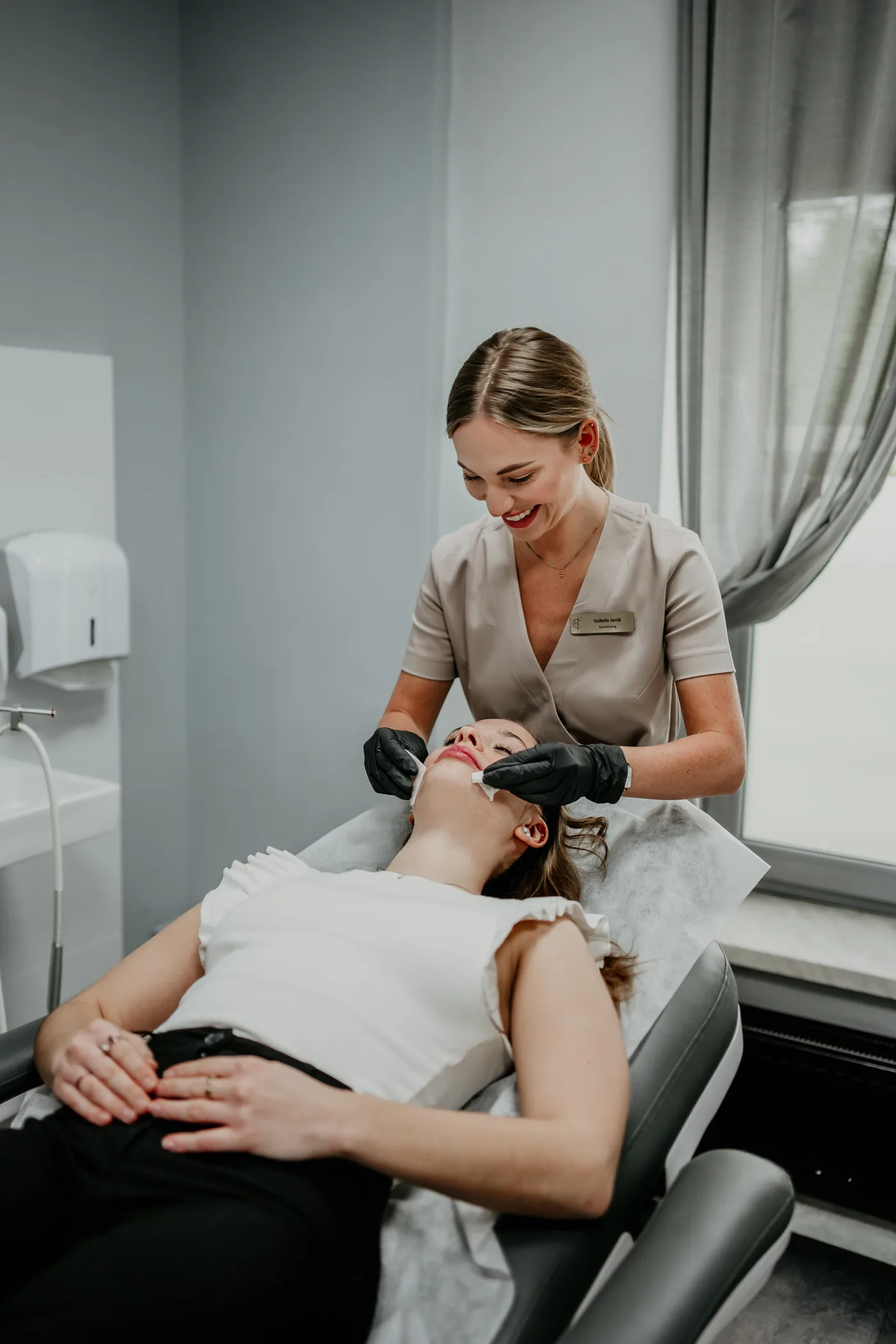
A recording from our treatment room, without editing to speed the work up.
How DermShield technology works
DermShield is a patented additive for acid preparations. According to the manufacturer, it limits the activation of type C nociceptors, meaning it interrupts the reaction described above at its first stage, before the cascade of neurogenic inflammation develops.
The manufacturer states that the action includes selective suppression of tingling, burning and itching sensations, inhibition of redness and swelling, and a reduction in the formation of pro-inflammatory cytokines in keratinocytes, including TNF-alpha, IL-1 alpha and IL-6. It also notes that the mechanism works differently from classic anaesthetic substances, because it does not remove sensation, only affects the very start of the inflammatory reaction.
This is information from the manufacturer of the preparations. We provide it because it explains the difference compared with classic acids, but it is not a conclusion from independent clinical trials. Our practice experience confirms a milder course of the treatment, but that is not the same as proof.
What this means in practice
This makes it possible to work with acids at a high concentration and low pH, below 1, in situations where a much milder preparation would normally be used. The preparations use, among others, retinoic, azelaic, salicylic, lactic and glycolic acid.
It is worth keeping a sense of proportion, though. Limited burning does not mean that the treatment is neutral for the skin, or that there are no contraindications. The acid still acts keratolytically, flaking can still occur, and photoprotection after the treatment applies just as with any peel.
Less burning, the same action of the acid
The technology affects the sensation, not what the acid does to the epidermis. The exfoliating and remodelling effect remains.
Sensations vary
The manufacturer writes about minimising irritation, not eliminating it. In some people, a temporary feeling of warmth or skin tightness appears.
Photoprotection applies just the same
Skin after a peel is more sensitive to radiation, regardless of how mild the treatment was. A high factor sunscreen is a requirement.
Who this path is for
Skin that reacts to classic acids
Redness, burning and stinging that persist for longer than a moment after the treatment, despite a well chosen concentration.
Sensitive skin that needs strong action
A situation in which the problem requires a high concentration, but the skin cannot tolerate it. This is the main reason this path was created.
Acne and excess sebum production with reactive skin
Working on acne lesions in cases where strong acids previously caused irritation.
Pigmentation and uneven skin tone
Evening out skin tone in people for whom standard protocols were poorly tolerated.
Signs of ageing in sensitive skin
Working on density and texture in cases where classic peels used to end in prolonged redness.
If the skin tolerates classic acids well, this path is not necessary. In that case we usually suggest standard acid peels, because they offer comparable results without an extra charge for technology you do not actually need.
Peels used in the practice
The in-clinic line includes several preparations with different compositions and strengths. The choice belongs to the cosmetologist after a skin assessment, not to a selection made at booking.
The treatment can be supplemented with an ampoule matched to the problem, for example with acne changes or when working on skin tone, and with a mask closing the visit. This is one protocol, not separate treatments.
Home care
With this method, home care matters more than usual, because some preparations from this line are intended for daily use and extend the effect of the in-clinic series.
This is not, however, a condition for having the treatment, and we do not sell cosmetics alongside a visit. If you would like to put together a full care plan, this is a separate service, charged according to the price list, because it requires separate time, an interview and an assessment of what you already use.
Contraindications
Despite the milder course, the contraindications proper to acid peels apply here.
Rosacea requires a separate conversation here. The manufacturer lists it among the applications, but it is a condition with a recurring course, requiring a medical assessment before starting any course of treatments. More on the vascular skin page.
The questions we are asked most often
Do these peels really not sting?
The sensations are usually noticeably milder than with classic acids of similar strength, but they do not disappear completely. The manufacturer writes about minimising irritation, not eliminating it, and that is how we describe it too. In some people, a temporary warmth or tightness of the skin appears.
What does DermShield involve?
It is an additive to the preparation which, according to the manufacturer, limits the activation of nerve fibres responsible for burning and itching before an inflammatory reaction develops. It works differently to anaesthesia, because it does not remove sensation, only affects the onset of this reaction.
Does that mean the treatment is safer?
It means it is better tolerated by reactive skin. The contraindications remain the same as with other acid peels, and we go through them at the consultation.
Does the skin peel after the treatment?
It may, because the acid works keratolytically regardless of how mild the treatment felt. Peeling is usually gentler than with classic peels of similar strength, but it depends on the preparation used.
How many treatments do I need?
The number and intervals are set by the cosmetologist after a skin assessment, because they depend on the problem and on how the skin reacts to the first session. Peels are, as a rule, planned as a series, not individually.
Do I have to buy cosmetics for home use?
No. Home care extends the effect of the series, but it is not a condition for having the treatment, and we do not sell cosmetics alongside a visit. If you would like to put together a full plan, this is a separate, chargeable service.
I have rosacea, can I have this treatment?
This requires a separate conversation and usually a prior medical assessment. Rosacea has a recurring course, and the decision on any course of treatment should be made after diagnosis, not before it.
How does this differ from a regular acid peel?
In terms of the acid itself, not at all, because these are the same groups of substances. The difference is that, thanks to the additive, it is possible to work with a higher concentration at a lower pH without the typical burning. If your skin tolerates classic acids well, this advantage has no significance for you.
Can it be done in summer?
Yes, with consistent use of a high factor sunscreen and no sunbathing. Skin after a peel is more sensitive to radiation, regardless of the preparation's technology.
Before you decide
Consultation with a cosmetologist
We start by establishing whether your skin really needs this approach. If it tolerates classic acids well, we will say so directly and suggest a simpler solution. If it has reacted with irritation before, we will check exactly what made it sensitive. The conversation does not commit you to having the treatment.
This material is for information only and does not replace a consultation or qualification for treatment. The preparations described on this page are cosmetics, not medicinal products.