
On this page
How hydradermabrasion works
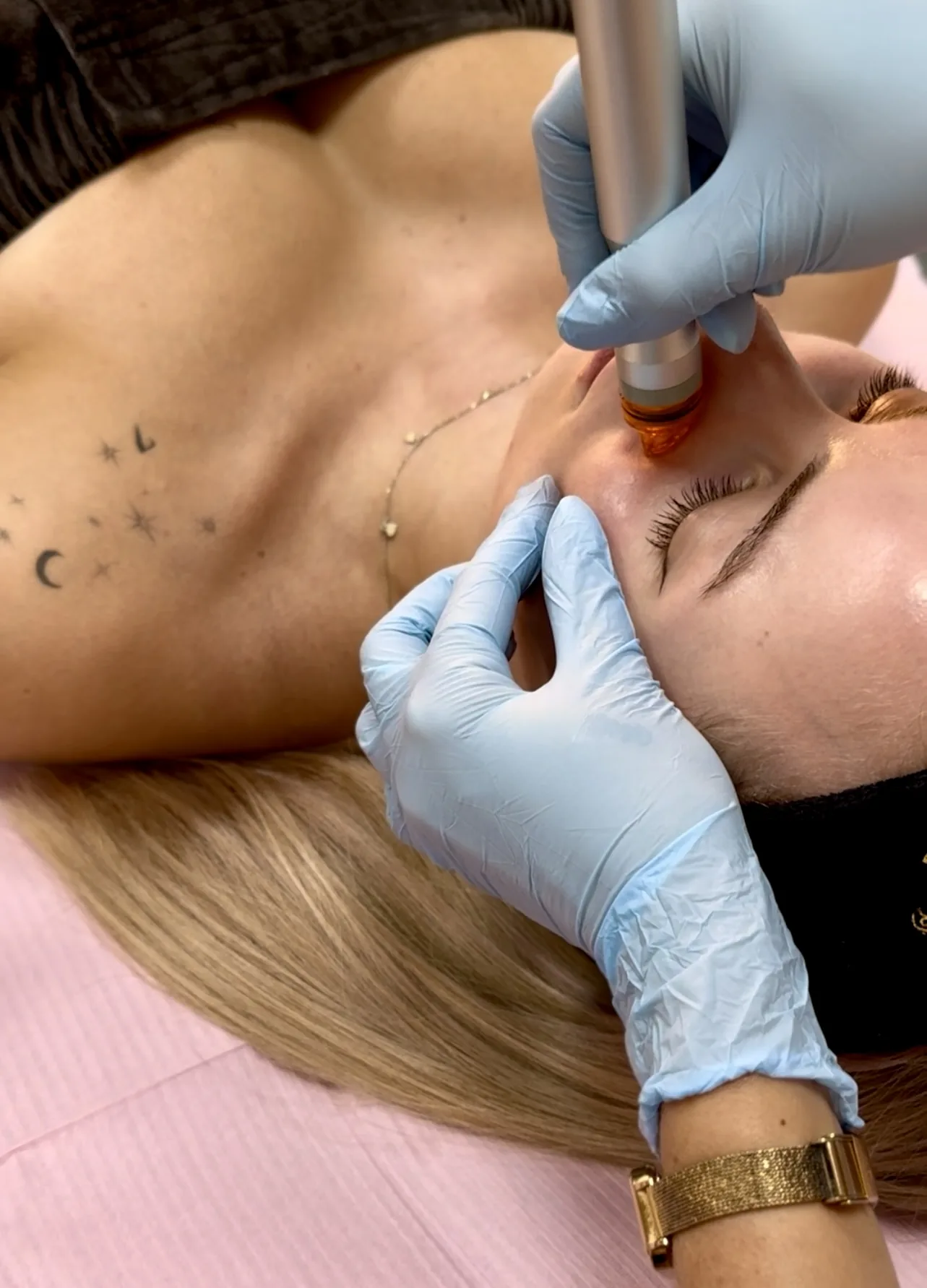
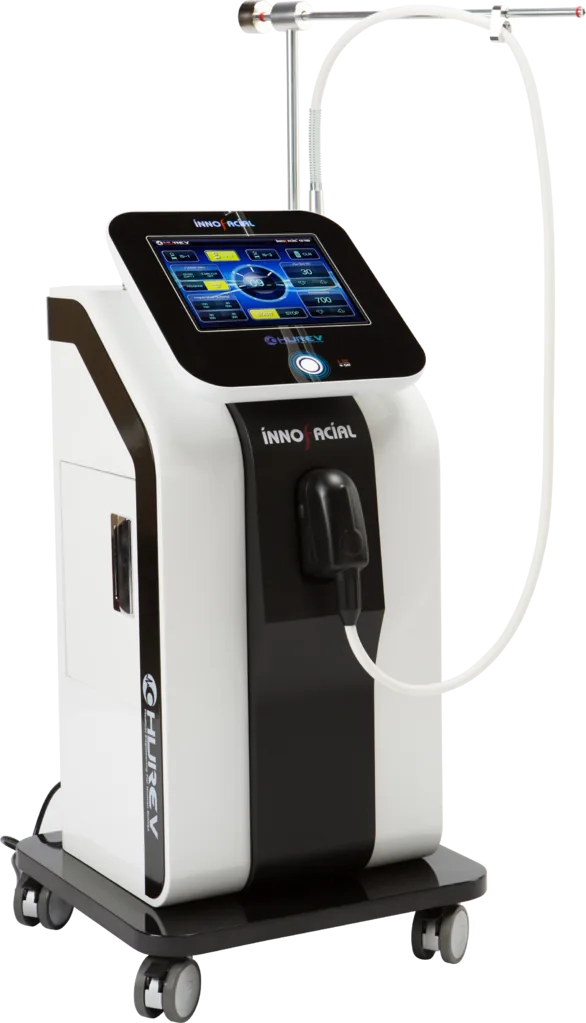
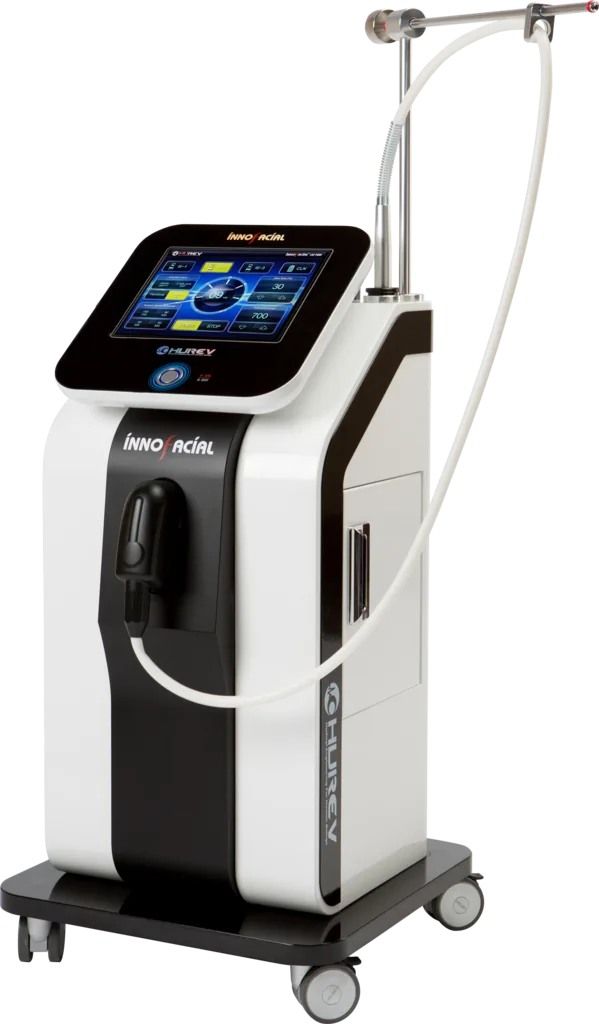
The treatment removes dead cells, excess sebum and impurities from the skin, mechanically and chemically at the same time. The device tip delivers fluid under pressure and at the same moment draws it back together with what has been released from the pores. The principle is similar to how a wet vacuum cleaner works.
The difference compared with classic manual cleansing is practical: blackheads are not squeezed out, only suctioned, so the skin is not put under pressure, and the risk of irritation is lower. The device does not deliver water, only specialist cosmetic fluids.
The last stage is hydration and the application of a regenerating product with antioxidants to already cleansed skin. Cleansed epidermis absorbs active ingredients better than before the treatment, and this is the point of this order.
The treatment on video
Three treatment fluids
The treatment has a fixed sequence, and each fluid is responsible for a different stage. This division of roles means that oily skin and dry skin can undergo the same treatment with a different emphasis.
IS 1, surface exfoliation
Lactic acid, from the AHA group
Normalises epidermal exfoliation gently while also moisturising. Pressure and vacuum remove keratinised skin and cleanse the skin's surface.
IS 2, pore cleansing
Salicylic acid, from the BHA group
Dissolves in fats, so it penetrates through the sebaceous layer deep into the hair follicles. It helps cleanse the skin of blackheads and prepares it for the next stage.
IS 3, moisturising and regeneration
Moisturising substances and antioxidants
Applied to already cleansed skin, after the pores have been opened and emptied. It moisturises, protects and delivers nutrients where they can really work.
Indications, that is who it is for
We perform the treatment on the face, neck, décolletage, back and hands. It is also sometimes chosen to complement other procedures, for example after laser treatments or after methods that dry out the skin. It is well tolerated even by delicate skin.
Right after the treatment the skin is cleansed, hydrated and more radiant, and the pores are less visible. How much the skin changes and how long the change lasts depend on its starting condition and vary from person to person.
The results and how long they last
This is one of the few treatments where the change is visible straight after the visit: the skin is cleansed, moisturised and brightened, and the pores are less visible. That is why it is often chosen before an event.
The effect is not permanent, however, because the epidermis keeps renewing itself and sebum is produced just as before. With oily skin and a tendency to blackheads, the treatment is repeated regularly, while for maintenance care it is done less often. The cosmetologist sets the rhythm, and the treatment can be performed even every week.
How it differs from an acid peel
Hydradermabrasion works mechanically and chemically at the same time, at a shallow level, and finishes with moisturising. Acid peeling works only chemically, usually deeper, and more often involves flaking in the following days.
This leads to a different use. Hydradermabrasion is a cleansing and moisturising treatment that can be done before going out. Peeling is part of a series focused on skin tone, texture or post-acne changes, requiring a plan and breaks between sessions. Both methods are sometimes combined in one schedule, but not on the same day. More about acids on the acid peels page.
Contraindications
Rosacea is a contraindication here, even though the treatment is considered gentle. For reactive and vascular skin, other approaches are often more suitable, which we will discuss at the consultation.
The questions we are asked most often
Does hydradermabrasion hurt?
It does not require anaesthesia. The sensation is similar to moving a tip delivering fluid under pressure across the skin, without pressing or squeezing. The treatment is well tolerated even by delicate skin.
How often can the treatment be repeated?
Even every week. The frequency is set by the cosmetologist depending on the skin's condition and the goal: with oily skin and blackheads the rhythm tends to be more frequent, for maintenance care it is less frequent.
Can I have the treatment before an important event?
Yes, this is one of the typical uses. The treatment does not require recovery time, and the cleansing and moisturising effect is visible straight away. It can be done on a working day.
Is this the same as manual cleansing?
No. With manual cleansing, blackheads are squeezed out, here they are extracted together with the fluid. The skin is less burdened by pressure, and the risk of irritation is lower.
How does it differ from an acid peel?
Hydradermabrasion works mechanically and chemically at the same time, at a shallow level, and finishes with moisturising. Peeling works only chemically, usually deeper, and more often causes flaking in the following days.
Will the treatment help with acne?
With blackheads and oily skin it can be helpful, because it cleanses the pores and regulates sebum production. With inflammatory acne and pustules this is not enough, and in that case we suggest a different approach, sometimes after a medical consultation.
Is my skin too sensitive for this treatment?
The treatment is suitable even for delicate skin, but rosacea and active inflammatory conditions are a contraindication. For vascular skin, the decision is made after an assessment at the consultation.
Does the device dispense water?
No. It dispenses only specialist cosmetic fluids, matched to the successive stages of the treatment. These, not water alone, are responsible for the effect.
Before you decide
Consultation with a cosmetologist
Hydradermabrasion can be a good first step, but not always. With severe acne, rosacea and reactive skin, other approaches are more suitable, and for neglected skin the treatment can be an introduction to a series. We determine this at the consultation, which does not commit you to having the treatment.
This material is for information and does not replace a consultation or an assessment of suitability for the treatment.