
Legal note
The content is for information. It does not replace a consultation, an examination or an individual medical assessment.
Botulinum toxin is a prescription-only medicinal product. This page describes a health service performed in our clinic and is not an advertisement for a medicinal product or an encouragement to use it. Whether the treatment is appropriate is decided by the doctor during the assessment.
In a communication of August 2025, the Office for Registration of Medicinal Products, Medical Devices and Biocidal Products stressed that botulinum toxin preparations should be administered only by a physician or a dentist. It is worth asking about the qualifications of the person performing the treatment in any clinic.
On this page
Where expression lines come from
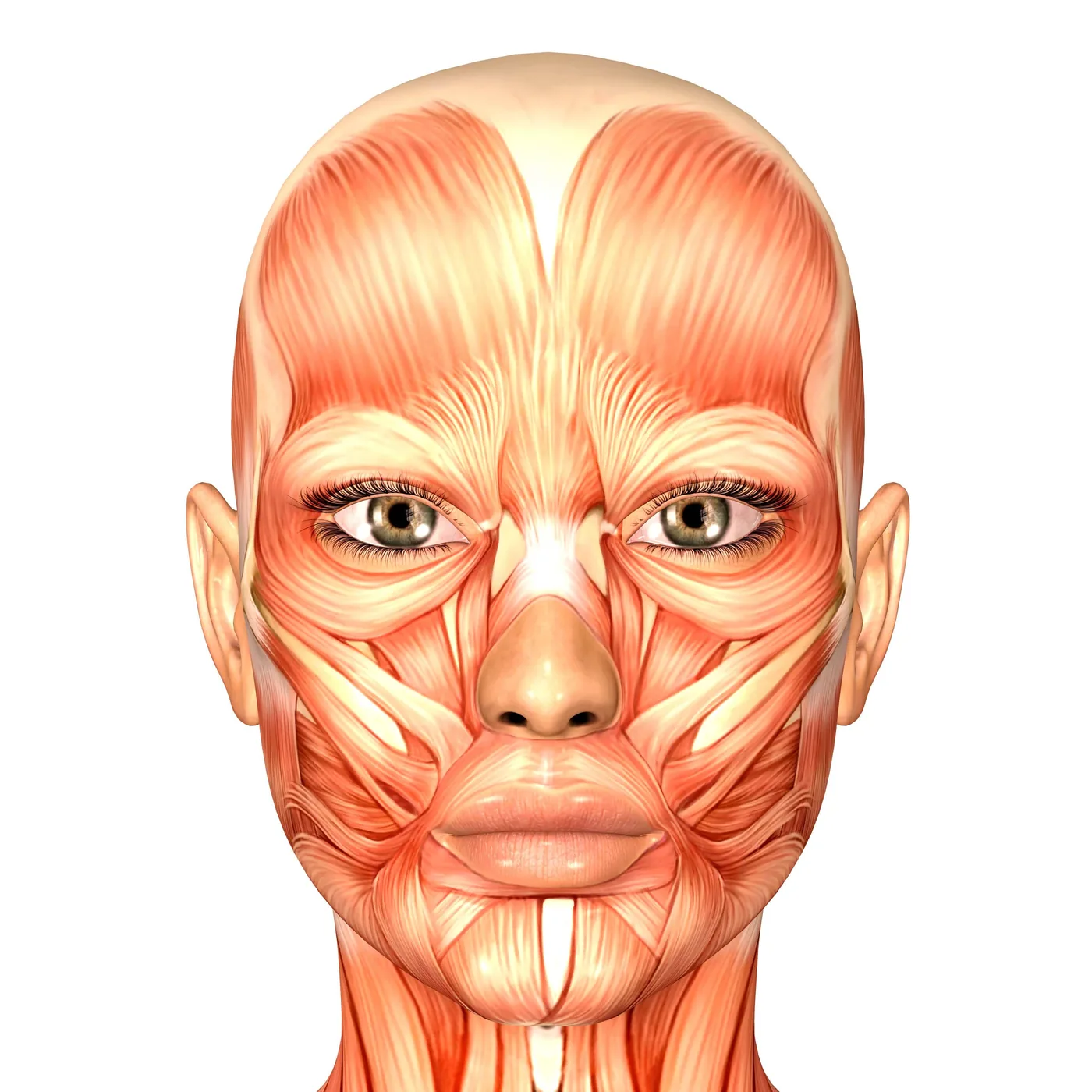
The muscles of facial expression attach directly to the skin, not to the bone. Every time you frown or squint, the skin above these muscles folds into the same creases. Over years of repetition this pattern becomes fixed and the line stays visible even when the face is at rest.
This distinguishes expression lines from wrinkles caused by loss of volume or by photoageing. The distinction has practical significance, because different methods apply to each of these mechanisms, and confusing them is the most common reason for disappointment after a treatment.
The colloquial name and botulinum toxin
Colloquially people say “botox”, and that is also how they most often ask about this treatment. The word, however, comes from the trade name of one of the preparations, not from the substance itself. The active substance in all preparations of this type is botulinum toxin type A.
On this page we use the name of the substance, not trade names, because we are talking about a method, not a specific medicinal product. Which preparation will be used is decided by the doctor during the assessment, taking into account the treatment area and the patient's previous experience.
How botulinum toxin acts on expression lines
Botulinum toxin is a neurotoxin produced by bacteria of the genus Clostridium botulinum. In medicine it is above all type A that is used, first applied in the 1960s in the non-surgical treatment of strabismus.
The mechanism consists of temporarily blocking neuromuscular transmission at the site of administration. The muscle that stops receiving the signal relaxes, and the skin above it stops creasing. The action is local and transient, and its extent depends on the dose and the precision of administration.
Outside aesthetic medicine, botulinum toxin is used in ophthalmology, neurology, urology, orthopaedics and surgery. This is information about the range of uses of the substance, not a suggestion that we perform each of them.
The treatment on video
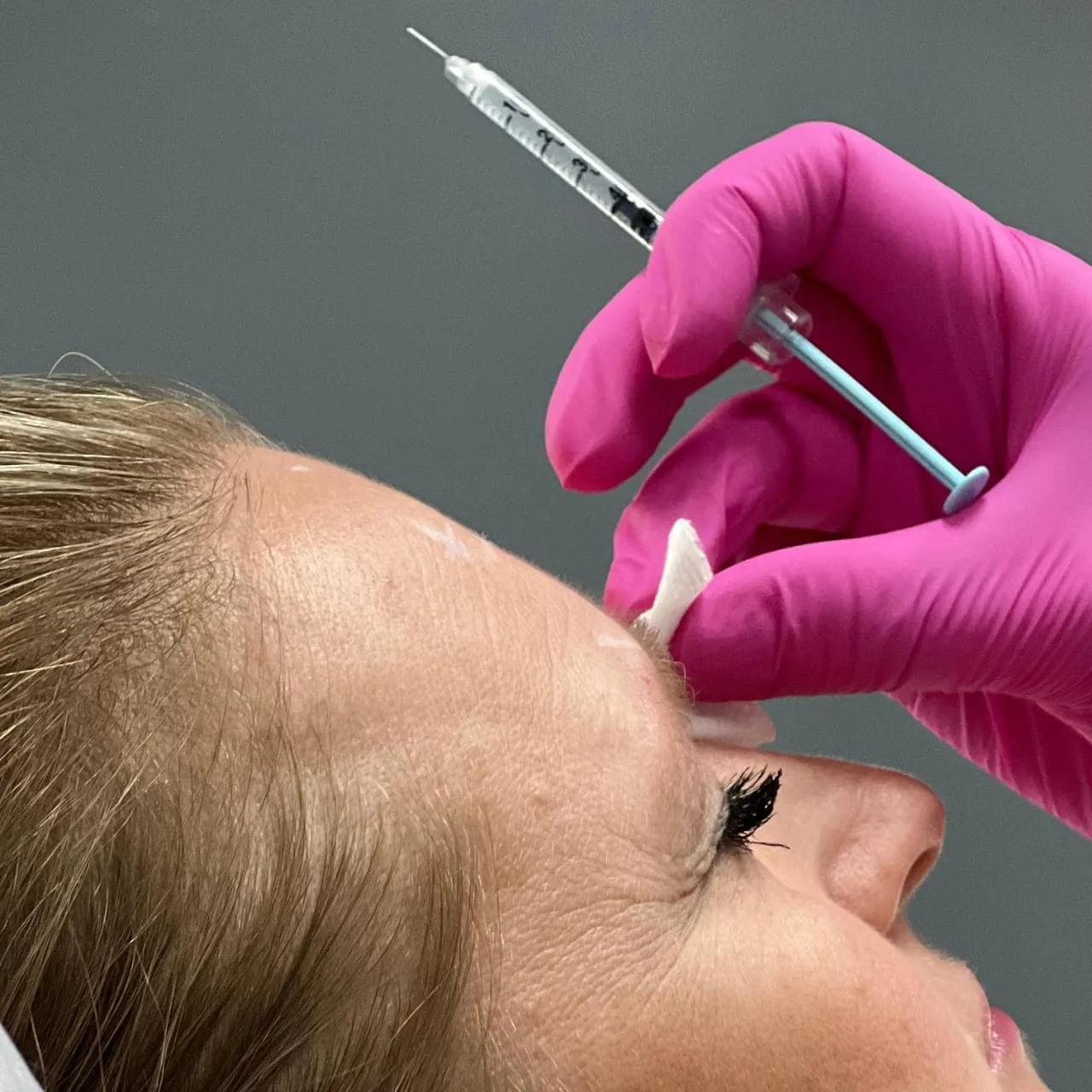
A recording from our treatment room will show the course of the injections and how fine the needle used is. With treatments involving needles, seeing the procedure usually reassures more than any assurances.
For expression lines we take both frames with the same facial expression, because the expression itself changes the picture more than the treatment does.
We publish photos of results only with patients’ consent and under comparable conditions: the same framing, light, facial expression and time interval. The result is always individual.
On-label and off-label indications
This distinction is worth knowing, because it rarely appears on clinic websites, and it concerns the legal basis of the treatment.
Registered indications in Poland
Botulinum toxin type A is registered for smoothing the vertical lines between the eyebrows, called glabellar or frown lines, and for treating primary axillary hyperhidrosis.
Off-label use
The other areas, including the forehead, crow's feet and the area around the mouth, are use outside the registered indications. The doctor informs you of this before the treatment, and you make the decision together.
Use outside the registered indications is a common and permissible practice in aesthetic medicine, but it requires an informed decision by the patient. The doctor informs you of this during the assessment, before you give consent to the treatment.
Treatment areas, or where the preparation is administered
Lines between the eyebrows
So-called glabellar or frown lines, the vertical lines visible when frowning. One of the two registered indications in Poland.
Horizontal forehead lines
Lines visible when raising the eyebrows and looking up.
Crow's feet
The lateral lines around the eyes that form when smiling and squinting.
Nose wrinkles
So-called bunny lines, which appear when wrinkling the nose.
Lip area
Vertical lines around the mouth and the lines running down from the corners of the mouth.
Gummy smile and the corners of the mouth
Work on excessive gum exposure when smiling and on drooping corners of the mouth.
Apart from work on lines, botulinum toxin is also used for hyperhidrosis and for bruxism, that is excessive tension of the masseter muscles. These are separate indications, described on the hyperhidrosis treatment page, and they also require a medical assessment.
The treatment step by step
The treatment takes from 15 to 45 minutes, depending on the number of areas. The first visit with a consultation takes about 30 minutes. Very fine needles and small syringes are used for the injections, and the preparation is administered intramuscularly or intradermally. Anaesthesia is not routine; an anaesthetic cream can be applied on request.
Results and how long it takes to see the effect
The first effect of the preparation usually appears within a week of administration. The expression lines in the treatment area become shallower or disappear, and the face looks calmer while the overall expression is preserved.
The effect lasts on average from two to six months, and that is a range, not a promise. It depends on the dose, the area, the activity of the facial expression and individual metabolism. The interval between successive injections should be at least twelve weeks.
After the effect of the preparation wears off, the skin in this area is often in a better state than before the treatment, because for several months it was not subjected to repeated creasing.
When botulinum toxin does not work
For over ten per cent of people the treatment does not bring the expected effect or does not work at all. The reason is an efficient immune system and the production of antibodies directed against the components of the preparation.
Effectiveness can also decline after many years of regular use, for the same reason. There is currently no widely available test for the presence of such antibodies that could be done before the treatment.
We say this before the treatment, because it is information that affects your decision. The doctor discusses ways of limiting this phenomenon, including the intervals between treatments and the choice of dose, during the consultation.
Recommendations after a botulinum toxin treatment
Upright position for 4 hours
For four hours after the treatment stay sitting or standing and do not bend down.
No touching the area
Do not touch the injection sites with your fingers, do not massage or press them.
No high temperatures
Sauna, steam baths, swimming pool and cryotherapy only two weeks after the treatment.
No exercise or alcohol for a day
For at least 24 hours no alcohol and no intense exercise: gym, running or fitness classes.
Expected reactions
Slight redness, sometimes minor bruising, may occur at the injection site. It usually resolves quickly.
A follow-up after two weeks
A routine follow-up visit, at which the full effect of the preparation is visible and any correction can be made.
We invite you to a follow-up visit after two weeks. That is the moment when the full effect of the preparation is visible and, if needed, a correction can be made.
Contraindications to botulinum toxin
This list does not replace a medical consultation. At the consultation the doctor discusses contraindications, possible complications, supplementation and other details of the treatment.
For ten days before the treatment, medicines that impair blood clotting should not be taken, which limits the risk of bruising at the injection site. Do not stop anything on your own, however: any change is decided by the treating doctor, and report the medication you take during the assessment.
The questions we are asked most often
Who may perform a botulinum toxin treatment?
Only a physician or a dentist. That is what the Office for Registration of Medicinal Products, Medical Devices and Biocidal Products indicated in a communication of August 2025. Botulinum toxin is a prescription-only medicinal product, and administration by an unqualified person deprives the patient of a proper assessment and of proper management in the event of a complication. It is worth asking about qualifications in any clinic.
How long does the result last?
Usually from two to six months, and the first effect appears within a week of administration. That is a range, not a promise: it depends on the dose, the area, the activity of the facial expression and individual metabolism.
Will the treatment work for everyone?
No. For over ten per cent of people the preparation does not work or works less well, because the immune system produces antibodies against its components. Effectiveness is also sometimes lower after many years of use. There is no widely available test that would check this before the treatment.
Will my face be expressionless?
The aim is to reduce the tension of selected muscles, not to abolish facial expression. The result depends on the dose and the precision of administration. The treatment is performed by a doctor. During the assessment you agree how large the change is to be.
How often can the treatment be repeated?
The interval between successive injections should be at least twelve weeks. Shorter intervals increase the risk of antibody production, that is what takes away effectiveness in the future.
Is it worth starting preventively before thirty?
That is an individual decision, made after assessing the facial expression, not on the basis of age. If the lines have not yet become fixed at rest, the doctor may suggest waiting or a different approach. We do not encourage starting therapy in advance.
Does the treatment hurt?
Sensations are limited to a prick with a very fine needle and are usually well tolerated. Anaesthesia is not routine, but an anaesthetic cream can be applied before the treatment on request.
How does it differ from fillers?
They are two different mechanisms. Botulinum toxin reduces muscle tension, so it acts on lines created by movement. Fillers replace volume, so they work on furrows caused by its loss. They are sometimes used together, but they do not replace each other.
When should the treatment be planned before an important event?
At least two to three weeks earlier. The full effect of the preparation is visible after about two weeks, and that margin also allows time for any correction at the follow-up visit.
How much does botox cost?
The cost depends on the number of areas and the dose of the preparation, which is why we keep one up-to-date aesthetic medicine price list instead of scattered amounts on subpages. You will get an exact quote at the consultation, once the treatment plan is agreed. With a medicinal product the price comes from the cost of the preparation and from the qualifications of the person performing the treatment. It is worth asking about both, wherever you decide to go.
The content is for information. It does not replace a consultation, an examination or an individual medical assessment.