
On this page
Anatomy of the lip area
Planning any procedure in this area is based on several structures whose condition is assessed during the visit.
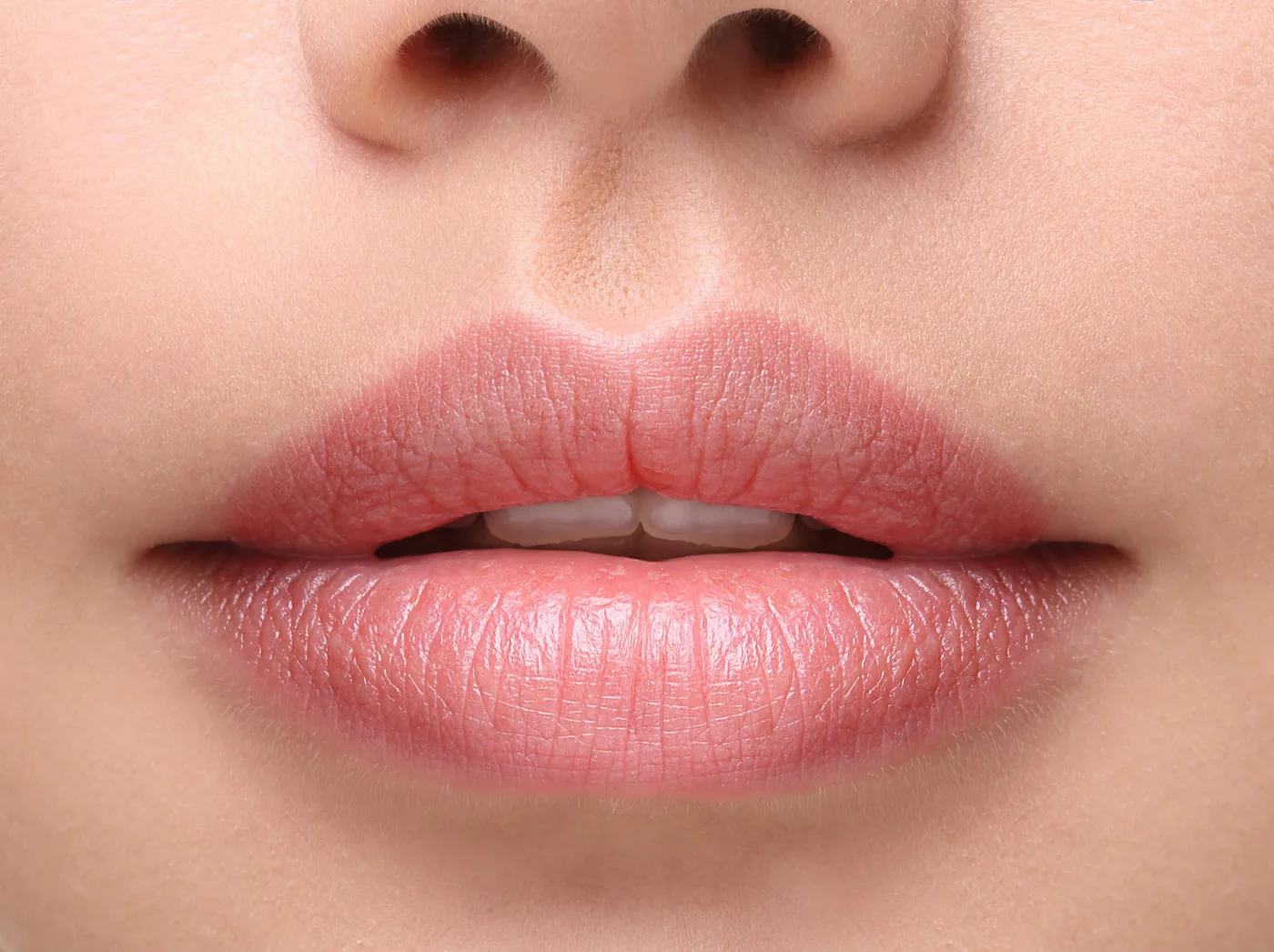
Lip vermilion
The visible, outer part of the lips, richly innervated and supplied with blood vessels. The upper and lower lip meet at the corners of the mouth; the peak of the upper lip forms what is known as Cupid's bow.
Contour (the border of the lip vermilion)
The line separating the lip vermilion from the skin around the mouth. Over time it loses definition, which is one of the recognisable signs of ageing in this area.
Philtrum, or the lip groove
The indentation between the upper lip and the nose, bordered by two ridge lines. With age it can become less defined.
Skin around the mouth
Thinner than in other areas of the face and with fewer sebaceous glands, so more prone to dryness. Rich innervation and blood supply affect the sensitivity of the area and the course of healing.
Anatomical variants within this area are numerous. Shape, size and proportions differ between individuals to the extent that the approach is decided individually, not according to a single scheme.
How lips change with age
The pace and extent of changes are individual. The ranges below describe a typical sequence, not a schedule that applies to everyone.
Changes are minimal. They mainly concern hydration and fine lines linked to facial expression and sun exposure.
Lip volume decreases, especially in the upper lip. The contour loses definition, vertical lines appear around the mouth, and the corners may droop.
The lips become thinner, and the nasolabial folds and marionette lines deepen. Changes in the bone and fat tissue of the face further affect the contour of the whole area.
Smoking and excessive exposure to UV radiation speed up these processes. In men the lips and skin are usually thicker, so early changes tend to be less visible, although the loss of volume over time is comparable.
Symmetry and proportions
Full lip symmetry is rare. Natural asymmetries result from genetic factors, differences in muscle tension, expression habits, previous injuries or earlier procedures. Slight asymmetry is within the normal range and can be part of a face's character.
Aesthetic literature refers to mathematical proportions, for example a ratio of upper to lower lip height around 1 to 1.618, statistically described as 2:3. We treat these as a theoretical guide when planning, not as a rule. The reference point remains the proportions of the whole face and the expectations discussed with the patient.
Assessment of this area concerns proportions, not conformity with the current trend. Very full, strongly defined lips seen on social media are not an anatomical norm or a default goal.
Groups of methods that may be considered
Below are the directions of treatment only, without a description of how the procedures are carried out. Details of each method, preparation, reactions after the treatment and prices can be found on the treatment pages that the links lead to.
Eligibility and limitations
Procedures in this area are qualified and performed by a doctor. The visit includes a medical history, an assessment of anatomy, and a discussion of the possible directions of treatment, risks and alternatives. The amount of product, technique and number of visits follow from this assessment, so we do not state them in advance.
After injections within the lips, swelling, tenderness, bruising and asymmetrical distribution of swelling are possible in the first few days. We discuss the extent and duration of these reactions before the procedure, together with aftercare recommendations and how to get in touch if concerning symptoms occur.
Some people will not be qualified, or the procedure will be postponed, for example in the case of an active infection within the treatment area. The decision is made by the doctor on site.
Editorial responsibility
Responsible for the content
NL Clinic, Katowice
How the content is created
Last updated
15 August 2026
This material is informational in nature and does not replace a consultation or qualification.