On this page
How ultrasonic cavitation works
The ultrasonic wave hits the fat cells and causes gas bubbles to form inside them, known as cavitation bubbles. The bubbles increase in volume and then burst, releasing the cell's contents.
What is released has to be removed by the body through natural metabolism. This is why the recommendations after the treatment are not an addition, but part of the procedure: without adequate hydration and physical activity the result is noticeably smaller.
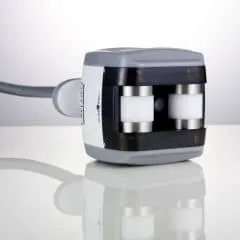
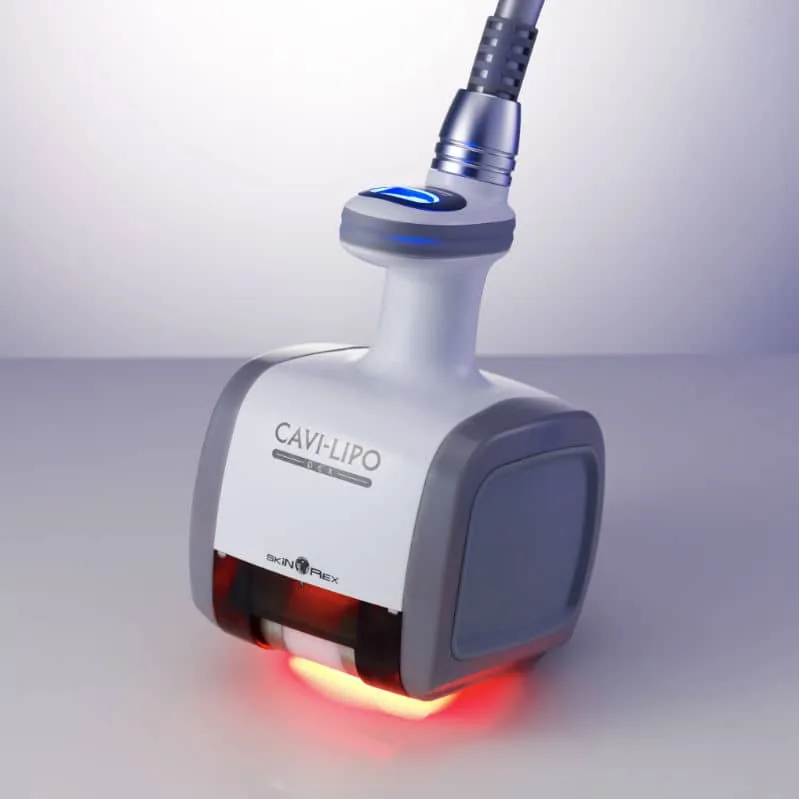
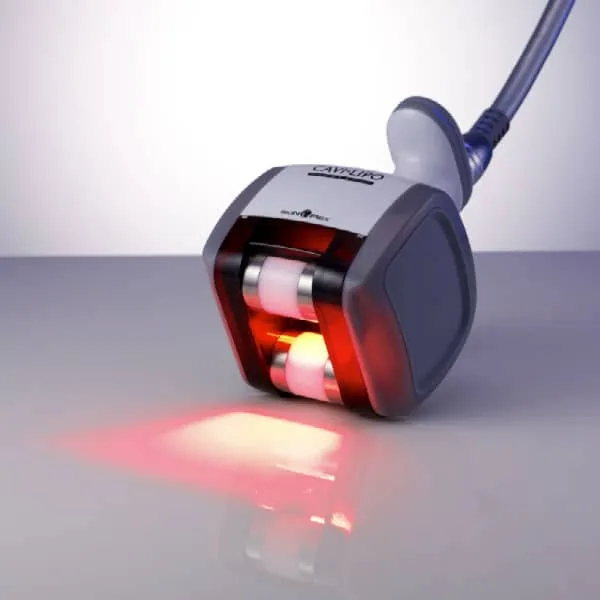
The head generates multiple overlapping waves that spread out at an angle, not in a straight line. This allows it to reach deeper without increasing the power, which reduces the risk of irritation and burns.
Four tools in one platform
Ultrasound cavitation
The basic tool. The waves overlap and spread out at an angle, which allows them to reach deeper without increasing the power.
Head for working on cellulite
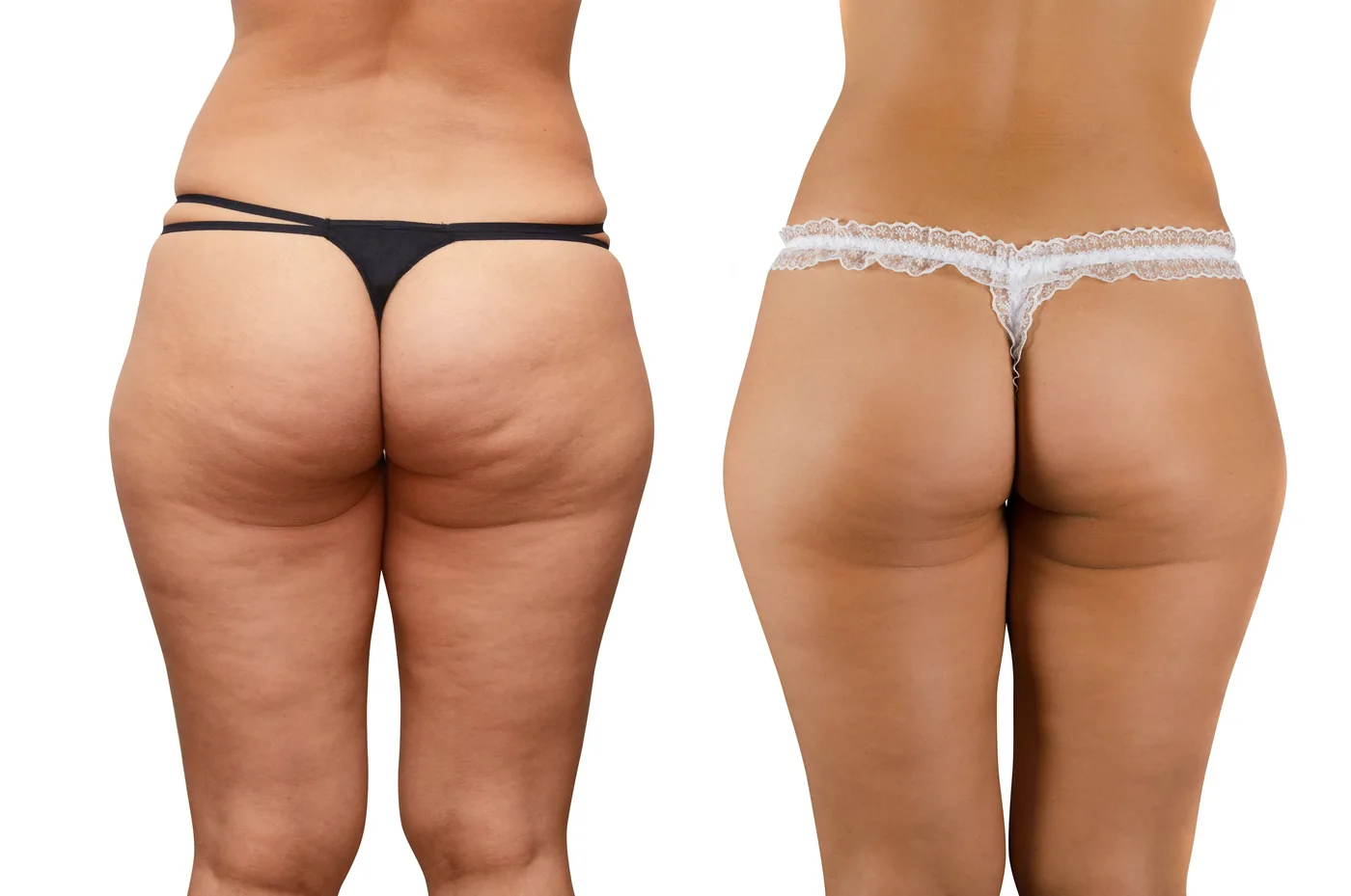
Designed for working on cellulite. It liquefies the contents of the cells, which evens out the tissue structure and reduces the visibility of irregularities.
Roller massage
Mechanical treatment of the area after the ultrasound work, supporting circulation and drainage. Included in the price of the treatment.
Light LED
The element that closes the treatment, supporting the condition of the skin in the area worked on.
Areas and treatment time
The treatment time depends on the size of the area and is not set arbitrarily.
How many treatments and how often
A course is planned as six to eight treatments for one body area, carried out once a week. The weekly interval reflects the time the body needs to metabolise the released cell content.
The change in circumference is individual and depends on the starting point, diet and activity between treatments. We do not state a number of centimetres in advance, as that would be a promise we cannot control. We discuss the realistic range at the consultation, after assessing the area.
What this treatment will not do
It will not replace diet or exercise. Without a change in habits, fatty tissue returns, and the course of treatments becomes a cost without a result.
It is not a method of treating obesity. It is a local treatment, aimed at a chosen body area, not at body mass as a whole.
It does not replace liposuction. With large excess fatty tissue, the right path is a medical consultation, not a course of cosmetology treatments.
It does not significantly tighten loose skin. Other methods work on tightening, for example RF thermolifting, and they are sometimes carried out in parallel.
Recommendations before the series and after the treatment
One week before the course
A light diet, ideally boiled and stewed dishes, and no alcohol. The aim is to ease the load on the liver, which will metabolise the released fatty tissue.
After each treatment
At least one and a half litres of water a day. Hydration makes it easier for the body to remove what was released during the treatment.
Physical activity
Increased activity in the days after the treatment and throughout the whole course. It is what makes the difference to the result.
Alcohol
Limit it for the duration of the course, for the same reason as diet: the liver has extra work to do during this time.
These recommendations are not a formality. The liver and lymphatic system have real work to do in this procedure, and whether you help them determines the difference between an effective treatment and one done for nothing.
Assessment and contraindications
Before the first treatment, the cosmetologist carries out an interview. We ask about pregnancy and breastfeeding, liver and kidney disease, cancer, clotting disorders, implanted electronic devices and implants in the treatment area, epilepsy, stone disease, and medications taken.
We do not carry out the treatment during pregnancy and breastfeeding, in cancer under active treatment, or with active inflammation in the treatment area. We decide other situations individually, and if in doubt we refer you to a doctor before starting the course.
The questions we are asked most often
Does ultrasound cavitation help you lose weight?
No. It is a local treatment that works on a chosen body area, not on body mass. Without a change in diet and activity, the result is limited and temporary. If the goal is weight loss, the starting point is a dietitian, and the treatments can be a complement.
How many treatments do I need?
Usually six to eight for one body area, once a week. The cosmetologist sets the number after assessing the area, and the plan can be adjusted during the course.
Why are the treatments once a week?
Because the body needs time to metabolise the content released from fat cells. More frequent treatments will not speed up the result, and will put extra load on the liver.
By how much will the circumference decrease?
It depends on the starting point, the area, diet and activity between treatments. We do not state a number of centimetres in advance, as too many variables are beyond our control. We discuss the realistic range at the consultation.
Does it hurt?
The treatment does not require anaesthesia. While the ultrasound head is working, you can hear a characteristic sound, which is sometimes described as not very pleasant, but not painful. The roller massage feels similar to endermologie.
Will this treatment help with cellulite?
A separate head is used to work on cellulite. The result can be visible as smoother skin texture, but cellulite has multiple causes, so a single method is rarely enough. We usually combine it with other treatments.
Can I combine it with EMS training?
Yes, this is a common combination, because the two methods work on different things: cavitation on fatty tissue, EMS training on muscles. The cosmetologist sets the order and intervals.
Will fat come back after the treatments?
The cells whose content was released do not disappear from the body permanently in terms of their ability to store fat again. If you return to old habits, fatty tissue rebuilds, including in the same place. Maintaining the result depends on diet and activity.
Before you decide
Consultation with a cosmetologist
At the consultation, we assess the area and tell you whether cavitation is the right method here, or whether it makes more sense to start with something else. With loose skin, this can be thermolifting, with weak muscle tone, EMS training. The conversation does not commit you to having the treatment.
This material is for information and does not replace a consultation or an assessment of suitability for the treatment.