
Patient guide
Three treatments for autumn: microneedling mesotherapy, CO2 laser and peels
After summer the skin has been through UV radiation, high temperatures and chlorinated water. Autumn makes it easier to carry out treatments after which sun exposure needs to be limited.
Published 8 August 2024. Last verified 16 August 2026.
Category
Patient guide
Applies to treatments
Author
NL Clinic team
Microneedling
Microneedling mesotherapy, also called skin needling (microneedling), is based on controlled micro-puncturing of the epidermis and dermis. The micro-injuries trigger natural healing mechanisms, which lead to increased production of collagen, elastin and hyaluronic acid, the three components responsible for skin firmness and elasticity. The needles have a microscopic diameter, which limits discomfort during the treatment.
The method may be considered for:
- wrinkles, where the goal is to smooth the skin's structure,
- post-acne scars, where micro-puncturing supports tissue remodelling,
- pigmentation, including post-inflammatory pigmentation, with melasma requiring particular caution,
- skin sagging, where we work on tone and elasticity.
It is also used for stretch marks, hair loss and excessive skin dryness, because it increases the penetration of active substances such as vitamins and peptides. In autumn, reduced UV radiation lowers the risk of post-treatment pigmentation.
It is worth knowing the limitations of this method. In a randomised 2024 study of the eye area, patients themselves reported improvement in skin evenness and texture, while an assessment carried out independently by three blinded dermatologists showed no significant differences before and after the series of treatments (item 1 in the sources). This is a good illustration of why we do not promise a result: patient perception and measurement do not always align.
Fractional CO2 laser resurfacing
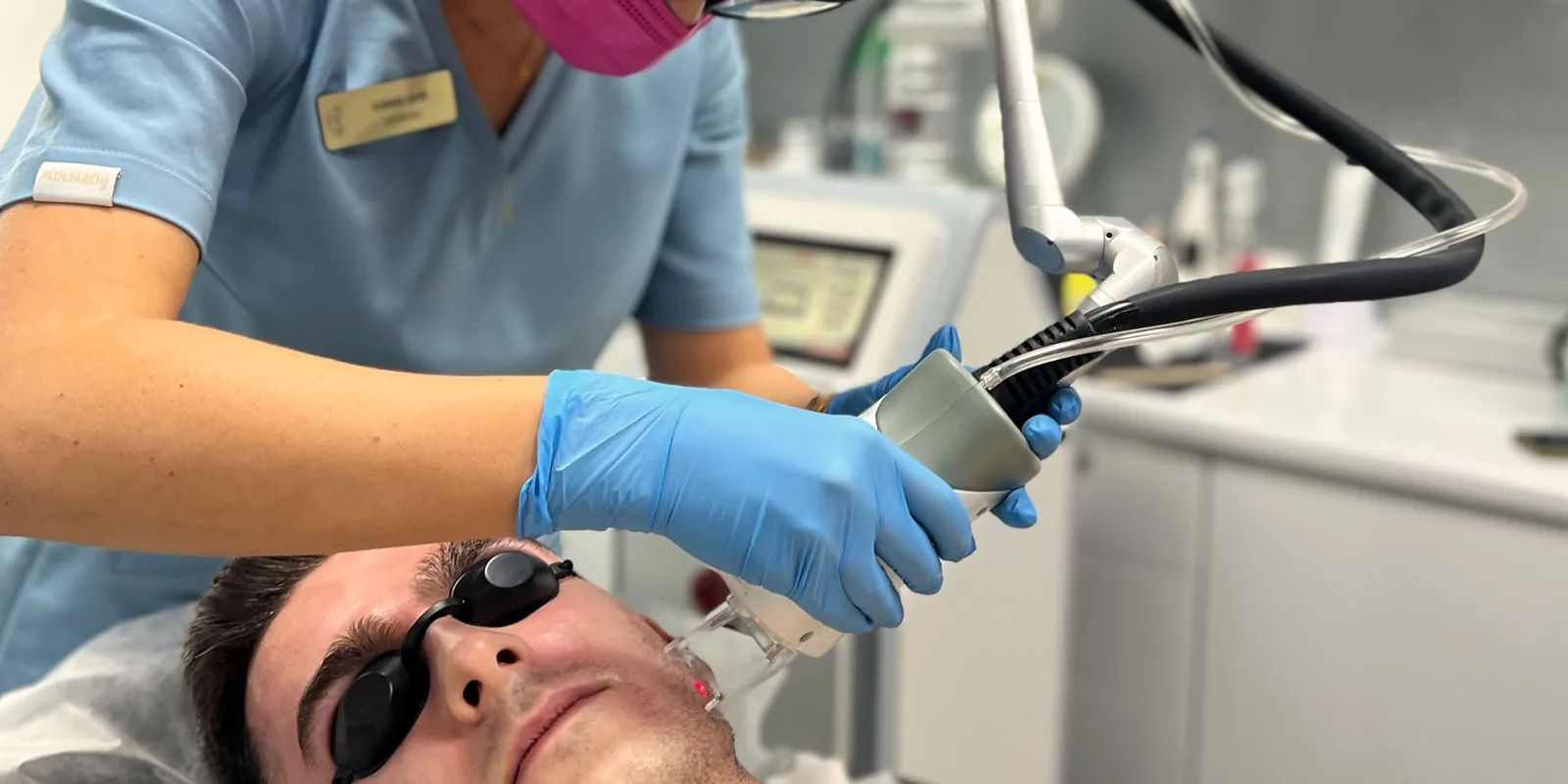
Fractional CO2 laser is an ablative laser: it removes fragments of the outer layer of skin while stimulating collagen production in the deeper layers. Fractional operation means that micro-injuries form in individual points, and the tissue between them stays intact, so healing proceeds faster than after an ablative treatment over the whole surface.
The method is considered for wrinkles and furrows, for sun-related pigmentation, for post-acne and post-surgical scars, and for stretch marks.
Because CO2 is an ablative technology, the skin needs time to regenerate, 7 to 14 days, depending on the depth of the treatment. This is the main reason the treatment is planned outside the season of intense sunshine.
Efficacy for wrinkles is documented in the literature. In a randomised split-face study on forty patients, with three sessions at monthly intervals, fractional CO2 laser and fractional Er:YAG significantly reduced facial wrinkles, without serious adverse effects, although post-treatment discomfort was more pronounced on the side treated with CO2 (item 2 in the sources). The studies do not give a single figure that can be promised to everyone, because the result depends on the depth of the treatment and the condition of the skin.
Chemical peels
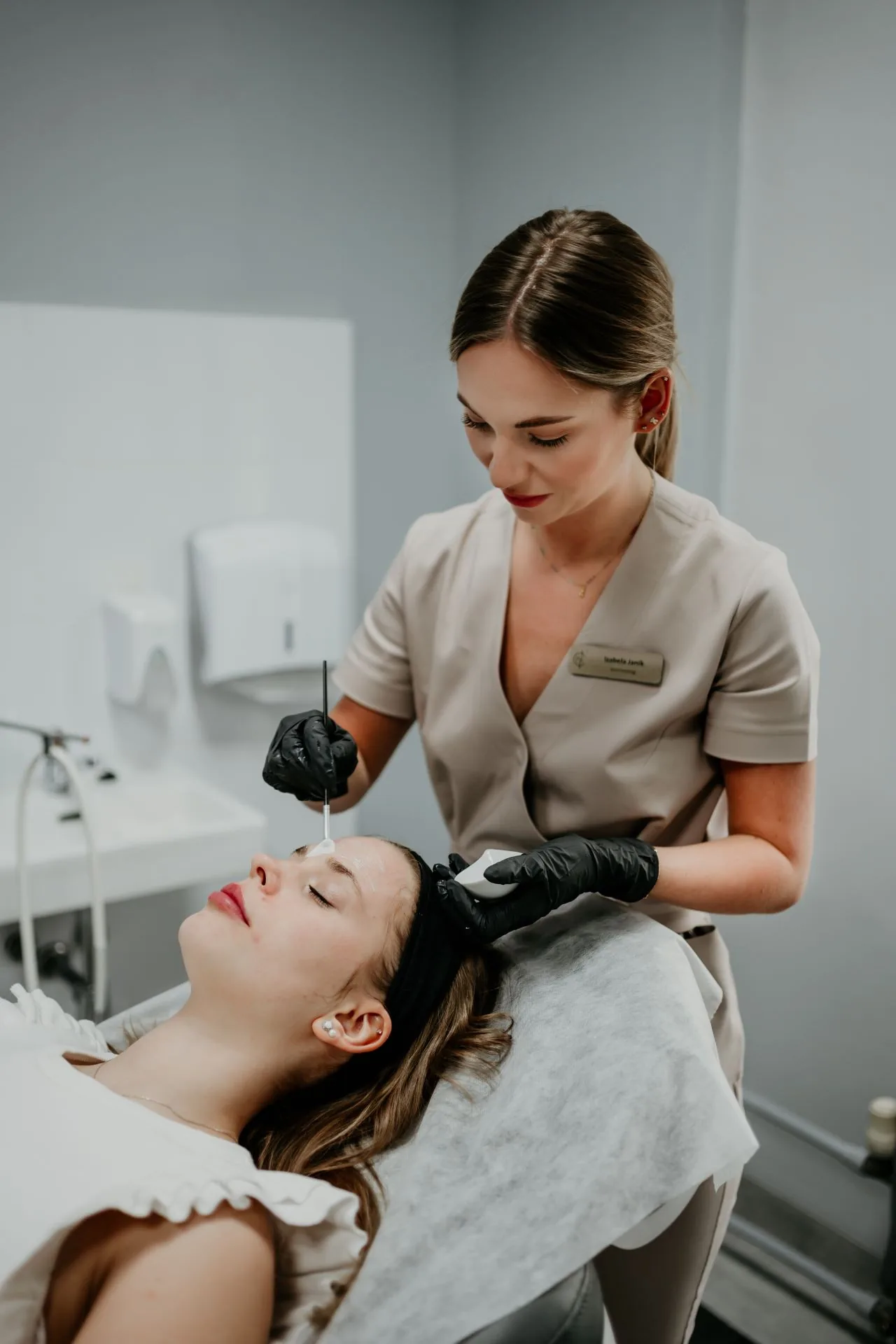
Chemical peel involves applying acids that cause controlled exfoliation of the epidermis. The process stimulates cell renewal and the production of collagen and elastin. Formulas vary in concentration and composition, so they are chosen to suit the condition of the skin.
Indications include:
- acne and post-acne scars, where salicylic acid and glycolic acid, among others, are used to unblock gland openings and reduce inflammation,
- pigmentation and uneven skin tone, where mandelic acid works well,
- fine wrinkles and loss of tone, where deeper-acting peels are used, for example with trichloroacetic acid or glycolic acid.
Superficial peels refresh the skin, and the first changes can be visible after one treatment. Medium-depth and deep peels are used for more advanced changes. Each of them requires skin preparation and adherence to post-treatment recommendations, above all sun protection.
Why autumn in particular
There is one practical reason: after each of these treatments the skin needs protection from UV radiation, and shorter days and less sunshine make that easier to provide. Sun exposure during the healing period increases the risk of post-inflammatory pigmentation.
The second reason concerns the skin's starting condition. After months of sun, wind and high temperatures, the skin can be dehydrated and irritated, so autumn is a natural time for regenerative care, also ahead of the winter season, when dry air and low temperatures arrive.
This does not mean that treatments are not carried out at other times of year. We have described the summer safety rules separately: laser therapy in summer.
Recommendations after the treatment
- Sun protection: SPF 30 minimum, including in autumn, especially after CO2 laser and peels.
- Hydration: after microneedling and peels the skin tends to be dry, so barrier care is part of the process.
- No intense exercise for a few days after an ablative treatment or a peel, to avoid overheating the skin.
- Qualification before choosing a method. Each of these treatments has its own contraindications and a different healing time.
Sources
- Al Hassan S., Saade D.S., Kurban M., Abou Rahal J., Alameddine R.M., Evaluating the Efficacy of Combined Platelet-Rich Plasma and Microneedling for Aesthetic Rejuvenation of the Periorbital Area: A Randomized, Blinded Cohort Study, Journal of Cosmetic Dermatology, 2024. DOI 10.1111/jocd.16717
- Efficacy and safety of fractional CO2 laser versus fractional Er:YAG laser in the treatment of facial skin wrinkles, a randomised split-face trial, 40 patients, three sessions. PubMed, PMID 27885522
- Efficacy and safety of ultra-pulsed CO2 fractional laser for the treatment of periorbital static wrinkles, a prospective study, 30 patients, wrinkle depth measured by 3D analysis. PubMed, PMID 39954149
About this text
Prepared by the NL Clinic team. Published 8 August 2024, reviewed 16 August 2026.
The content is for information and does not replace a consultation.
Choosing a treatment for autumn
Three methods, three different healing times and three different sets of contraindications. Which treatment makes sense in a given case is determined after a skin assessment.