This page covers one area
We cover fat fractions, the healing timeline and the full list of contraindications on the lipotransfer page. We describe how to identify the cause of under-eye shadows and the other methods on the under-eye shadows page.
The content is for information. It does not replace a consultation, an examination or an individual medical assessment.
On this page
Three mechanisms of change in the eye area
Skin ageing around the eyes is a natural process, accelerated by age, genetics, exposure to UV radiation, hormonal changes, fatigue, stress and certain illnesses. Smoking and a diet low in valuable nutrients also play a part.
What you see in the mirror as bags and shadows can, however, have three different underlying causes. Telling them apart matters more here than choosing a method.
Loss of fat tissue
The fat padding in the under-eye area diminishes, and the skin loses support from underneath. A hollow forms, which casts a shadow in light falling from above.
Approach: restoring volume, for example with your own tissue. This is an indication for lipotransfer.
Fat herniation
The fat tissue does not diminish, it shifts and bulges forward, forming a visible bag under the eye. The mechanism is the opposite of the previous one.
Approach: depends on the size. For larger changes, a surgical consultation is appropriate, and lipotransfer is contraindicated.
Weakening of the supporting structures
The structures holding the tissues in the eye area lose their strength, which changes the arrangement of the whole area regardless of the amount of fat.
Approach: individual assessment. Adding volume alone will not restore the support that is missing.
Lipotransfer addresses the first of these mechanisms. For the other two, adding volume is not the right approach, and in an extreme case it will make the appearance of the area worse.
When a surgeon is needed instead of a treatment
The size of the fat herniation as a contraindication
If the size of the fat herniation in the eye area qualifies you for a surgical procedure, lipotransfer is not the right method. This is a contraindication, not a matter of preference. We discuss this at the consultation, before setting a date, even when the patient arrives already set on an aesthetic treatment.
This boundary is one of the more important things decided in this area. Filling the under-eye area in a person whose problem is displaced tissue, rather than tissue loss, will not bring the expected result.
Four stages of the treatment
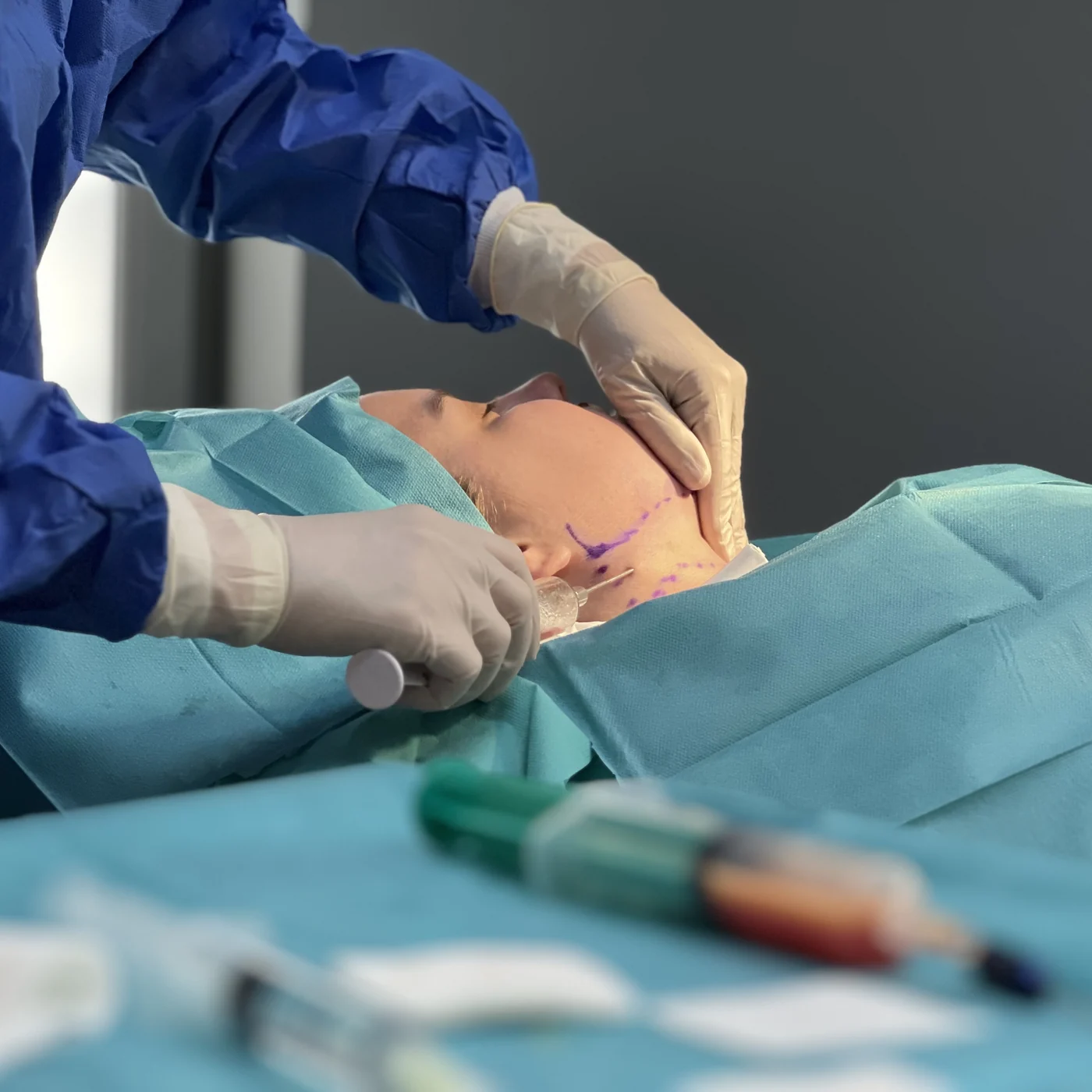
The treatment takes 60 to 180 minutes and is performed under local anaesthetic, not general anaesthesia. In the eye area, the injection is carried out with fine needles, because of the skin thickness and the course of the blood vessels.
Why the fat does not show through
With fillers injected into the under-eye area, there is a risk that the product will show through the thin eyelid skin. With your own tissue, this risk does not exist, because the material is the same as the surrounding tissue.
This is one of the few real advantages of lipotransfer over hyaluronic acid, and it applies specifically to this area. In areas with thicker skin, this difference loses its significance.
Results in the eye area
Reduction of under-eye shadows
Filling the area where the skin is thinner reduces the visibility of the shadow. This applies to shadows with a volume-related cause, not a pigment-related one.
Tear trough filling
Filling the hollow between the lower eyelid and the cheek, which makes the area look more rested.
Improving the quality of the skin
Stem cells contained in the transplanted tissue take part in regeneration, which affects the texture and elasticity of the thin eyelid skin.
Softening of fine wrinkles
The change also affects wrinkles in the eye area, commonly known as crow's feet, although it does not replace methods that work on the muscle.
The schedule is the same as for the other treatments in this group: regeneration over 7 to 10 days, full effect up to three months, and according to the clinic's observations, lasting for as long as three years. Details on the lipotransfer page.
Qualification: what matters in this area
The general qualification criteria for lipotransfer also apply here. In the eye area, however, there are three additional things the doctor asks about separately.
No history of blood clotting disorders or vascular fragility. In an area with thin skin and a dense network of blood vessels, this matters more than elsewhere.
Good condition and elasticity of the skin in the eye area. This supports a better result and reduces the risk of skin sagging after the treatment.
No active infections or serious dermatological problems in the treatment area.
Smoking is listed among the contraindications, because it is linked to delayed healing and a higher risk of complications. This is not an automatic disqualification, but a topic to discuss during qualification.
What happens to excess material
After the harvested tissue is cleaned, there is usually more of it left than is needed for the eye area alone. The surplus can be used in the same procedure for other areas, for example to contour the face or to fill wrinkles elsewhere.
It is worth asking about this at the consultation when planning the treatment. A single harvest covering several areas means fewer procedures, and so a lower total cost and one recovery period instead of several.
The treatment on video
A recording from the practice will show the material being injected into the under-eye area with a fine needle.
We publish photos of results only with patients’ consent and under comparable conditions: the same framing, light, facial expression and time interval. The result is always individual.
The questions we are asked most often
Where do under-eye bags and shadows come from?
From three different mechanisms: loss of fatty tissue, fat herniation, and weakening of the supporting structures. Lipotransfer addresses the first of these. With fat herniation, adding volume is not the right approach, which is why qualification starts with identifying the mechanism.
When is a surgeon needed instead of lipotransfer?
When the size of the fat herniation in the eye area qualifies the patient for a surgical procedure. This is a contraindication to lipotransfer, not a matter of choosing between methods. It is decided at the consultation, before a date is set.
Does the fat show through the skin after lipotransfer?
With your own tissue, there is no risk of the product showing through, which can be a problem with fillers in this area. The eyelid skin is thin, so this difference has practical significance here and is one of the real advantages of lipotransfer in this location.
How does the treatment in the eye area proceed?
In four stages: harvesting the tissue with a gentle liposuction technique from the abdomen, thighs or hips; cleaning the material by centrifugation and filtration; precise injection with fine needles into the tear trough and under-eye area; recovery with swelling and bruising in two places at once.
Does skin elasticity matter?
Yes. Good condition and elasticity of the skin in the eye area support a better result and reduce the risk of skin sagging after the treatment. With very lax skin, the extent of possible change is limited, and we discuss this before the treatment.
What happens to the surplus of harvested fat?
After cleaning, there is usually more material left than is needed for one area. The surplus can be used in the same procedure for other areas, for example to contour the face. It is worth asking about this when planning the treatment, because a single harvest covering several areas means one recovery period instead of several.
Does smoking cigarettes rule out the treatment?
Smoking is listed among the contraindications, because it is linked to delayed healing and a higher risk of complications. This is not an automatic disqualification, but a topic the doctor raises during qualification.
The content is for information. It does not replace a consultation, an examination or an individual medical assessment.