
Treatment safety
Perifollicular swelling after laser hair removal, what it means
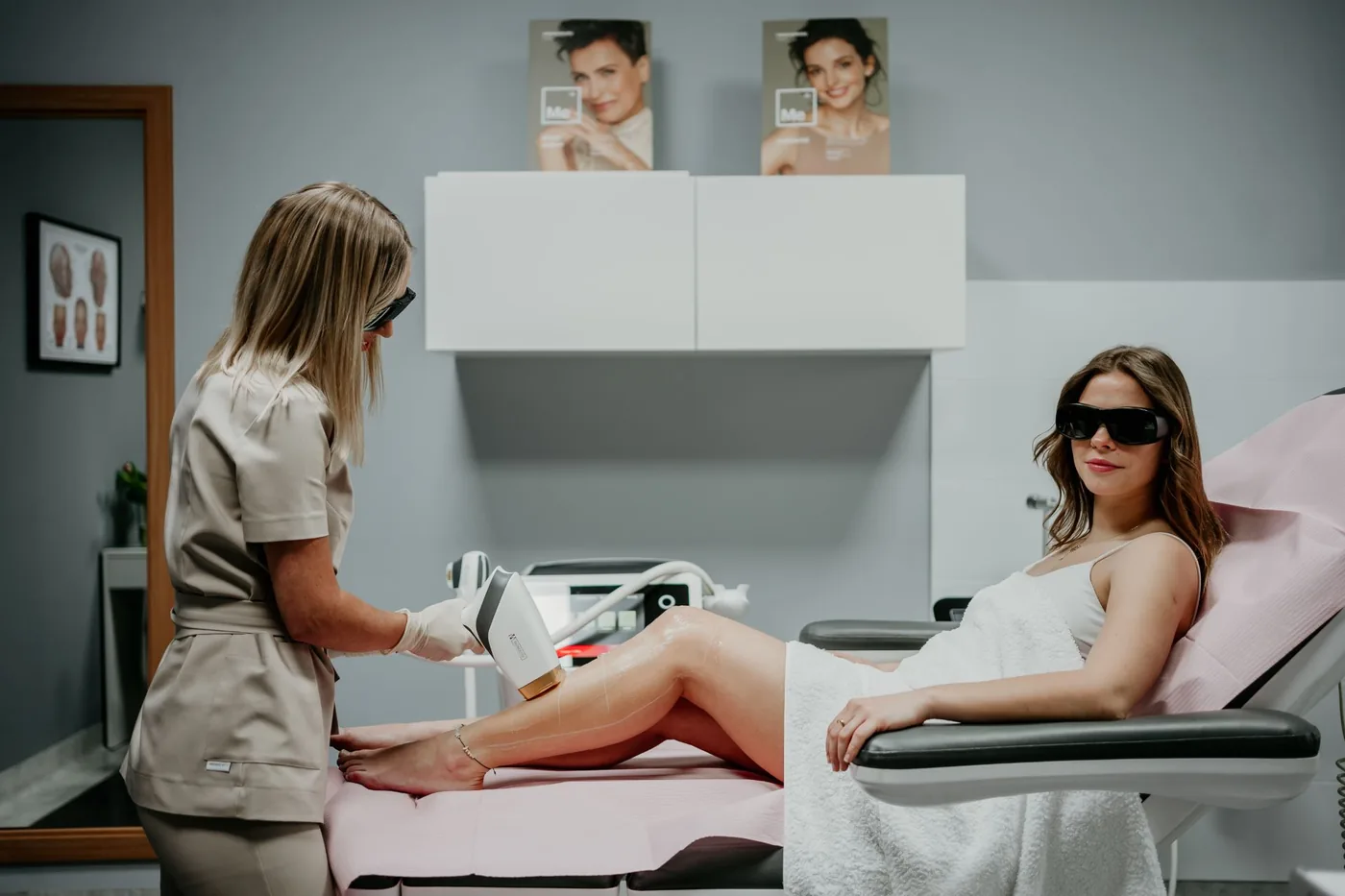
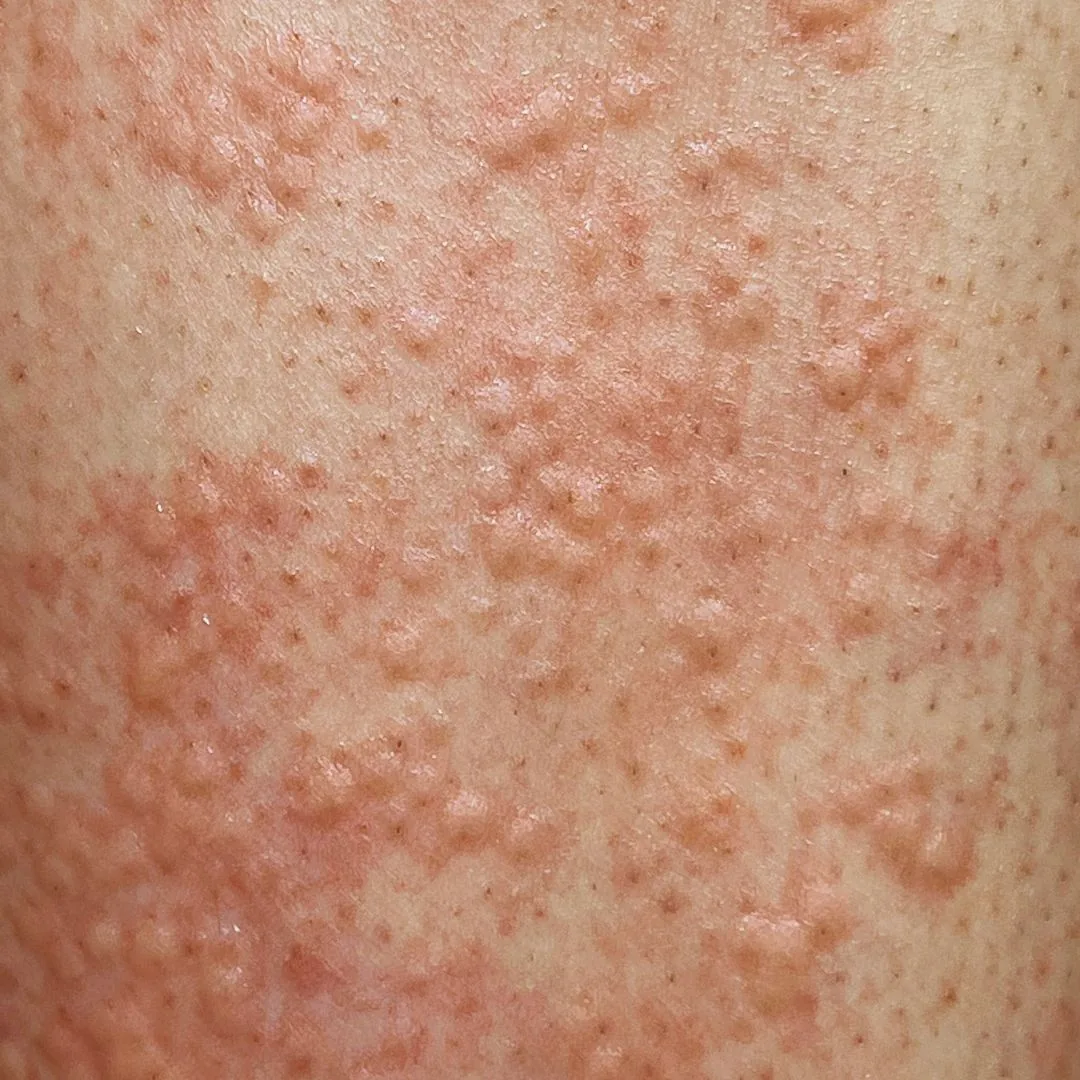
Straight after the treatment, small, reddened bumps appear around the follicle openings. This looks concerning, yet it is an expected reaction of the skin to correctly selected laser parameters.
Published 2 August 2024. Last verified 18 August 2026.
Category
Treatment safety
About the treatment
Usually resolves
From a few hours to a few days
What perifollicular oedema is
Perifollicular oedema is short lived redness and a slight raising of the skin around the follicle openings, visible immediately after laser hair removal. At that point, the skin resembles light goosebumps, and each bump corresponds to the position of a follicle.
The reaction appears within a few minutes of the pulse and is one of the signs that the person performing the treatment uses to assess whether the energy reached where it should.
How it develops
Laser light is absorbed by the melanin concentrated in the hair and the follicle. The absorbed energy turns into heat, which warms the hair and the surrounding structures. This phenomenon is called selective photothermolysis and is the basis of how all hair removal lasers work.
The heat also affects the small vessels surrounding the follicle. Their reaction, together with a local inflammatory response, produces the visible redness and swelling. The inflammatory response here is a natural stage of healing, not a sign of skin damage.
What it does and does not mean
In treatment practice, the perifollicular reaction is treated as an endpoint of the treatment, that is a sign confirming that the parameters were selected correctly for the given skin and hair. Device manufacturers list it in their documentation alongside immediate erythema around the follicles.
It is worth knowing the limits of this observation, however. The intensity of the reaction is not a measure of the future result: a stronger swelling does not mean that more hair will be lost. Its absence, too, does not determine that the treatment is ineffective, because the visibility of the reaction depends on the area of the body, the density and thickness of the hair, and the skin phototype. The effectiveness of the series is assessed after several treatments, by observing the reduction in hair and whether the regrowing hair is finer and lighter.
What to do after the treatment
- Cooling. Cold compresses or a cooling gel straight after the treatment reduce redness and the feeling of heat.
- Soothing preparations. If needed, topical anti-inflammatory preparations are used, selected by the person performing the treatment.
- Avoiding overheating. No sauna, hot baths or intensive physical exercise for a few days.
- Sun protection. A high factor sunscreen on exposed areas, especially in summer. Freshly treated skin is more prone to pigmentation.
When this is no longer a normal reaction after the treatment
Contact the practice if any of the following symptoms appear after the treatment:
- blisters, erosions, weeping or scabs at the treatment site,
- pain that does not subside or increases after the treatment,
- swelling and redness lasting longer than a few days,
- fever, chills or spreading redness,
- pigmentation or skin discolouration appearing in the following weeks.
Symptoms of this kind need to be assessed before the next treatment, as they usually mean the parameters need to be changed or the course postponed.
Technology and the intensity of the reaction
The type of laser affects how pronounced the perifollicular reaction is. Alexandrite laser and diode lasers have a high affinity for melanin, so the reaction tends to be more visible with them. Nd:YAG lasers are absorbed less by melanin and more by haemoglobin, which is why they are sometimes chosen for darker skin phototypes, usually at the cost of a greater number of treatments.
Choosing the wavelength, energy and pulse duration is part of the qualification, not a matter of preference. You can find more about the differences between the technologies in the post alexandrite or diode laser.
The questions we are asked most often
Is perifollicular oedema dangerous
It is an expected and temporary skin reaction to the treatment. If it lasts longer than a few days, or is accompanied by blisters, oozing, severe pain or fever, contact the practice.
How long it lasts
It usually subsides within a few hours to a few days after the treatment. The time depends on the body area, hair density and individual skin reaction.
Does the absence of oedema mean the treatment was ineffective
No. The intensity of the reaction depends on the body area, hair colour and thickness, and skin phototype. The person carrying out the treatment assesses several signs together, and the effectiveness of the course is assessed after several treatments, by observing the reduction and thinning of regrowing hair.
Can the formation of oedema be prevented
Complete prevention is not the aim, as the reaction accompanies a correctly performed treatment. Cooling the skin and avoiding irritants can reduce its intensity and shorten its duration.
Does the type of laser affect the intensity of the reaction
Yes. Lasers with a high affinity for melanin, that is alexandrite and diode, more often cause a pronounced perifollicular reaction. The Nd:YAG laser acts less on melanin, which is why it is sometimes chosen for darker phototypes, but it usually requires a greater number of treatments.
Sources
The perifollicular reaction as a treatment endpoint is mentioned in the instruction manual for the device used at NL Clinic, in the chapter on treatment parameters for permanent hair reduction.
About this text
The text was prepared by the NL Clinic team. Published 2 August 2024. Last verified 18 August 2026.
The content is for information and does not replace a consultation.
Skin reaction raises concerns
If your skin reacts differently than usual after the treatment, call before booking your next visit. We select the parameters according to the current condition of your skin.