
This page describes one application of hyaluronic acid
We cover the mechanism of cross-linked gel, complications, including management of vascular occlusion, and the full list of contraindications on the fillers and hyaluronic acid page.
The content is for information. It does not replace a consultation, an examination or an individual medical assessment.
On this page
What hyaluronic acid does in the skin
Hyaluronic acid is a glycosaminoglycan, a substance that occurs naturally in connective tissue. About half of its total amount in the body is found in the skin, mainly in the dermis.
It binds water and holds it in the tissue, which translates into hydration, elasticity and smoothness of the skin. It also fills the spaces between cells, helping to maintain its volume. With age, the synthesis of your own hyaluronic acid decreases, and this is one of the mechanisms through which the skin loses firmness.
Revitalisation involves replenishing this component by administering it directly into the skin. The preparation acts only locally, in the area treated, without any systemic effect.
Revitalisation versus filling
These are two different treatments with the same substance in the name, which is why they are the most commonly confused of this entire category.
Revitalisation
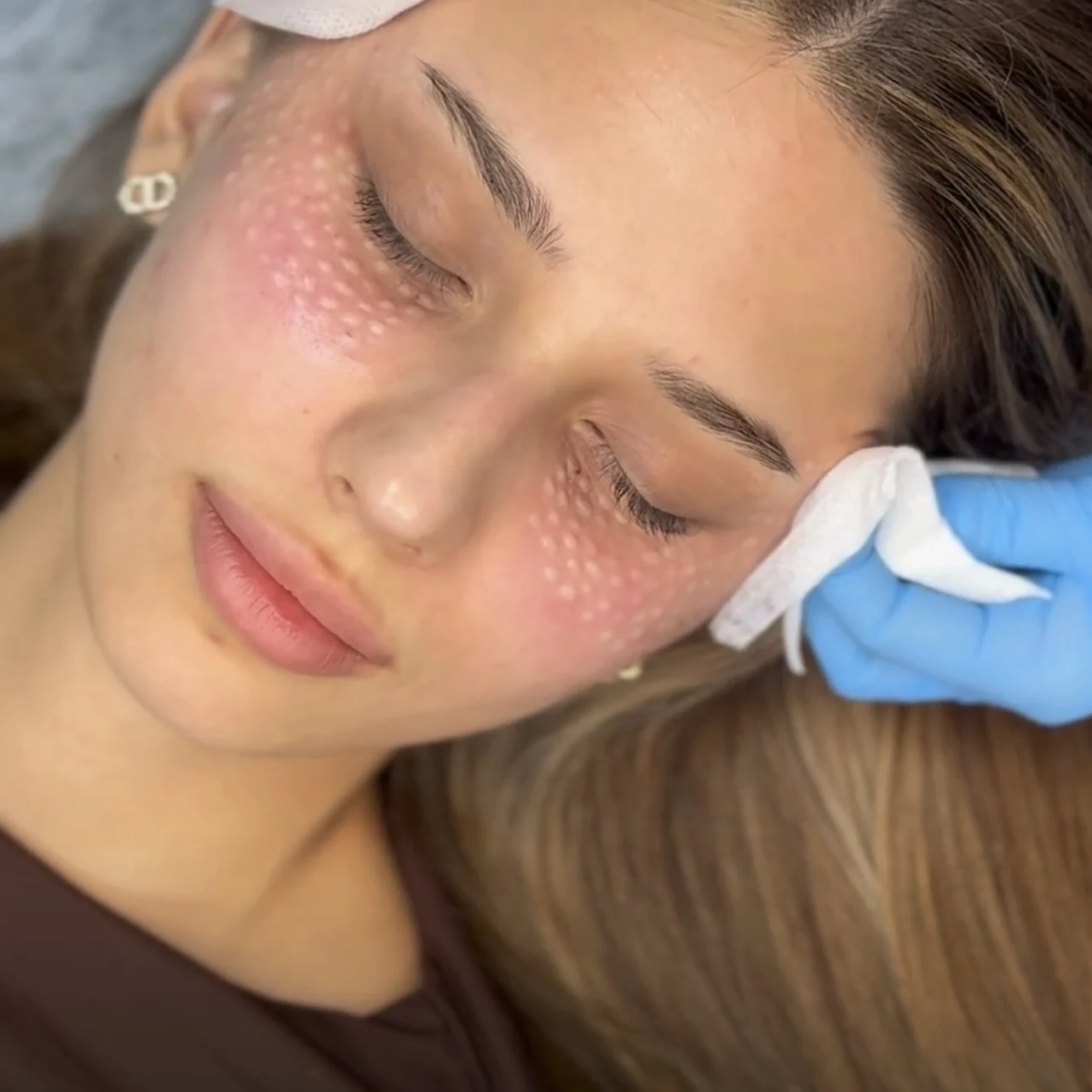
Concentrated hyaluronic acid administered intradermally, in multiple small punctures. It works on hydration, density and skin tone. Carried out in a series, the effect builds up over weeks.
Filling
Gel made of cross-linked acid administered deeper, in one spot, to make up for volume loss. The effect is visible immediately, assessed after two weeks.
Both methods can be part of one plan: revitalisation improves the quality of the tissue in which the filler later works. The order is decided by the doctor after assessing the skin.
How the treatment is performed
The preparation is administered intradermally, as micro-injections, with a thin needle. The concentrations used are usually 12 to 15 mg per millilitre, depending on the preparation chosen, and the choice belongs to the doctor.
The micro-punctures themselves have an additional significance: they trigger repair processes in the skin, in which collagen and elastin synthesis increases. The effect of the treatment is therefore the sum of the preparation's action and the tissue's response to the punctures.
The first treatment lasts from 30 minutes. We use anaesthetic cream for comfort, although it is not required. The treatment does not require recovery time, although temporary swelling, tenderness and redness are possible.
The treatment series and how often to repeat it
Revitalisation works as a series, not as a single treatment. It usually includes three to four treatments at intervals of a few weeks, and the plan is set by the doctor at the first visit, because it depends on the preparation chosen.
The intervals are not random: between visits, the skin rebuilds the tissue and uses the preparation administered, so each subsequent session builds on the effect of the previous one. The full series is usually repeated two to three times a year.
This has a practical consequence for planning your spending: by booking the first treatment, you are deciding on the whole series. At the consultation, we give you a price for the series, not a single visit.
Results and when they're fully visible
Improved hydration is usually visible straight after the series ends. The full effect is assessed around two months after the last treatment, because only then is the change resulting from tissue remodelling visible.
The extent of the change depends on the skin's initial condition, age, sun exposure and cigarette smoking. Revitalisation improves the quality of the tissue, it does not stop the ageing process.
Indications
For post-acne scars, revitalisation is part of a broader approach, not a stand-alone method. The lip area has a separate page, because it is governed by its own anatomy: you will find the description in the section on lips.
How it differs from nutritional mesotherapy and biostimulators
The administration technique is similar across these treatments, so the distinction is based on the composition of the preparation and on what we expect from it.
Revitalisation with concentrated hyaluronic acid
A preparation with a concentration usually of 12 to 15 mg per millilitre, administered intradermally. Aim: hydration and density of the skin, with tissue stimulation from the punctures themselves.
Nutritional mesotherapy
A vitamin cocktail or a preparation with a different composition, chosen to suit the skin's condition. The aim is similar, but the starting point is different: replenishing nutrients, not hyaluronic acid alone.
Soft biostimulators
Collagen, tropocollagen or polynucleotides. Aim: stimulating the skin to produce its own collagen, so the effect builds up more slowly and mainly concerns tissue density.
The boundaries between these methods are thin, and the choice is decided by the assessment of the skin, not the name of the treatment in the price list. That is why at the consultation we talk about the problem, not the preparation.
Contraindications
This list applies to revitalisation alone. Treatments with cross-linked gel are subject to a wider list, described on the fillers page. Report any medication you take and chronic conditions during qualification.
The questions we are asked most often
How does revitalisation differ from filling with hyaluronic acid?
The preparation and the depth of administration. Revitalisation is intradermal micro-injections of concentrated hyaluronic acid, which work on skin hydration and density. Filling is the administration of cross-linked gel deeper, to restore volume. These are two different aims, even though the substance shares the same name.
How many treatments does a course include?
Usually three to four treatments spaced a few weeks apart. The doctor sets the plan at the first visit, since it depends on the chosen preparation and the condition of the skin. A single treatment is not a basis for judging the method.
When is the full result visible?
Improved hydration is usually visible straight after the course ends, while the full effect is assessed around two months after the last treatment, since that is how long tissue remodelling takes.
How often should the course be repeated?
With concentrated hyaluronic acid, the full course is usually repeated two to three times a year. Regularity matters here, since each session builds on the effect of the previous one, and the skin uses the administered preparation between visits.
Does the treatment hurt?
The preparation is administered with a thin needle, intradermally, in many small punctures. We use anaesthetic cream for comfort, although it is not required. The treatment does not require recovery time, although temporary swelling and redness are possible.
Will revitalisation fill folds?
No. Concentrated hyaluronic acid administered intradermally does not build volume. For a fold resulting from volume loss, a cross-linked gel filler is the right choice, and revitalisation can then be a complement, not a replacement.
How much does hyaluronic acid revitalisation cost?
The cost depends on the preparation, the area and the number of treatments in the course, so we keep a single up to date aesthetic medicine price list instead of scattered amounts on subpages. At the consultation you will learn the price of the whole course.
The content is for information. It does not replace a consultation, an examination or an individual medical assessment.