Cosmetology
Needle mesotherapy, where it came from and what it involves
The method we now associate with a cosmetology practice originated in the treatment of pain. It reached aesthetic applications only after more than a decade.
Published 26 May 2021. Last verified 16 August 2026.
Category
Cosmetology
About the treatment
Treatment performed by
Cosmetologist or doctor
History of the method
Mesotherapy as a medical technique was developed in 1952 by the French doctor Michel Pistor. He administered medicines at specific points in the treatment of rheumatic and neurological diseases and pain conditions. It was then that he first injected procaine, a local anaesthetic, around the ears and observed an improvement in hearing. Some of his observations were accidental.
In 1964, Pistor extended the technique to skin problems and founded the French Society of Mesotherapy. In 1987, the French National Academy of Medicine recognised mesotherapy as a medical specialty. In the following years, the method began to be used for aesthetic purposes. Pistor is now referred to as the father of mesotherapy.
Earlier use of needles in medicine is sometimes cited as historical background: practices attributed to Hippocrates in treating shoulder pain, and Chinese acupuncture. The development of the method in its current form, however, is linked only to the spread of hollow needles, which made it possible to administer substances.
What it involves
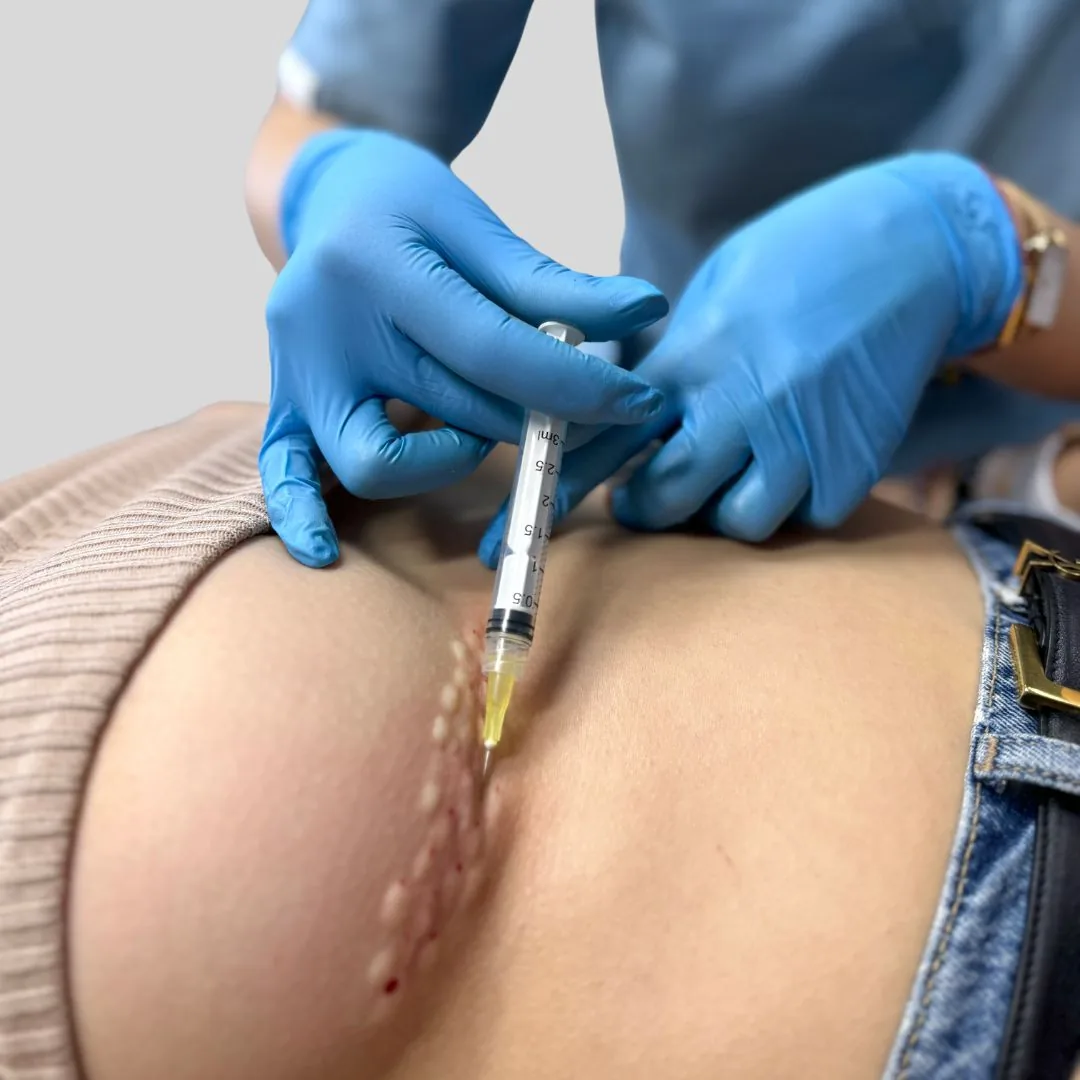
Needle mesotherapy involves injecting hyaluronic acid and nourishing substances, such as vitamins, trace elements, amino acids, and stimulators, deep into the skin. Ready-made preparations designed for specific problems are used. The substances act in the dermis, that is the layer lying beneath the epidermis.
Breaking through the epidermal barrier makes it possible to deliver the preparation directly where it is meant to act. Preparations applied to the surface of the skin overcome this barrier only to a limited extent, which results from its structure, not from the quality of the cosmetic.
The treatment is performed by a cosmetologist or a doctor, depending on the preparation and the indication.
Areas of application
Mesotherapy is used on the face, scalp, and eye area. On the face, the aim is to improve hydration, firmness, and tone, as well as to work on scars and wrinkles. On the scalp, the method is used for various types of hair loss and thinning, in which case the set of substances is selected individually, and changes can take up to several months to appear.
The skin around the eyes is thin and requires a separate approach. Treatment in this area usually takes 15 to 20 minutes, is performed after local anaesthesia, and is planned as a course with intervals of two to three weeks. With clear under-eye bags, bruising, or drooping eyelids, a medical consultation tends to be more appropriate, because the cause may require a different approach.
The detailed course of the treatment, preparation and aftercare recommendations are described on the needle mesotherapy page.
Contraindications
- pregnancy and breastfeeding,
- allergy to a component of the preparation and a tendency to allergic reactions,
- diabetes, cancer and autoimmune diseases,
- a tendency to keloids and fibrosis,
- cold sores, skin infections or inflammation on the day of the treatment,
- taking anticoagulant medication.
This list is not exhaustive. Contraindications are assessed by the person carrying out the treatment during qualification, based on the medical history and medication taken.
When effects become visible
The time needed depends on the aim of the treatment and the area involved. Treatments are carried out in a series, and the number of visits depends on the condition of the skin and the aim set. With minor changes, for example skin dryness after summer, a change can be noticeable sooner. The scalp needs the most patience, as effects appear the slowest there.
Maintaining the result requires maintenance treatments. The skin's response is individual, so the intervals and number of visits cannot be set in advance for everyone.
Besides needle mesotherapy, micro-needle mesotherapy is also used, including fractional, as well as needle-free treatments. A separate group is made up of tissue biostimulators and booster-type moisturising preparations, along with cleansing treatments: hydradermabrasion, microdermabrasion and peels.
About this text
The text was prepared by the NL Clinic team. Published on 26 May 2021, verified on 16 August 2026.
The content is for information and does not replace a consultation.
Choosing the preparation after a skin assessment
We determine the preparation, the number of treatments and the intervals after a skin assessment and a medical history covering contraindications.