
Patient guide
Adult acne, causes and what to do
Acne vulgaris is associated primarily with adolescence. However, acne in adulthood is becoming an increasingly common reason for visits to aesthetic medicine practices.
Published 12 July 2020. Last verified 16 August 2026.
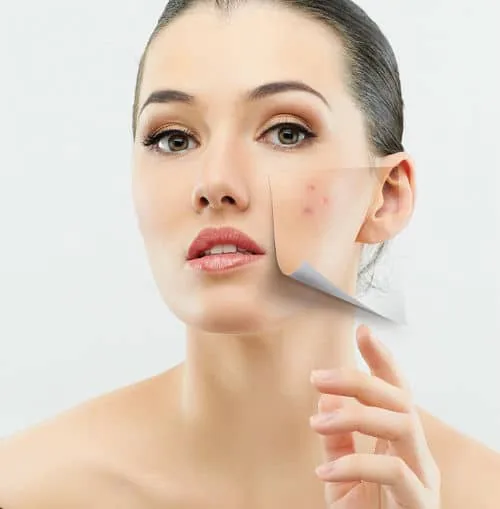
Causes of adult acne
The causes can be complex, and it is sometimes difficult to establish what is responsible for the changes. A common cause is a hormonal imbalance involving a rise in androgens, the so-called male sex hormones. Fluctuations in hormone levels can result from stopping contraceptive pills, as well as from lifestyle factors. Stress and disruption of the circadian rhythm have an adverse effect on the body's hormonal balance.
Medicines that can trigger acne lesions
Adult acne can also be linked to the medicines a person is taking. These include, among others:
- steroids, that is anti-inflammatory medicines often used in medicine,
- anticonvulsant medicines used to treat epilepsy,
- iodine preparations,
- vitamin B12.
The mechanism behind the last item has been described. In a study published in Science Translational Medicine, vitamin B12 supplementation altered the transcriptional profile of Cutibacterium acnes bacteria on facial skin and increased the production of porphyrins, which trigger inflammation. In one of ten people studied, acne lesions appeared a week after starting supplementation (item 1 in the sources). This therefore applies to some people, not everyone, and is not a reason to stop a medicine prescribed by a doctor on your own initiative.
Diet, skincare and working conditions
Other factors include a diet rich in carbohydrates, incorrect skincare, the use of comedogenic cosmetics and smoking. Working conditions also matter, with causes seen in exposure to oils, tar and chlorine.
The role of diet has been studied. In a randomised trial with blinded dermatological assessment, involving 43 men aged 15 to 25, after twelve weeks the number of lesions fell more in the group on a low glycaemic load diet than in the control group. The authors note that body weight also fell in the study group, so the effect of diet alone cannot be separated from the effect of weight reduction (item 2 in the sources). Diet is therefore a supporting factor in management, not a treatment method.
Pharmacological treatment is led by a dermatologist
Pharmacological therapy for adult acne is led by a dermatologist. Depending on the severity of the lesions, topical or oral medicines are used. Topical preparations include benzoyl peroxide, azelaic acid and salicylic acid, among others. Systemic preparations include antibiotics from the tetracycline group and vitamin A derivatives, that is retinoids.
If you are taking or have taken an oral retinoid, mention this before qualification for the treatment. This affects the permissible timing of laser and exfoliating treatments, and the interval is set by the practitioner in charge.
When this is not a cosmetology matter
Acne is a skin disease, not an aesthetic defect. Papulopustular lesions, purulent lesions and nodules, as well as rapidly progressing lesions, require medical assessment and treatment, not a treatment at a cosmetology practice. The sudden appearance of lesions after starting a medicine is also a reason to speak to the treating doctor.
Cosmetology management makes sense as a complement to treatment, agreed with a dermatologist, and in working with the marks left by lesions, once the skin has settled.
Cosmetology treatments in acne management
Management requires care and usually a combination of cosmetology and dermatology methods. At the practice, the following are mainly used:
- chemical peels using acids, which exfoliate the keratinised epidermis, reduce keratinisation of the sebaceous gland openings and cleanse the pores, which limits the severity of lesions,
- fractional lasers, used in working with post-acne scars and with comedones,
- microdermabrasion, used for post-acne scars.
Microdermabrasion is not used when the skin has active lesions, including in papulopustular acne. This restriction also applies to other exfoliating treatments, so the order of management is determined after assessing the condition of the skin.
A separate path is laser acne reduction, carried out after qualification and taking into account any medicines being taken.
What to expect
Adult acne tends to be recurrent and chronic in nature, so the aim of management is to control the lesions and improve the condition of the skin, not a one-off cure. The extent of improvement depends on the cause, the severity of the lesions and consistency in treatment. Cooperation with a dermatologist is the foundation, and cosmetology treatments play a supporting role.
Sources
- Kang D., Shi B., Erfe M.C., Craft N., Li H., Vitamin B12 modulates the transcriptome of the skin microbiota in acne pathogenesis, Science Translational Medicine, 2015, 7(293):293ra103. DOI 10.1126/scitranslmed.aab2009
- Smith R.N., Mann N.J., Braue A., Mäkeläinen H., Varigos G.A., A low-glycemic-load diet improves symptoms in acne vulgaris patients: a randomized controlled trial, American Journal of Clinical Nutrition, 2007, 86(1):107-115. DOI 10.1093/ajcn/86.1.107
About this text
The text was prepared by the NL Clinic team. Published 12 July 2020, verified 16 August 2026.
The content is for information purposes only and does not replace a consultation or dermatological treatment.
Assessment of skin with acne
At the consultation we assess the type and severity of the lesions and the medicines being taken, and then determine whether the cosmetology path is appropriate or a visit to a dermatologist should come first.